Indian History Essentials (UPSC Focus)
Cheatsheet Content
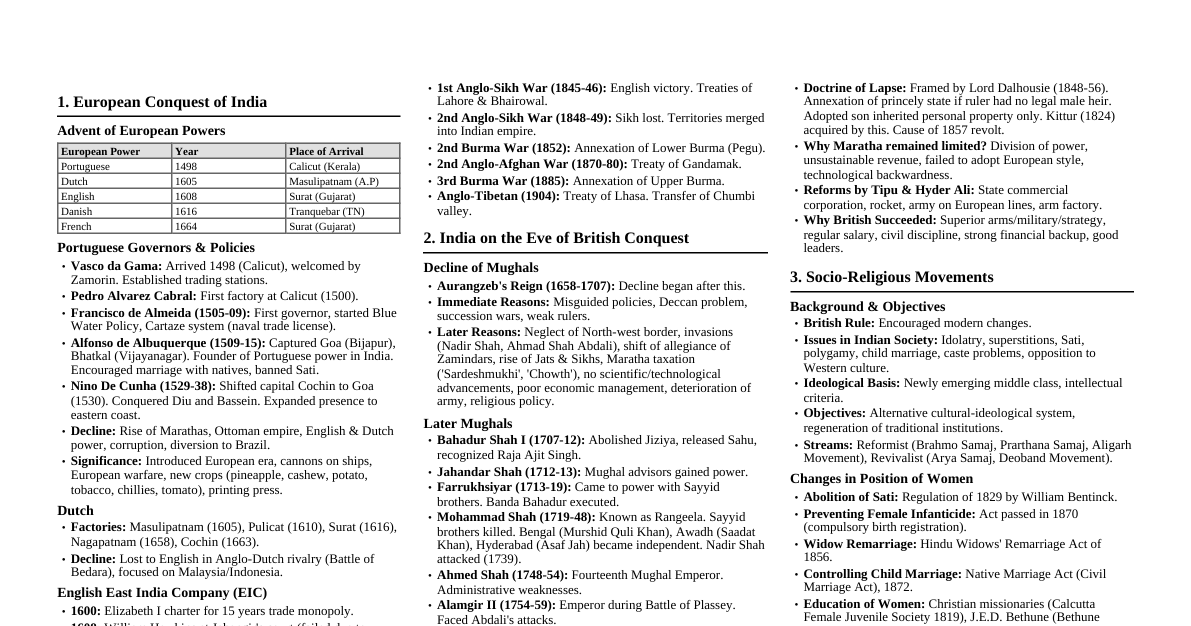
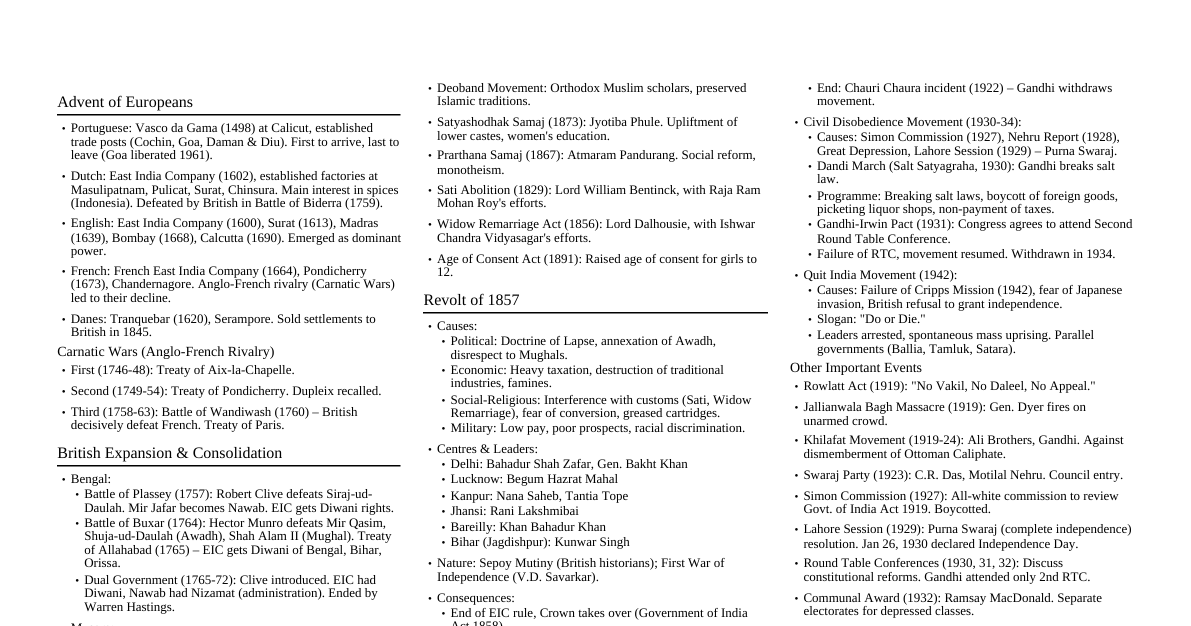
Ancient India (Pre-history to 7th Century CE) 1. Pre-historic Period Paleolithic Age: Old Stone Age. Hunter-gatherers. Tools: crude stone, hand axes, choppers. Sites: Bhimbetka, Hunsgi, Kurnool Caves. Mesolithic Age: Middle Stone Age. Microliths (smaller, sharper tools). Domestication of animals begins. Sites: Adamgarh, Bagor. Neolithic Age: New Stone Age. Agriculture, pottery, settled life. Tools: polished stone. Sites: Mehrgarh, Burzahom, Chirand. 2. Indus Valley Civilization (c. 2500-1750 BCE) Harappan Civilization: Urban civilization. Grid pattern towns, elaborate drainage. Major Sites: Harappa, Mohenjo-Daro, Lothal, Dholavira, Kalibangan, Ropar. Features: Great Bath, Granaries, Citadel, Mother Goddess worship, Pashupati Seal, Terracotta figurines. Script: Pictographic (undeciphered). Decline: Floods, Aryan invasion, climate change (debated). 3. Vedic Period (c. 1500-600 BCE) Early Vedic (Rig Vedic): Semi-nomadic Aryans. Rig Veda (oldest text). Tribal assemblies (Sabha, Samiti, Vidhata, Gana). Rajan (tribal chief). Pastoral economy. Later Vedic: Expansion to Ganga valley. Janapadas (territorial states). Rise of Varna system (Brahmin, Kshatriya, Vaishya, Shudra). Sacrifices, rituals (Yajurveda, Samaveda, Atharvaveda). Agriculture dominant. Philosophical Texts: Upanishads (Vedanta) – emphasize 'Atman' and 'Brahman'. 4. Mahajanapadas & Rise of New Religions (6th Century BCE) 16 Mahajanapadas: Powerful states like Magadha, Kosala, Avanti, Vatsa. Magadha emerged strongest. Jainism: Founder: Rishabhanatha (1st Tirthankara). Mahavira (24th Tirthankara): Real founder. Teachings: Triratnas (Right Faith, Right Knowledge, Right Conduct), Ahimsa (non-violence), Austerity, Renunciation. Sects: Digambara (sky-clad), Svetambara (white-clad). Buddhism: Founder: Siddhartha Gautama (Buddha). Teachings: Four Noble Truths (suffering, cause of suffering, cessation of suffering, path to cessation). Eightfold Path (right view, resolve, speech, conduct, livelihood, effort, mindfulness, meditation). No soul (Anatta), impermanence (Anicca). Sects: Hinayana (Theravada), Mahayana, Vajrayana. Buddhist Councils: Important for compilation and division. 5. Mauryan Empire (c. 322-185 BCE) Founders: Chandragupta Maurya (with Chanakya/Kautilya). Key Rulers: Chandragupta Maurya: United India, defeated Seleucus Nicator. Bindusara: Expanded empire. Ashoka the Great: Kalinga War, conversion to Buddhism, Dhamma policy (moral code), Edicts on rocks & pillars. Spreading Buddhism. Administration: Centralized. Megasthenes' Indica. Kautilya's Arthashastra (statecraft). Art & Architecture: Ashokan Pillars (lion capital), Stupas (Sanchi). 6. Post-Mauryan Period (c. 185 BCE - 300 CE) Successors: Shungas, Kanvas, Satavahanas (Deccan), Indo-Greeks, Sakas, Parthians, Kushanas (North-West). Kushanas: Kanishka (patron of Buddhism, Fourth Buddhist Council), Gandhara & Mathura school of art. Silk Route trade. Sangam Age (South India): Cheras, Cholas, Pandyas. Rich Tamil literature, trade with Rome. 7. Gupta Empire (c. 319-550 CE) - Golden Age Founders: Chandragupta I. Key Rulers: Samudragupta: Napoleon of India (V.A. Smith). Prayag Prashasti (Allahabad Pillar inscription). Chandragupta II (Vikramaditya): Fa-Hien's visit. Navaratnas (nine gems) in his court (Kalidasa, Aryabhata, Varahamihira). Achievements: Science & Math: Decimal system, zero, Aryabhata (astronomy, mathematics), Varahamihira. Art & Architecture: Dashavatara Temple (Deogarh), Ajanta frescoes, Iron Pillar (Mehrauli). Literature: Kalidasa (Abhijnanashakuntalam). Revival of Hinduism (Puranas, Smritis). Decline: Huna invasions. 8. Post-Gupta Period (Harsha & Regional Kingdoms, 6th-8th Century CE) Harshavardhana (Kanauj): United North India. Hiuen Tsang's visit. Patron of Buddhism & Hinduism. Regional Powers: Pallavas (Mahabalipuram), Chalukyas (Badami), Pandyas (Madurai) in South. Palas, Pratiharas, Rashtrakutas (Tripartite Struggle for Kanauj). Medieval India (8th to 18th Century CE) 1. Early Medieval Period (8th-12th Century CE) North India: Rajputs (Gurjara-Pratiharas, Chauhans, Paramaras, Solankis). Constant warfare. South India: Cholas (9th-13th Century): Rajaraja I, Rajendra I. Naval power, local self-government (Uttaramerur inscription), Dravidian temple architecture (Brihadisvara Temple). Rashtrakutas: Ellora caves (Kailasa Temple). Pallavas: Rock-cut temples, structural temples. Arab Invasion of Sindh (712 CE): Muhammad bin Qasim. Limited impact beyond Sindh. Turkish Invasions: Mahmud of Ghazni (1000-1027 CE): 17 raids, plundered temples (Somnath). Muhammad Ghori (1175-1206 CE): First Battle of Tarain (1191): Prithviraj Chauhan defeats Ghori. Second Battle of Tarain (1192): Ghori defeats Prithviraj Chauhan. Laid foundation for Turkish rule. 2. Delhi Sultanate (1206-1526 CE) Dynasties: Slave (Mamluk), Khilji, Tughlaq, Sayyid, Lodi. Slave Dynasty (1206-1290): Qutb ud-Din Aibak: Founder. Quwwat-ul-Islam Mosque, Qutub Minar construction. Iltutmish: Consolidated rule, Iqta system, Turkan-i-Chahalgani (Council of 40). Razia Sultan: First and only female Muslim ruler. Ghiyas ud din Balban: Strong central rule, 'Blood & Iron' policy, divine right of kings. Khilji Dynasty (1290-1320): Alauddin Khilji: Market control policy, standing army, land revenue reforms, Dagh (branding horses) & Chehra (descriptive roll). Conquests (Malik Kafur). Tughlaq Dynasty (1320-1414): Muhammad bin Tughlaq: Transfer of capital (Delhi to Devagiri/Daulatabad), token currency, Famine code, Qarachil & Khurasan expeditions. Controversial policies. Firoz Shah Tughlaq: Public works, irrigation canals, Jaziya on Brahmins, Diwan-i-Khairat (charity). Sayyid & Lodi Dynasties: Gradual decline of Sultanate power. Administration: Iqta system, Diwan-i-Wizarat (finance), Diwan-i-Arz (military). Art & Architecture: Indo-Islamic style. Qutub Minar, Alai Darwaza, Tughlaqabad fort. 3. Provincial Kingdoms & Religious Movements Vijayanagara Empire (1336-1646 CE): Founders: Harihara and Bukka. Key Rulers: Krishnadevaraya (Tuluva dynasty) - greatest ruler, patron of art & literature (Ashtadiggajas). Battle of Talikota (1565): Defeat by Deccan Sultanates, led to decline. Art & Architecture: Hampi (Virupaksha Temple, Vittala Temple). Bahmani Kingdom (1347-1527 CE): Founded by Alauddin Hasan Bahman Shah. Later broke into Deccan Sultanates (Bijapur, Golconda, Ahmednagar, Bidar, Berar). Bhakti Movement: Alvars & Nayanars (South): Devotion to Vishnu & Shiva respectively. North: Ramananda, Kabir, Guru Nanak, Chaitanya, Mirabai, Tulsidas. Emphasis on devotion (Bhakti), monotheism, equality. Sufi Movement: Chishti (Khwaja Moinuddin Chishti), Suhrawardi orders. Mystical Islam, tolerance, music (Qawwali). 4. Mughal Empire (1526-1707 CE - Zenith, till 1857 - nominal) Founders: Babur (defeated Ibrahim Lodi in First Battle of Panipat, 1526). Key Rulers: Humayun: Fought Sher Shah Suri (Battle of Chausa 1539, Kannauj 1540). Exiled, regained throne. Sher Shah Suri (1540-1545): Reforms - land revenue (Ryotwari), Grand Trunk Road, currency reform (Rupee). Akbar (1556-1605): Second Battle of Panipat (1556). Consolidated empire. Religious tolerance (Din-i-Ilahi, Ibadat Khana, abolition of Jaziya). Mansingh (military), Todar Mal (revenue - Zabti system, Dahsala). Art & Architecture: Fatehpur Sikri, Buland Darwaza. Jahangir (1605-1627): Patron of painting. Noor Jahan's influence. Shah Jahan (1628-1658): Golden Age of Mughal architecture. Taj Mahal, Red Fort, Jama Masjid. Aurangzeb (1658-1707): Expanded empire to its largest extent. Orthodox policies, re-imposed Jaziya, Deccan campaigns (Marathas). Led to decline. Administration: Mansabdari system, Jagirdari system, Zabti system. Art & Architecture: Fusion of Persian and Indian styles. Miniatures, monumental buildings. Decline of Mughals: Aurangzeb's policies, succession wars, rise of regional powers (Marathas, Sikhs, Jats, Awadh, Bengal). 5. Marathas Shivaji (1627-1680): Founder of Maratha Empire. Guerrilla warfare. Ashtapradhan mandal (Council of 8 ministers). Chauth and Sardeshmukhi (taxes). Peshwas: Balaji Vishwanath, Baji Rao I, Balaji Baji Rao. De facto rulers, expanded Maratha power. Third Battle of Panipat (1761): Marathas defeated by Ahmad Shah Abdali. Weakened Maratha power. Modern India (18th Century to 1947) 1. Advent of Europeans & British Expansion Portuguese: Vasco da Gama (1498), Goa, Daman & Diu. Dutch: Spice trade, Coromandel coast. English (EIC): Surat (1613), Madras, Bombay, Calcutta. French: Pondicherry. Anglo-French Wars (Carnatic Wars): Struggle for supremacy. British victory. Battle of Plassey (1757): Robert Clive defeats Siraj-ud-Daulah. Beginning of British political dominance in Bengal. Battle of Buxar (1764): EIC defeats combined forces of Mir Qasim, Shuja-ud-Daulah, Shah Alam II. Treaty of Allahabad (1765) - Diwani rights for Bengal, Bihar, Orissa. Anglo-Mysore Wars: Haider Ali & Tipu Sultan vs. British. Tipu's defeat & death (1799). Anglo-Maratha Wars: British gradually subdue Maratha Confederacy. Subsidiary Alliance (Lord Wellesley): Hyderabad first to accept. Doctrine of Lapse (Lord Dalhousie): Satara, Jhansi, Nagpur annexed. Punjab Annexation: Anglo-Sikh Wars. 2. British Administration & Economic Policies Regulating Act (1773): Governor General of Bengal. Supreme Court at Calcutta. Pitt's India Act (1784): Board of Control. Dual control. Charter Acts (1793, 1813, 1833, 1853): EIC's monopoly ended (1813), Governor General of India (1833). Land Revenue Systems: Permanent Settlement (Cornwallis, 1793): Zamindars as owners. Bengal, Bihar. Ryotwari System (Munro & Read, 1820s): Direct settlement with cultivators. Madras, Bombay. Mahalwari System (Holt Mackenzie, 1822): Settlement with village community/Mahal. Punjab, Gangetic Valley. Economic Impact: De-industrialization, Drain of Wealth (Dadabhai Naoroji), famines. 3. Social and Religious Reform Movements Brahmo Samaj (Raja Ram Mohan Roy): Abolition of Sati (1829), monotheism, rationalism. Arya Samaj (Swami Dayananda Saraswati): 'Go back to Vedas', Shuddhi movement. Ramakrishna Mission (Swami Vivekananda): Universal religion, service to humanity. Theosophical Society (Annie Besant): Revival of ancient religions. Jyotiba Phule: Satyashodhak Samaj, education for lower castes & women. Syed Ahmed Khan: Aligarh Movement, modern education for Muslims. 4. Revolt of 1857 Causes: Political (Doctrine of Lapse), Economic (exploitation), Social-Religious (fear of conversion, greased cartridges), Military (low pay, discrimination). Leaders: Mangal Pandey, Rani Lakshmibai, Nana Saheb, Tantia Tope, Begum Hazrat Mahal, Kunwar Singh. Impact: Transfer of power from EIC to British Crown (Government of India Act 1858). End of Mughal rule. Reorganization of army. 5. Rise of Nationalism & Indian National Congress (INC) Early Nationalists (Moderates, 1885-1905): Dadabhai Naoroji, G.K. Gokhale, W.C. Bonnerjee. Constitutional methods, petitions. Partition of Bengal (1905, Lord Curzon): Sparked Swadeshi & Boycott Movement. Extremists (1905-1919): Bal Gangadhar Tilak, Lala Lajpat Rai, Bipin Chandra Pal (Lal-Bal-Pal). Assertive nationalism, Swaraj. Surat Split (1907): Moderates & Extremists split. Morley-Minto Reforms (1909): Separate electorates for Muslims. Home Rule League (1916): Tilak & Annie Besant. Lucknow Pact (1916): Congress & Muslim League united. Montagu-Chelmsford Reforms (1919) / GoI Act 1919: Diarchy in provinces. Jallianwala Bagh Massacre (1919). 6. Gandhian Era (1919-1947) Mahatma Gandhi's Entry: Champaran Satyagraha (1917), Ahmedabad Mill Strike (1918), Kheda Satyagraha (1918). Non-Cooperation Movement (1920-22): Khilafat Movement merge. Chauri Chaura incident led to withdrawal. Swaraj Party (1923): C.R. Das, Motilal Nehru. Council entry. Simon Commission (1927): All-white commission, boycotted. Lahore Session (1929): Purna Swaraj resolution. January 26, 1930 declared Independence Day. Dandi March / Civil Disobedience Movement (1930): Salt Satyagraha. Gandhi-Irwin Pact (1931). Round Table Conferences (1930, 1931, 1932). Communal Award (1932) & Poona Pact: Separate electorates for depressed classes, later joint electorates. Government of India Act 1935: Provincial autonomy, All India Federation (never implemented). Quit India Movement (1942): 'Do or Die'. Leaders arrested. Cripps Mission (1942). Cabinet Mission Plan (1946): Proposed federal structure, constituent assembly. Direct Action Day (1946): Muslim League. Mountbatten Plan (1947): Partition of India. Indian Independence Act (1947): India & Pakistan granted independence. 7. Revolutionary Movements Early: Vasudev Balwant Phadke, Chapekar Brothers. Bengal: Anushilan Samiti, Jugantar. North India: Hindustan Republican Association (HRA) -> Hindustan Socialist Republican Association (HSRA) - Bhagat Singh, Chandrashekhar Azad. Outside India: Ghadar Party (USA), Indian National Army (INA) - Subhas Chandra Bose. 8. Peasant, Tribal, and Labour Movements Peasant: Indigo Revolt (1859-60), Pabna Agrarian Unrest (1870s), Deccan Riots (1875), Moplah Rebellion (1921), Bardoli Satyagraha (1928). Tribal: Santhal Rebellion (1855-56), Munda Rebellion (Birsa Munda, 1899-1900). Labour: Formation of AITUC (1920). 9. Governor-Generals & Viceroys (Key contributions/events) Warren Hastings (1772-85): First GG of Bengal, Rohilla War, First Anglo-Maratha War. Lord Cornwallis (1786-93): Permanent Settlement, Civil Services, Judicial Reforms. Lord Wellesley (1798-1805): Subsidiary Alliance, Fourth Anglo-Mysore War. Lord William Bentinck (1828-35): Abolition of Sati, Suppression of Thuggee, English Education (Macaulay's Minute). Lord Dalhousie (1848-56): Doctrine of Lapse, Wood's Despatch, First Railway Line, Telegraph, Postal Reforms. Lord Canning (1856-62): Last GG & First Viceroy, Revolt of 1857, GoI Act 1858. Lord Lytton (1876-80): Vernacular Press Act, Arms Act, Second Anglo-Afghan War. Lord Ripon (1880-84): Repeal of Vernacular Press Act, Ilbert Bill, Local Self-Government. Lord Curzon (1899-1905): Partition of Bengal, Ancient Monuments Preservation Act. Lord Minto II (1905-10): Morley-Minto Reforms. Lord Chelmsford (1916-21): GoI Act 1919, Jallianwala Bagh. Lord Irwin (1926-31): Simon Commission, Dandi March, Gandhi-Irwin Pact. Lord Linlithgow (1936-43): August Offer, Quit India Movement. Lord Wavell (1943-47): Wavell Plan, Simla Conference, Cabinet Mission. Lord Mountbatten (1947-48): Partition of India, Indian Independence Act.