Biology: Genetics, Cells, Meta
Shared 5/17/2026•10 views
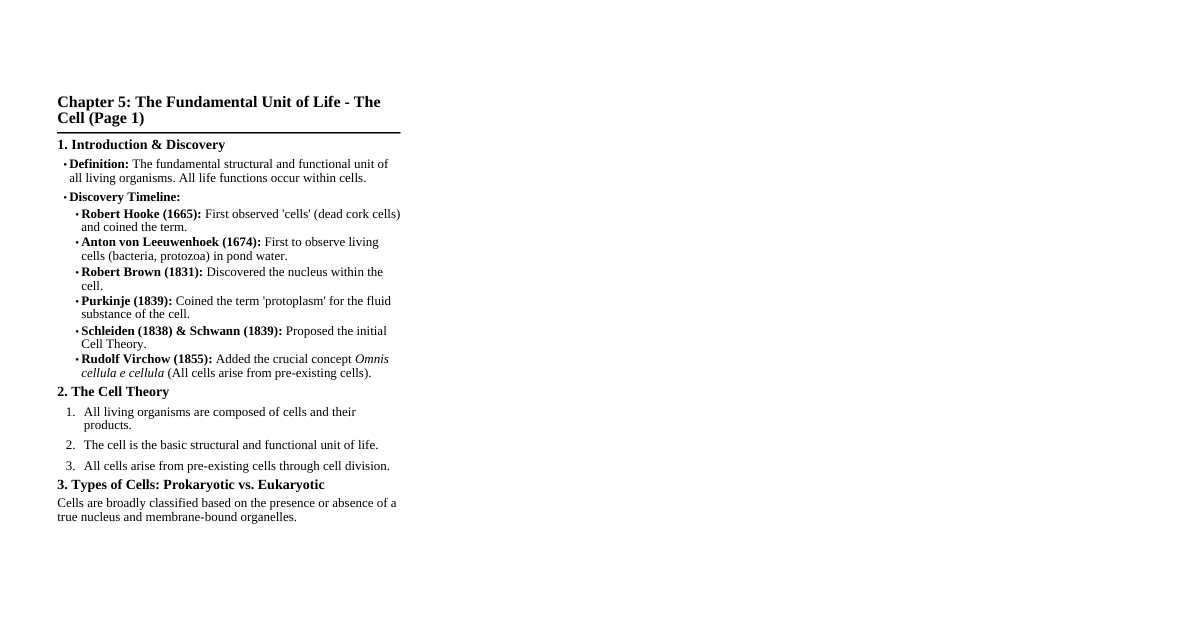
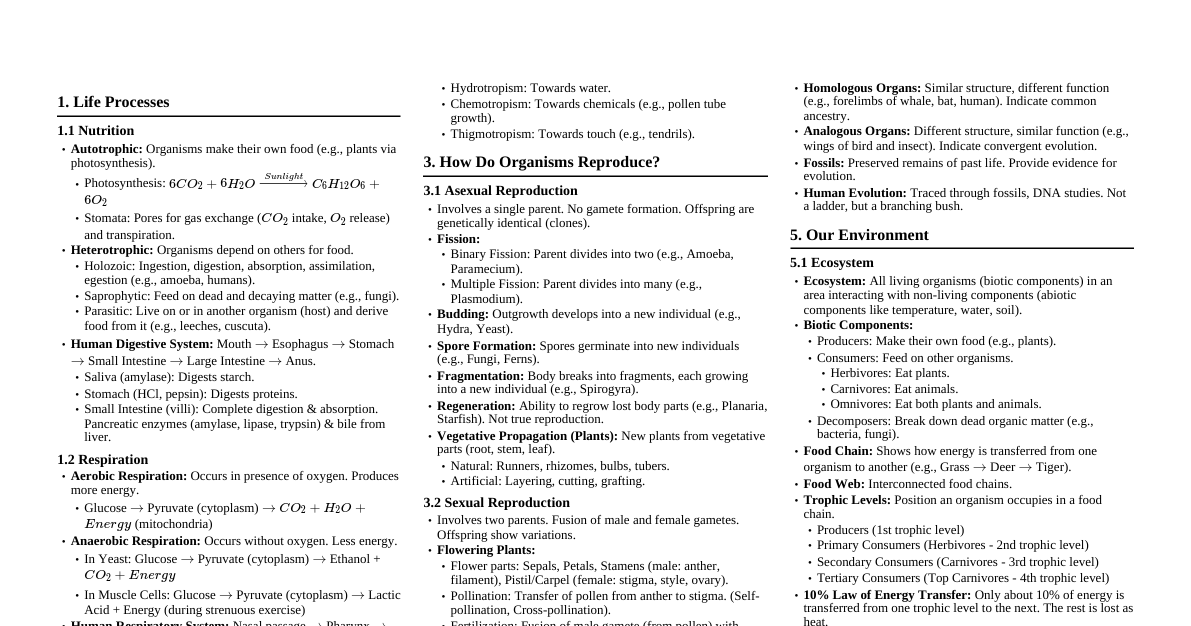
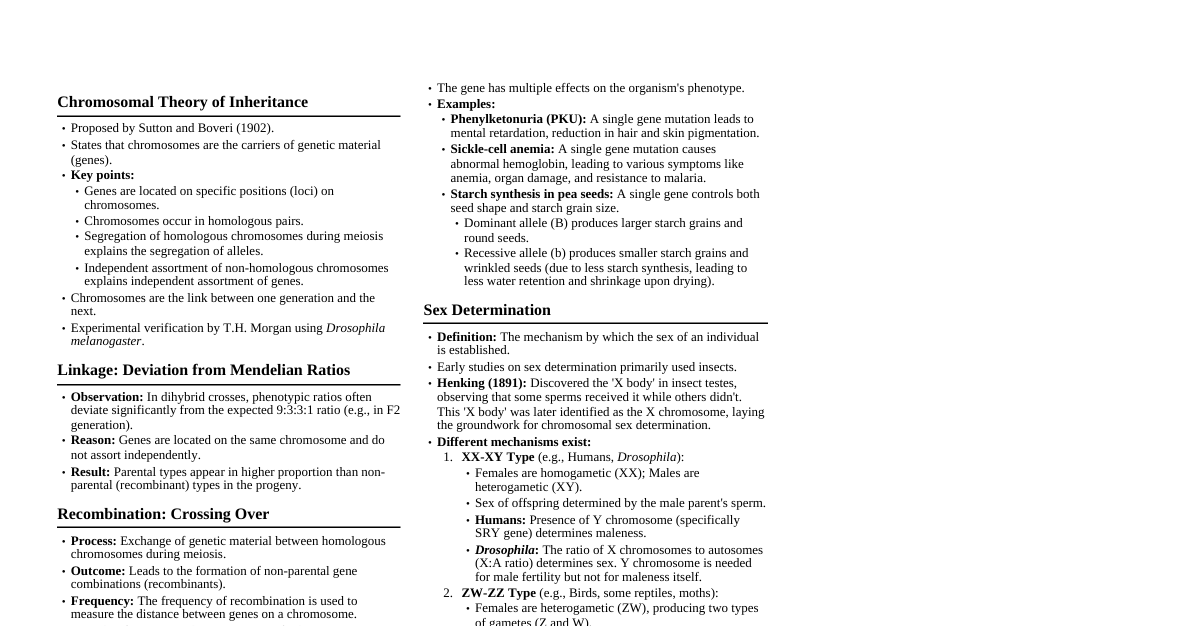
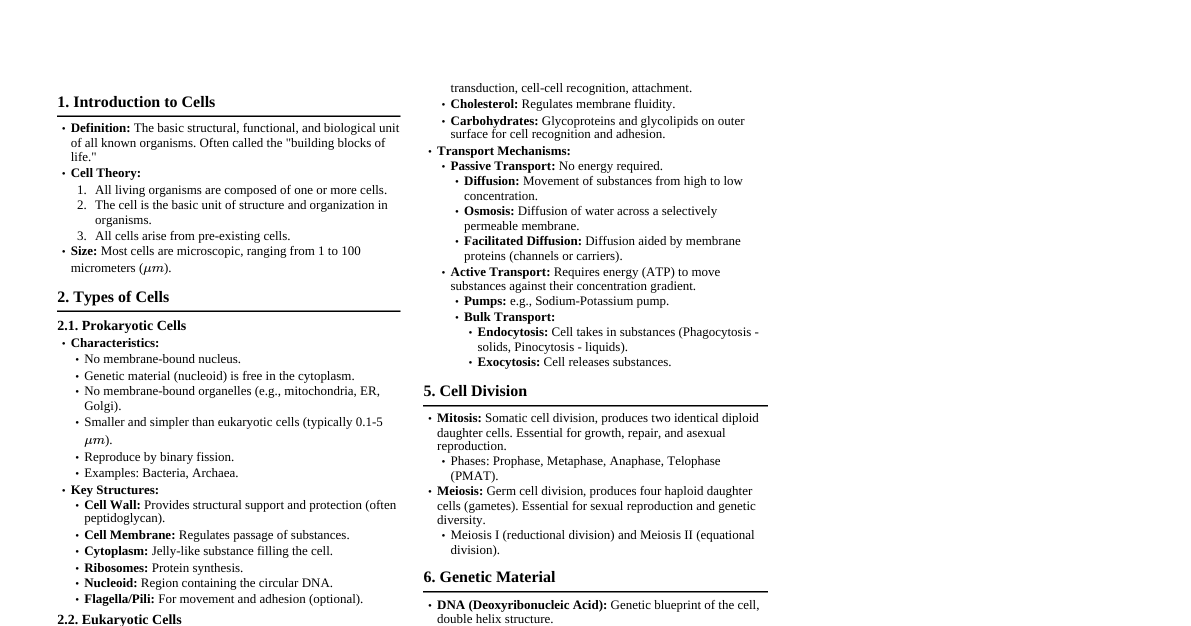
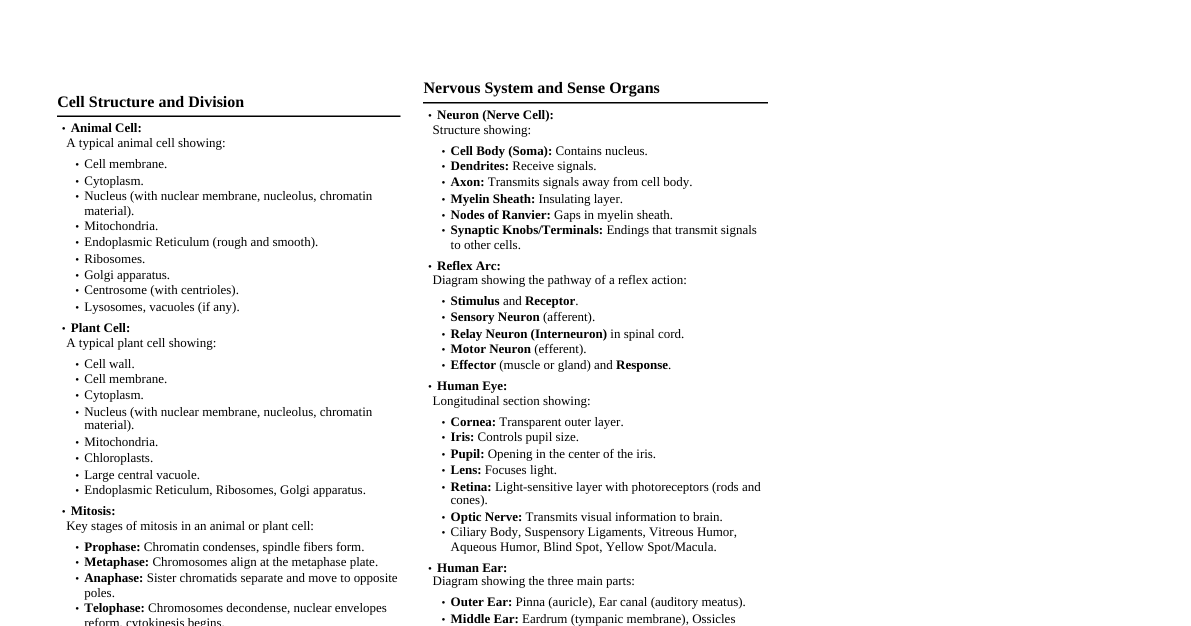
### Genetics Overview Genetics is the study of heredity and variation, focusing on how traits are passed from parents to offspring. It involves two main levels of analysis: Classical Genetics and Molecular Genetics. #### Key Milestones in Genetics - **Gregor Mendel (1860s):** Discovered "Genes and the Rules of Inheritance" through pea plant experiments, laying the foundation for classical genetics. - **Watson and Crick (1953):** Discovered the "Structure of DNA," giving rise to molecular genetics. - **Fredrick Sanger:** Developed methods for protein and DNA sequencing, leading to the Human Genome Project. - **Human Genome Project (2003):** Completed the sequencing of the entire human genome. ### Classical Genetics Classical genetics focuses on visible reproductive outcomes and Mendelian inheritance patterns. #### Key Concepts & Vocabulary - **Gene:** A hereditary factor determining a particular trait, located on a specific DNA sequence on a chromosome (genetic locus). - **Allele:** A particular variant of a gene (e.g., brown vs. blue eye color alleles). - **Genotype:** The specific collection of alleles in an organism's DNA. - **Homozygous:** Two identical alleles for a gene. - **Heterozygous:** Two different alleles for a gene. - **Phenotype:** An organism's observable traits. - **Dominant Allele:** Produces its phenotype whether homozygous or heterozygous. - **Recessive Allele:** Produces its phenotype only when homozygous; masked if heterozygous. - **Carrier:** A heterozygous individual phenotypically normal but carrying a recessive, disease-associated allele. #### Monohybrid Crosses (Single Trait) - Illustrate basic inheritance patterns (e.g., pea shape: round vs. wrinkled). - **Principle of Segregation:** Each gamete carries only one allele for each trait because the two alleles segregate into different gametes during meiosis. - **Punnett Square:** A chart used to predict offspring genotypes and phenotypic ratios. - Example: Crossing homozygous round (RR) with homozygous wrinkled (rr) peas. F1 generation is all heterozygous round (Rr). Self-fertilizing F1 yields 3:1 round:wrinkled in F2. #### Dihybrid Crosses (Two Traits) - Study the inheritance of two different traits simultaneously (e.g., pea shape and color). - **Principle of Independent Assortment:** Alleles for different traits segregate independently of each other during gamete formation. This means traits are not always inherited together. - For N independent factors (genes), the number of possible gametes is $2^N$. - Probability rules can be used for crosses involving multiple traits, multiplying individual probabilities. #### Chromosome Theory of Inheritance - **Genes are located on chromosomes.** - Proposed by Thomas Hunt Morgan based on experiments with *Drosophila melanogaster* (fruit flies). - **Sex-linkage:** Inheritance pattern where genes are located on sex chromosomes (e.g., X-chromosome in fruit flies for eye color). - Males (XY) express recessive X-linked traits more often as they only have one X chromosome. #### Linkage and Genetic Recombination - **Linkage:** Violation of independent assortment when genes for different traits are located close together on the same chromosome. - **Crossing Over:** Exchange of genetic material between homologous chromosomes during meiotic prophase I, leading to **genetic recombination** (new combinations of alleles). - The farther apart two genes are on a chromosome, the more likely a crossover will occur between them. - Maximum recombination frequency is 50%. #### Pedigree Analysis - Used to infer inheritance patterns in humans, as controlled crosses are not possible. - **Autosomal Recessive:** - Affects males and females equally. - Both parents must carry the allele (may be carriers). - Parents may not display the trait. - ~1/4 of children affected if both parents are carriers. - **Autosomal Dominant:** - Affects males and females equally. - Only one parent must carry the allele. - If a child displays the trait, at least one parent must also display it. - ~1/2 of children affected if one parent displays the trait. - **X-linked Recessive:** - Typically affects only males. - Affected male passes allele to daughters, not to sons. - Trait may skip a generation. ### Modern Molecular Genetics Studies the structure, function, and behavior of nucleic acids and genes at the molecular level, building upon classical genetics. #### Deoxyribonucleic Acid (DNA) - **Blueprint of Life:** Contains instructions for an organism to grow, develop, survive, and reproduce by controlling protein synthesis. - **Discovery Timeline:** - **1866 Gregor Mendel:** Identified factors (genes) passed from generation to generation. - **1869 Friedrich Miescher:** Isolated "nuclein" (later DNA) from cell nuclei. - **1881 Albrecht Kossel:** Identified nuclein as a nucleic acid and isolated the five nitrogenous bases (A, C, G, T, U). - **1882 Walther Flemming:** Observed chromosome division (mitosis). - **Early 1900s Theodor Boveri & Walter Sutton:** Proposed the Chromosomal Theory of Inheritance. - **1902 Archibald Edward Garrod:** Linked Mendel's theories to human disease (recessive inheritance). - **1944 Oswald Avery:** Identified DNA as the "transforming principle." - **1944-1950 Erwin Chargaff:** Discovered Chargaff's Rules ($A=T$, $G=C$) and that DNA varies between species. - **Late 1940s Barbara McClintock:** Discovered "jumping genes" (transposons). - **1951 Rosalind Franklin:** X-ray diffraction images (Photo 51) provided critical data for DNA structure. - **1953 Watson and Crick:** Published the double helix model of DNA structure. #### Watson-Crick Model of DNA - **Double Helix Structure:** DNA is a helical molecule. - **Anti-parallel Strands:** Two strands run in opposite directions (5' to 3' and 3' to 5'). - **Sugar-Phosphate Backbone:** Forms the outer structure. - **Base Pairing:** Nitrogenous bases pair in the interior: - Adenine (A) pairs with Thymine (T) via two hydrogen bonds. - Guanine (G) pairs with Cytosine (C) via three hydrogen bonds. - **Chargaff's Rules:** $A=T$ and $G=C$. #### Nucleic Acids: DNA vs. RNA - **Nucleotides:** Building blocks of nucleic acids, each consisting of a nucleobase (purine or pyrimidine), a pentose sugar, and a phosphate group. - **Nucleoside:** Nucleobase + sugar. - **DNA (Deoxyribonucleic Acid):** - **Structure:** Double helix, contains deoxyribose sugar, bases A, T, C, G. - **Role:** Stores genetic information, controls protein synthesis. - **RNA (Ribonucleic Acid):** - **Structure:** Mostly single-stranded, contains ribose sugar, bases A, U (Uracil replaces Thymine), C, G. - **Role:** Involved in protein synthesis. - **mRNA (messenger RNA):** Carries genetic info from DNA to ribosomes for protein synthesis (transcription). - **tRNA (transfer RNA):** Binds to mRNA and amino acids, crucial for translation. - **rRNA (ribosomal RNA):** Forms ribosomes, catalyzes protein assembly. #### DNA Replication - **Bidirectional:** Proceeds in both directions from an **origin of replication**. - **Origins of Replication:** Rich in A-T base pairs (easier to unzipp due to fewer H-bonds). - **Helicase:** Enzyme that unzips and unwinds the DNA double helix at the replication fork. - **DNA Polymerase:** Synthesizes new DNA strands. - Requires an **RNA primer** (synthesized by **primase**) to start, as it can only add nucleotides to an existing 3'-OH end. - Adds nucleotides only in the 5' to 3' direction. - Reads template strand in 3' to 5' direction. - **Leading Strand:** Synthesized continuously in the 5' to 3' direction, towards the replication fork. - **Lagging Strand:** Synthesized discontinuously in short segments called **Okazaki fragments**, away from the replication fork. - **DNA Ligase:** Enzyme that seals the Okazaki fragments. ### Genes and Chromosomes Chromosomes are thread-like structures in the cell nucleus that carry hereditary information (genes). #### Chromosome Structure - **Composition:** DNA tightly coiled around proteins called histones. - **Strasburger (1815):** First described chromosomes. - **Waldeyer (1888):** Coined the term 'chromosome'. - **Visible:** Appear as rod-shaped, dark-stained bodies during metaphase of mitosis. - **Eukaryotic Chromosomes:** Multiple, large, linear, located in the nucleus. - **Parts:** - **Pellicle:** Outer envelope of the chromosome (thin, achromatic). - **Matrix:** Ground substance containing chromonemata (non-genic material). - **Chromonemata:** Two identical, spirally coiled threads within the matrix, each consisting of microfibrils (double helix of DNA). - **Centromere (Primary Constriction/Kinetochore):** A constricted region that holds sister chromatids together. Spindle fibers attach here during cell division. Divides chromosome into "p arm" (short) and "q arm" (long). - **Secondary Constriction/Nucleolar Organiser (NOR):** Additional constrictions useful for identifying chromosomes. Associated with nucleolus. - **Telomeres:** Specialized ends of chromosomes that prevent fusion with other chromosomal segments. #### Types of Chromosomes - **Autosomes:** Non-sex chromosomes (humans have 22 pairs). - **Sex Chromosomes:** Determine sex and carry sex-linked traits (humans have 1 pair: XX for female, XY for male). ##### Based on Number of Centromeres - **Monocentric:** One centromere. - **Dicentric:** Two centromeres. - **Polycentric:** More than two centromeres. - **Acentric:** No centromere (do not survive long). - **Diffused/Non-located:** Indistinct centromere diffused throughout (e.g., some insects). ##### Based on Location of Centromere - **Telocentric:** Rod-shaped, centromere at terminal end (one arm). - **Acrocentric:** Rod-shaped, centromere sub-terminal (one very long arm, one very short). - **Sub-metacentric:** Centromere slightly away from mid-point (unequal arms). - **Metacentric:** V-shaped, centromere in the middle (arms almost equal). #### Function and Significance of Chromosomes - **Genetic Code Storage:** Contain DNA (genes) for organism development and growth. - **Sex Determination:** Sex chromosomes determine biological sex. - **Control of Cell Division:** Ensure correct genetic information is passed to daughter cells during mitosis. - **Protein Formation & Storage:** Direct protein sequences and maintain DNA order. Histones aid in DNA packaging. ### Reproduction Overview Reproduction is the biological process by which new individual organisms are produced from their parents. It can be sexual or asexual. #### Sexual Reproduction - **Definition:** Involves a complex life cycle where new organisms form from the combination of genetic information from two different individuals (sexes). - **Process:** 1. **Gamete Formation:** Reproductive cells (gametes) undergo meiosis to form haploid cells (half chromosomes). Male gametes are typically motile (sperm), female gametes are immobile (egg). 2. **Fertilization:** Two gametes (male and female) combine/fuse to form a diploid zygote. - **Characteristics:** - Requires two parental cells. - Comparatively slower than asexual reproduction. - **Genetic Diversity:** Essential for natural selection and adaptation to environmental conditions, driving speciation. - **Types of Fertilization:** - **Internal Fertilization:** Gametes fuse inside the female organism's body. - **External Fertilization:** Gametes fuse outside the body. - **Types of Gamete Production:** - **Allogamy (Cross-fertilization):** Male and female gametes from two different individuals (sexual dimorphism). - **Autogamy (Self-fertilization):** Male and female gametes from the same individual (hermaphrodite). - **Types of Gamete Fusion:** - **Syngamy:** Nuclei of male and female gametes fuse. - **Conjugation:** Hyphae or plasmids fuse (e.g., in fungi). - **Examples:** Higher organisms (humans, mammals), some fungi, plants. #### Asexual Reproduction - **Definition:** Produces genetically identical offspring from a single parent without gamete fusion or genetic exchange (clones). - **Process:** - Somatic cells act as reproductive units. - Mitosis occurs: genetic material doubles, then divides into two equal halves. - No meiosis or genetic exchange. - **Characteristics:** - Uni-parental process (no mates required). - Rapid reproduction. - **Lack of Genetic Diversity:** Offspring are clones, making them susceptible to similar environmental conditions. - Less resource-intensive. - **Types of Asexual Reproductive Means:** - **Fission:** Parent cell divides into two genetically identical daughter cells (e.g., unicellular organisms). - **Budding:** New daughter organism develops as a bud from the parent, then separates (e.g., some fungi). - **Vegetative Propagation:** New plants form from parts of the plant without seeds/spores (e.g., cuttings). - **Fragmentation:** A new organism forms from a fragment of the parent body. - **Spore Formation:** Cells undergo meiosis to form haploid spores, which develop into multicellular organisms without fertilization (e.g., some plants, algae). - **Parthenogenesis:** An unfertilized egg develops into a new organism without fertilization (e.g., some insects, crustaceans, lizards). - **Examples:** Bacteria, most fungi, some vertebrates (lizards). #### Key Differences (Asexual vs. Sexual Reproduction) | Basis | Asexual Reproduction | Sexual Reproduction | |--------------|---------------------------------------------------------|------------------------------------------------------------------| | **Definition** | No gamete fusion, no genetic exchange; identical offspring. | Gamete fusion, genetic information combination; diverse offspring. | | **Occurs in** | Primitive organisms (bacteria, fungi, primitive plants). | Higher organisms (multicellular animals, some fungi, plants). | | **Complexity** | Less complex. | More complex. | | **Process** | Uni-parental. | Bi-parental (except hermaphrodites). | | **Gametes** | Not involved. | Involved. | | **Reproductive Units** | Somatic cells. | Gametes. | | **Fertilization**| Does not occur. | Occurs (internal or external). | | **Cell Division**| Mitotic divisions only. | Mitotic and meiotic divisions. | | **Chromosomes** | Remain diploid. | Meiosis produces haploid chromosomes. | | **Diversity** | No genetic diversity (clones). | High genetic diversity. | | **Speed** | Rapid. | Slower. | | **Organs** | No specialized reproductive organs. | Specialized reproductive organs. | | **Offspring** | Genetically identical to parent. | Genetically different from parents. | | **Importance** | Continuity of genetic information. | Genetic variation, evolution. | ### Cloning Cloning is the process of producing genetically identical, or virtually identical, individuals or copies. #### Natural Cloning - Occurs in nature (e.g., plants, fungi, bacteria, clonal colonies). - Allows life forms to spread without sexual reproduction. #### Molecular Cloning - **Definition:** Amplifying DNA fragments (genes, non-coding sequences) to produce multiple identical molecules. - **Steps:** 1. **Fragmentation:** Breaking DNA into suitable segments. 2. **Ligation:** "Gluing" DNA fragments into a vector (small piece of DNA, often a plasmid). 3. **Transfection:** Inserting the recombinant DNA into cells. 4. **Screening/Selection:** Identifying cells successfully transfected with the desired DNA. - **Tools:** Restriction enzymes (to cut DNA), DNA ligase (to join DNA), cloning vectors. #### Cell Cloning - **Definition:** Deriving a population of cells from a single cell. - **Unicellular Organisms:** Simple inoculation into appropriate medium. - **Multicellular Organisms:** More arduous due to specific growth requirements. - **Cloning Rings:** Technique to isolate and grow distinct cell lineages from single cells. #### Cloning Stem Cells (Therapeutic Cloning) - **Somatic-Cell Nuclear Transfer (SCNT):** - **Purpose:** To create embryos for research or therapeutic purposes (e.g., to harvest stem cells, study human development, treat disease). - **Process:** 1. Collect somatic cells from the animal to be cloned. 2. Remove maternal DNA from an oocyte (egg cell). 3. Insert the somatic cell nucleus into the enucleated egg cytoplasm, creating a one-cell embryo. 4. Introduce an electrical current to stimulate development. 5. Place successfully developed embryos into a surrogate recipient. - **Ethical Concerns:** Debate over embryo use, destruction of potential life. - **Genetic Implications:** Donor cell's mitochondrial DNA is left behind; resulting clones are not perfect copies. #### Organism Cloning (Reproductive Cloning) - **Definition:** Creating a new multicellular organism genetically identical to another. Asexual method of reproduction. - **"Dolly the Sheep":** First mammal successfully cloned from an adult somatic cell (1996). - Showed that differentiated cells could be reprogrammed to create an entire organism. - High failure rate initially (277 eggs for Dolly). - **Species Cloned:** Tadpole, carp, zebrafish, sheep, mice, rhesus monkey, pig, gaur, cattle, cat, rat, mule, horse, dog, wolf, water buffalo, Pyrenean ibex, camel, Pashmina goat, gastric brooding frog, macaque monkey, black-footed ferret. - **Ethical Issues:** - **Human Cloning:** Creation of a genetically identical human. Highly controversial, legislative bans in many nations. - **Therapeutic vs. Reproductive:** Therapeutic cloning (cells/tissues for medicine) is actively researched; reproductive cloning (entire human) is not pursued by scientists due to ethical and safety concerns. - **Animal Welfare:** High rates of malformations and health issues in cloned animals. - **Religious/Societal Views:** Debates over "playing God," impact on family structures, potential for abuse. ### Assisted Reproductive Technologies (ART) ARTs are various processes used to treat infertility, which is the inability to conceive or give birth to a child. #### Causes of Infertility - Diverse, including congenital, drug-related, diseases, immunological, or psychological factors. - Affects both men and women. #### Types of ART - **In Vitro Fertilization (IVF):** - **Process:** Egg and sperm are combined in a laboratory. The resulting embryo is then transferred into the woman's uterus. - **Steps:** Ovarian stimulation to retrieve eggs, fertilization in lab, embryo culture (2-6 days), embryo transfer. - Most common ART technique. - **Gamete Intrafallopian Transfer (GIFT):** - **Process:** Eggs and sperm are combined in the lab, then immediately implanted into the woman's fallopian tube, allowing fertilization to occur *inside* the body. - Appeals to couples desiring fertilization within the body. - **Zygote Intrafallopian Transfer (ZIFT) / Tubal Embryo Transfer (TET):** - **Process:** Similar to IVF, but the fertilized egg (zygote) is transferred into the fallopian tube (not the uterus) within 24 hours. - **Intracytoplasmic Sperm Injection (ICSI):** - **Process:** A single sperm is directly injected into an egg/ovum. - Used when sperm count is low or sperm have difficulty fertilizing the egg naturally. - **Intrauterine Insemination (IUI):** - **Process:** A man's sperm is directly inserted into a woman's uterus using a narrow tube. - Can be combined with ovulation stimulation. - **Surrogacy:** - **Process:** Another woman carries a baby for a couple. The baby can be conceived with the couple's gametes or donor gametes. - **Donor Eggs/Sperm:** - **Process:** Eggs or sperm from a donor are used for fertilization. - Used when a partner has issues with gamete production or quality. #### Success Rates - Depend on various factors (cause of infertility, age, fertility medications). - Requires high precision techniques, expensive instruments, and trained professionals. #### Ethical Considerations - Debates around the definition of life, genetic manipulation, and the rights of children born via ART. - Adoption is presented as an alternative for couples unable to conceive. ### Cell Overview Cells are the fundamental units of life, the smallest structural and functional units capable of independent function. #### Cell Types - **Prokaryotic Cells:** Simple, lack a membrane-bound nucleus and other organelles (e.g., bacteria). - **Eukaryotic Cells:** Complex, possess a membrane-bound nucleus and various specialized organelles (e.g., animal and plant cells). #### General Cell Composition - **Nucleic Acids:** Genetic material (DNA, RNA). - **Proteins:** Perform most cellular work (structure, enzymes, transport). - **Polysaccharides:** Energy storage, structural components. - **Cell Membrane:** Encloses the cell, controls material exchange. - **Cell Wall (in plant cells):** Rigid outer layer for support and protection. #### Animal Cell - **Characteristics:** - Eukaryotic, lacks a cell wall. - Enclosed by a plasma membrane. - Organelles are enclosed by membranes. - Diverse shapes and sizes, ranging from micrometers to larger (e.g., ostrich egg). - Contain membrane-bound nucleus with DNA. - Specialized cells (nerves, muscles) for movement and response. - **Size & Shape:** Generally smaller than plant cells, irregular shapes due to lack of cell wall. #### Plant Cell - **Characteristics:** - Multicellular eukaryotic cells. - Possess a cell wall (made of cellulose, hemicellulose, pectin). - Have plastids (e.g., chloroplasts for photosynthesis). - Large central vacuole for turgor pressure. - Defined nucleus with specialized organelles. - Generally larger than animal cells, typically rectangular or cuboid. - **Unique Structures:** Cell wall, chloroplasts, large central vacuole. - **Shared Organelles (with animal cells):** Mitochondria, endoplasmic reticulum, Golgi apparatus, ribosomes. #### Cell Organelles and Functions | Organelle | Function | Animal Cell ### Definition The process of sexual reproduction involves the fusion of male and female gametes to form a zygote, which develops into a new individual. This method combines genetic information from two parents, leading to genetic diversity in the offspring. #### Key Characteristics - **Gametes:** Specialized reproductive cells (sperm in males, eggs in females) with a haploid (n) set of chromosomes. - **Fertilization:** The fusion of male and female gametes to form a diploid (2n) zygote. - **Genetic Diversity:** Offspring inherit genetic material from both parents, resulting in unique combinations of traits. - **Meiosis:** A type of cell division that reduces the chromosome number by half in gamete formation, ensuring the zygote has the correct diploid number. - **Biparental:** Typically involves two parents, though self-fertilization (autogamy) can occur in hermaphroditic organisms. - **Slower Process:** Generally takes more time and resources compared to asexual reproduction. #### Types of Fertilization - **Internal Fertilization:** Gametes fuse inside the female's body. Common in terrestrial animals. - **External Fertilization:** Gametes fuse outside the body, usually in an aquatic environment. Common in many aquatic animals. #### Variations in Sexual Reproduction - **Allogamy (Cross-fertilization):** Gametes come from two different individuals, promoting genetic exchange. - **Autogamy (Self-fertilization):** Gametes from the same individual fuse. Occurs in some plants and hermaphroditic animals. - **Syngamy:** The complete fusion of two gametes to form a single cell. - **Conjugation:** A process in some organisms (e.g., bacteria, fungi) where genetic material is exchanged, leading to recombination but not necessarily gamete fusion in the traditional sense. #### Significance - **Evolutionary Advantage:** Genetic diversity allows populations to adapt to changing environments, increasing survival rates and driving evolution. - **Adaptation:** New trait combinations can lead to improved fitness. - **Speciation:** The formation of new species due to genetic changes and reproductive isolation. ### Process in Animals Sexual reproduction in animals involves a complex cycle of mitotic and meiotic cell divisions. #### Steps 1. **Gamete Production:** * Specialized reproductive organs (gonads) produce haploid gametes through meiosis. * Males produce **sperm** (motile male gametes). * Females produce **eggs** (immobile female gametes). 2. **Fertilization:** * Sperm and egg fuse to form a diploid zygote. * Can be internal or external. 3. **Embryonic Development:** * The zygote undergoes repeated mitotic divisions and differentiation to form an embryo, which develops into a new organism. 4. **Growth and Maturation:** * The organism grows, develops, and reaches reproductive maturity. #### Examples - **Humans:** Internal fertilization, long gestation period, parental care. - **Mammals:** Most reproduce sexually with internal fertilization. - **Fish & Amphibians:** Often exhibit external fertilization (e.g., spawning). - **Hermaphrodites:** Some animals (e.g., earthworms, snails) possess both male and female reproductive organs and can self-fertilize or cross-fertilize. ### Process in Plants Sexual reproduction in plants also involves male and female gametes, leading to seed formation. #### Steps 1. **Gamete Production:** * Male reproductive organs (anthers) produce **pollen grains** (male gametes). * Female reproductive parts (ovaries) produce **ovules** or **eggs** (female gametes). 2. **Pollination:** * Transfer of pollen grains from the anther to the stigma of a flower. * Can be **self-pollination** (within the same flower or plant) or **cross-pollination** (between different plants). 3. **Fertilization:** * Pollen grain germinates on the stigma, forming a pollen tube that delivers male gametes to the ovule. * Fusion of male and female gametes forms a zygote. 4. **Seed and Fruit Development:** * The zygote develops into an embryo within a **seed**. * The ovary matures into a **fruit**, enclosing the seeds. 5. **Dispersal and Germination:** * Seeds are dispersed and, under favorable conditions, germinate to grow into new plants. #### Examples - **Flowering Plants (Angiosperms):** Utilize flowers for sexual reproduction, producing seeds enclosed within fruits. - **Conifers (Gymnosperms):** Produce "naked" seeds (not enclosed in a fruit) on cones.