ICSE Class X Biology
Cheatsheet Content
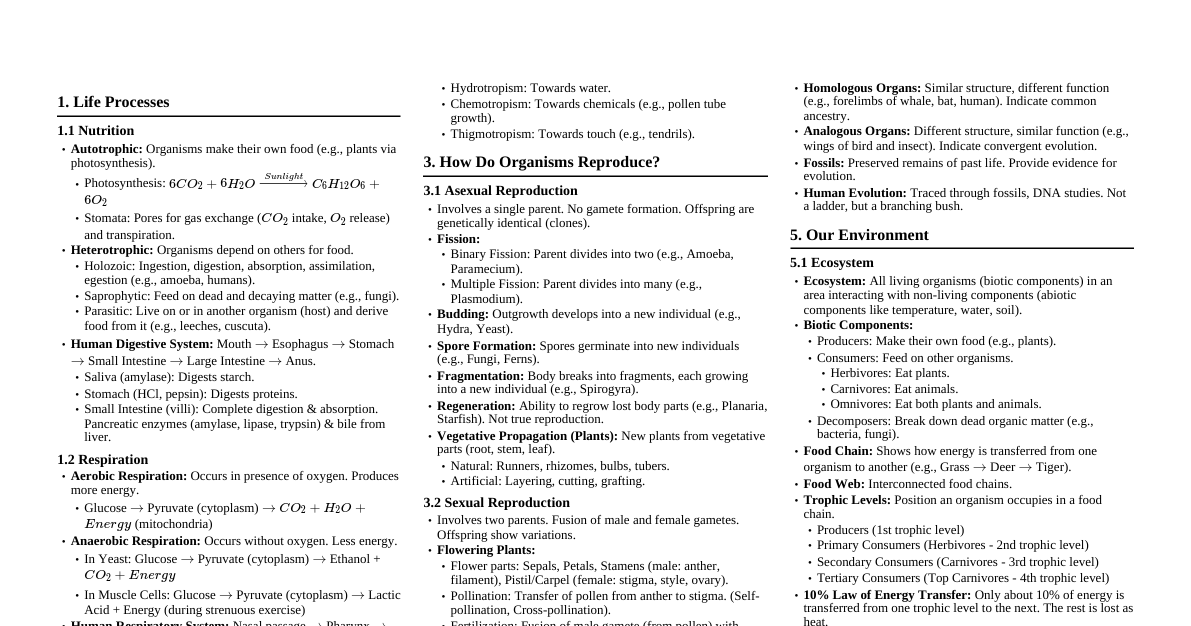
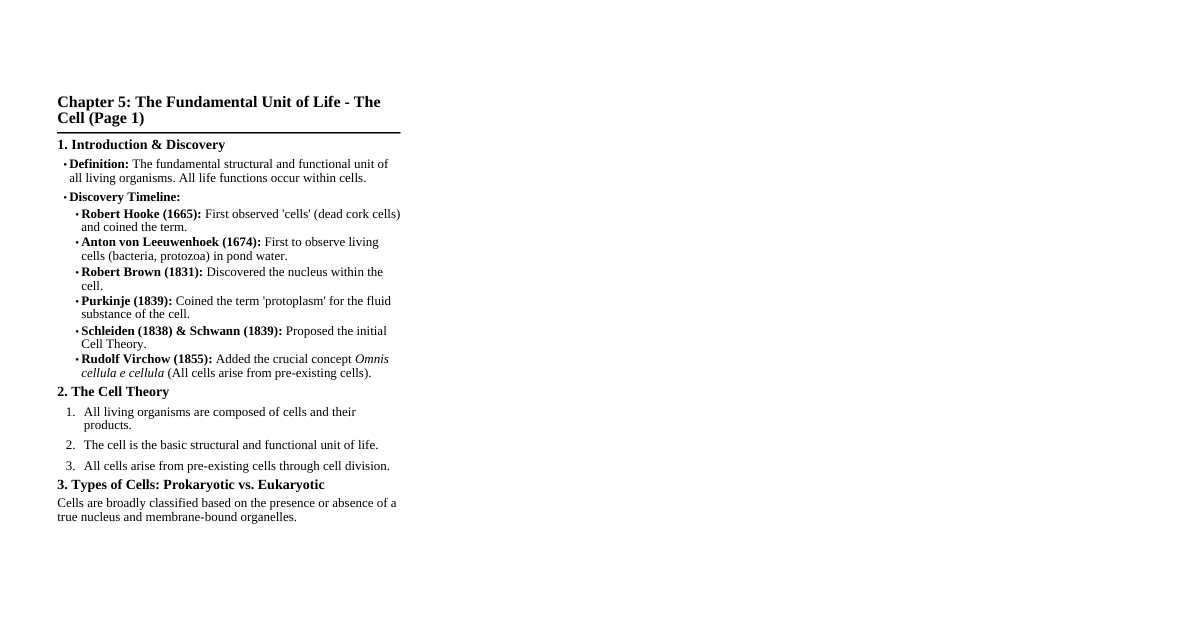
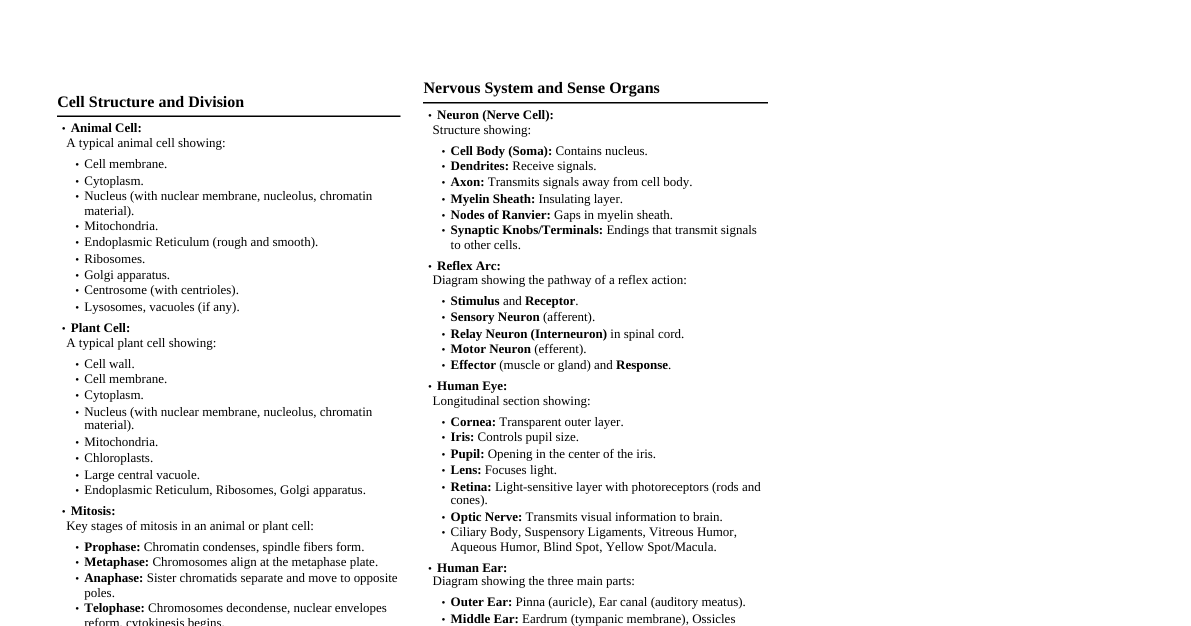
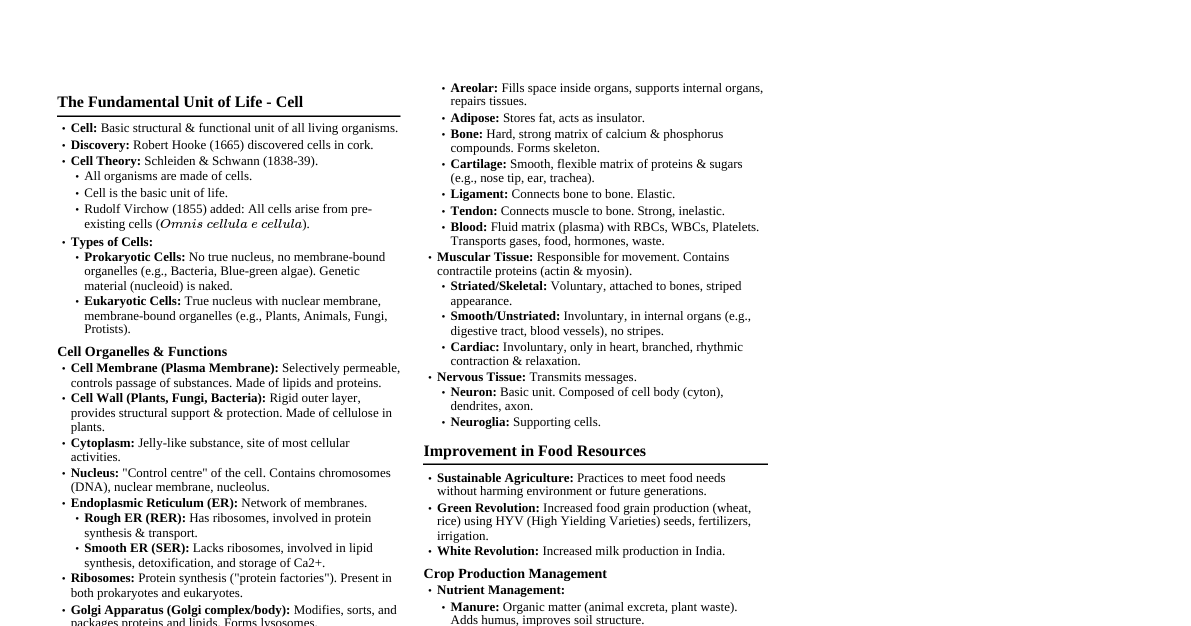
### Basic Biology #### 1. The Cell - The Unit of Life - **Definition:** The fundamental structural and functional unit of all known organisms. - **Prokaryotic vs. Eukaryotic Cells:** - **Prokaryotic:** No true nucleus, no membrane-bound organelles (e.g., bacteria). - **Eukaryotic:** True nucleus, membrane-bound organelles (e.g., plant, animal, fungi). - **Cell Organelles and their Functions:** - **Cell Wall (Plants, Fungi, Bacteria):** Provides structural support and protection. - **Cell Membrane (Plasma Membrane):** Regulates passage of substances in and out of the cell; selectively permeable. - **Cytoplasm:** Jelly-like substance filling the cell, site of many metabolic reactions. - **Nucleus:** Contains genetic material (DNA), controls cell activities. - **Nuclear Membrane:** Double membrane surrounding the nucleus. - **Nucleolus:** Involved in ribosome synthesis. - **Chromatin:** DNA + proteins, condenses into chromosomes during cell division. - **Endoplasmic Reticulum (ER):** Network of membranes. - **Rough ER (RER):** Has ribosomes, involved in protein synthesis and modification. - **Smooth ER (SER):** No ribosomes, involved in lipid synthesis, detoxification. - **Ribosomes:** Sites of protein synthesis. - **Mitochondria:** "Powerhouse of the cell," site of aerobic respiration and ATP production. - **Golgi Apparatus (Golgi Complex/Body):** Modifies, sorts, and packages proteins and lipids for secretion or delivery to other organelles. - **Lysosomes:** "Suicide bags," contain digestive enzymes to break down waste materials and cellular debris. - **Vacuoles:** Storage sacs for water, nutrients, waste. Large central vacuole in plant cells. - **Plastids (Plants):** - **Chloroplasts:** Site of photosynthesis, contain chlorophyll. - **Chromoplasts:** Contain pigments (e.g., yellow, orange, red). - **Leucoplasts:** Colorless, store food (e.g., starch). - **Centrosome (Animal Cells):** Involved in cell division, forms spindle fibers. - **Plant vs. Animal Cell Differences:** | Feature | Plant Cell | Animal Cell | |-----------------|--------------------------------------|--------------------------------------| | Cell Wall | Present | Absent | | Chloroplasts | Present | Absent | | Vacuole | Large, central, permanent | Small, temporary, many | | Centrosome | Absent (except lower plants) | Present | | Shape | Fixed, rectangular | Irregular, rounded | | Reserve Food | Starch | Glycogen | #### 2. Tissues - **Definition:** A group of similar cells that perform a specific function. - **Plant Tissues:** - **Meristematic Tissues:** Actively dividing cells, responsible for growth. - **Apical Meristem:** At tips of roots and shoots, increases length. - **Lateral Meristem (Cambium):** Increases girth (width) of stem/root. - **Intercalary Meristem:** At base of leaves/internodes, found in grasses. - **Permanent Tissues:** Derived from meristematic tissues, have lost ability to divide. - **Simple Permanent Tissues:** - **Parenchyma:** Most common, thin-walled, living cells, storage, photosynthesis. - **Collenchyma:** Living, thick-walled at corners, provides mechanical support (e.g., leaf stalks). - **Sclerenchyma:** Dead, thick-walled, lignified cells, provides strength and rigidity (e.g., fibers, sclereids). - **Complex Permanent Tissues (Vascular Tissues):** - **Xylem:** Conducts water and minerals from roots to leaves. Composed of tracheids, vessels, xylem parenchyma, xylem fibers. - **Phloem:** Conducts prepared food from leaves to other parts of the plant. Composed of sieve tubes, companion cells, phloem parenchyma, phloem fibers. - **Animal Tissues:** - **Epithelial Tissue:** Covers body surfaces, lines cavities and organs, protection, secretion, absorption. - **Squamous:** Flat, thin cells (e.g., lining of blood vessels). - **Cuboidal:** Cube-shaped (e.g., kidney tubules). - **Columnar:** Tall, column-shaped (e.g., lining of intestine), often with cilia or microvilli. - **Glandular:** Specialized for secretion. - **Connective Tissue:** Connects and supports other tissues and organs. - **Areolar:** Fills spaces, supports organs. - **Adipose:** Stores fat, insulation. - **Bone:** Hard, calcified matrix, support, protection. - **Cartilage:** Flexible support (e.g., nose, ear). - **Blood:** Fluid matrix (plasma), transports substances. Contains RBCs, WBCs, platelets. - **Muscular Tissue:** Responsible for movement. - **Striated (Skeletal):** Voluntary, attached to bones, striped appearance. - **Unstriated (Smooth):** Involuntary, in internal organs (e.g., digestive tract), no striations. - **Cardiac:** Involuntary, only in heart, branched, striated, intercalated discs. - **Nervous Tissue:** Transmits nerve impulses. - **Neurons:** Basic unit, consists of cell body, dendrites, axon. - **Neuroglia:** Support and protect neurons. ### Plant Physiology #### 1. Photosynthesis - **Definition:** The process by which green plants and some other organisms use sunlight to synthesize foods with the help of chlorophyll. - **Equation:** $6CO_2 + 6H_2O + \text{Light Energy} \xrightarrow{\text{Chlorophyll}} C_6H_{12}O_6 + 6O_2$ - **Site:** Chloroplasts, specifically in the thylakoids (light reactions) and stroma (dark reactions). - **Raw Materials:** Carbon dioxide ($CO_2$), Water ($H_2O$). - **Products:** Glucose ($C_6H_{12}O_6$), Oxygen ($O_2$), Water. - **Stages:** - **Light-Dependent Reactions:** Occur in thylakoids. - Light energy is absorbed by chlorophyll. - Water is split (photolysis) into protons ($H^+$), electrons ($e^-$), and oxygen ($O_2$). - ATP (energy currency) and NADPH (reducing power) are formed. - **Light-Independent Reactions (Calvin Cycle/Dark Reactions):** Occur in stroma. - $CO_2$ is fixed (incorporated into organic molecules). - ATP and NADPH from light reactions are used to convert $CO_2$ into glucose. - **Factors Affecting Photosynthesis:** - **Light Intensity:** Increases with intensity up to a saturation point. - **Carbon Dioxide Concentration:** Increases with concentration up to a saturation point. - **Temperature:** Optimal range (e.g., $25-35^\circ C$), rates decrease outside this range. - **Water Availability:** Deficiency can reduce rate. - **Chlorophyll Content:** Higher content, higher rate. - **Adaptations of Leaf for Photosynthesis:** Large surface area, thin, stomata for gas exchange, extensive vein network, chloroplasts in palisade cells. #### 2. Absorption by Roots - **Root Hair:** Specialized epidermal cells, increase surface area for absorption. - **Mechanism of Water Absorption:** - **Imbibition:** Initial absorption of water by solid particles (e.g., cell wall). - **Diffusion:** Movement of molecules from higher to lower concentration. - **Osmosis:** Movement of water molecules from a region of higher water potential to a region of lower water potential across a semi-permeable membrane. - **Turgor Pressure:** Pressure exerted by cell sap on the cell wall when a plant cell absorbs water and swells. - **Flaccidity:** State where cell loses water, cytoplasm shrinks from cell wall. - **Plasmolysis:** Severe loss of water, protoplast shrinks completely from cell wall. - **Mechanism of Mineral Absorption:** - **Passive Absorption:** Diffusion, facilitated diffusion (no energy required). - **Active Absorption:** Requires energy (ATP) to move ions against concentration gradient. #### 3. Transpiration - **Definition:** The loss of water vapor from the aerial parts of a plant, primarily through stomata. - **Types of Transpiration:** - **Stomatal Transpiration:** Through stomata (most significant). - **Cuticular Transpiration:** Through cuticle (waxy layer on epidermis). - **Lenticular Transpiration:** Through lenticels (small pores on woody stems). - **Significance:** - **Cooling Effect:** Evaporation cools the plant. - **Transpirational Pull:** Creates a suction force that helps draw water up from roots to leaves (ascension of sap). - **Distribution of Minerals:** Helps transport dissolved minerals. - **Factors Affecting Transpiration:** - **Environmental Factors:** - **Humidity:** Decreases with high humidity. - **Temperature:** Increases with higher temperature. - **Wind Speed:** Increases with higher wind speed. - **Light Intensity:** Increases with higher light intensity (stomata open). - **Plant Factors:** - **Stomatal Density:** More stomata, higher rate. - **Cuticle Thickness:** Thicker cuticle, lower rate. - **Leaf Area:** Larger area, higher rate. - **Adaptations to Reduce Transpiration:** Thick cuticle, sunken stomata, rolled leaves, reduced leaf surface area (spines). #### 4. Chemical Coordination in Plants (Plant Hormones/Phytohormones) - **Auxins:** Promote cell elongation, apical dominance, root initiation. - **Gibberellins:** Promote stem elongation, seed germination, flowering. - **Cytokinins:** Promote cell division, delay leaf senescence (aging). - **Abscisic Acid (ABA):** Growth inhibitor, promotes dormancy, stomatal closure under stress. - **Ethylene:** Gaseous hormone, promotes fruit ripening, leaf abscission (shedding). ### Human Anatomy & Physiology #### 1. Circulatory System - **Components:** Blood, blood vessels, heart. - **Blood:** - **Plasma:** Fluid matrix (55% of blood), transports nutrients, hormones, waste. - **Red Blood Cells (Erythrocytes):** Biconcave, anucleated, contain hemoglobin for oxygen transport. - **White Blood Cells (Leukocytes):** Part of immune system. - **Granulocytes:** Neutrophils, Eosinophils, Basophils. - **Agranulocytes:** Lymphocytes (B & T cells), Monocytes. - **Platelets (Thrombocytes):** Involved in blood clotting. - **Blood Vessels:** - **Arteries:** Carry oxygenated blood away from the heart (except pulmonary artery). Thick, elastic, muscular walls. - **Veins:** Carry deoxygenated blood towards the heart (except pulmonary vein). Thin walls, contain valves to prevent backflow. - **Capillaries:** Microscopic, thin-walled vessels, site of exchange of gases, nutrients, waste. - **Heart:** Four-chambered muscular organ, pumps blood. - **Structure:** Right atrium, right ventricle, left atrium, left ventricle. - **Valves:** Tricuspid (R. atrium to R. ventricle), Bicuspid/Mitral (L. atrium to L. ventricle), Pulmonary (R. ventricle to pulmonary artery), Aortic (L. ventricle to aorta). - **Cardiac Cycle:** Sequence of events in one heartbeat (atrial systole, ventricular systole, joint diastole). - **Double Circulation:** Pulmonary circulation (heart to lungs and back) and Systemic circulation (heart to body and back). - **Heartbeat:** Initiated by SA node (pacemaker), conducted through AV node, Bundle of His, Purkinje fibers. - **Blood Pressure:** Pressure exerted by blood on artery walls. Systolic/Diastolic (e.g., 120/80 mmHg). - **Lymphatic System:** Lymph, lymph vessels, lymph nodes. Collects tissue fluid, returns it to blood, part of immune system. #### 2. Excretory System - **Definition:** Removal of metabolic waste products from the body. - **Components:** Kidneys, ureters, urinary bladder, urethra. - **Kidneys:** Pair of bean-shaped organs, filter blood, produce urine. - **Structure:** Cortex, medulla, renal pelvis. - **Nephron:** Functional unit of kidney. - **Malpighian Corpuscle:** Glomerulus (capillary network) + Bowman's capsule (cup-shaped structure). - **Renal Tubule:** Proximal convoluted tubule (PCT), Loop of Henle, Distal convoluted tubule (DCT), Collecting duct. - **Urine Formation:** - **Ultrafiltration:** Blood filtered in glomerulus, forms glomerular filtrate. - **Selective Reabsorption:** Useful substances (glucose, amino acids, some salts, most water) reabsorbed from filtrate in renal tubule. - **Tubular Secretion:** Waste products (excess ions, drugs) secreted from blood into filtrate. - **Composition of Urine:** Water, urea, uric acid, creatinine, mineral salts. - **Regulation of Urine Output:** - **Antidiuretic Hormone (ADH/Vasopressin):** Increases water reabsorption, reduces urine volume. - **Aldosterone:** Increases sodium and water reabsorption. - **Dialysis (Artificial Kidney):** Used for kidney failure to filter blood. #### 3. Nervous System - **Definition:** Coordinates and controls all body activities. - **Components:** Brain, spinal cord, nerves. - **Neuron:** Structural and functional unit. - **Cell Body (Soma):** Contains nucleus. - **Dendrites:** Receive impulses. - **Axon:** Transmits impulses away from cell body. - **Myelin Sheath:** Insulating layer, increases speed of impulse. - **Synapse:** Junction between two neurons. - **Types of Neurons:** Sensory, Motor, Relay/Interneuron. - **Central Nervous System (CNS):** - **Brain:** - **Cerebrum:** Largest part, conscious thought, memory, voluntary actions, senses. - **Cerebellum:** Coordinates muscular activities, balance, posture. - **Medulla Oblongata:** Controls involuntary actions (heartbeat, breathing, swallowing, vomiting). - **Spinal Cord:** Connects brain to rest of body, controls reflexes. - **Peripheral Nervous System (PNS):** Nerves extending from CNS. - **Somatic Nervous System:** Voluntary control of skeletal muscles. - **Autonomic Nervous System:** Involuntary control of internal organs. - **Sympathetic:** "Fight or flight" response. - **Parasympathetic:** "Rest and digest" response. - **Reflex Action:** Automatic, involuntary response to a stimulus (e.g., touching a hot object). - **Reflex Arc:** Pathway of nerve impulses during a reflex. (Receptor $\rightarrow$ Sensory Neuron $\rightarrow$ Spinal Cord/CNS $\rightarrow$ Motor Neuron $\rightarrow$ Effector). #### 4. Endocrine System (Chemical Coordination) - **Definition:** Glands that secrete hormones directly into the bloodstream. - **Hormones:** Chemical messengers that regulate various body functions. - **Major Endocrine Glands:** - **Pituitary Gland:** "Master gland," secretes growth hormone (GH), TSH, FSH, LH, ADH, Oxytocin. - **Thyroid Gland:** Secretes Thyroxine (regulates metabolism), Calcitonin (lowers blood calcium). - **Parathyroid Glands:** Secrete Parathormone (raises blood calcium). - **Pancreas:** - **Islets of Langerhans:** Secrete Insulin (lowers blood glucose) and Glucagon (raises blood glucose). - **Adrenal Glands:** - **Cortex:** Corticosteroids (e.g., Cortisol - stress response, metabolism). - **Medulla:** Adrenaline (Epinephrine) and Noradrenaline (Norepinephrine) - "fight or flight." - **Gonads:** - **Testes (Males):** Testosterone (male secondary sexual characteristics). - **Ovaries (Females):** Estrogen and Progesterone (female secondary sexual characteristics, menstrual cycle, pregnancy). - **Feedback Mechanism:** Regulation of hormone secretion (e.g., high glucose $\rightarrow$ insulin release $\rightarrow$ glucose lowered $\rightarrow$ insulin release inhibited). #### 5. Reproductive System - **A. Male Reproductive System:** - **Testes:** Produce sperm and testosterone. - **Epididymis:** Stores and matures sperm. - **Vas Deferens:** Transports sperm. - **Seminal Vesicles, Prostate Gland, Bulbourethral Glands:** Produce seminal fluid. - **Urethra:** Common passage for urine and semen. - **Penis:** External reproductive organ. - **B. Female Reproductive System:** - **Ovaries:** Produce ova (eggs) and female hormones (estrogen, progesterone). - **Oviducts (Fallopian Tubes):** Site of fertilization, transport egg to uterus. - **Uterus:** Site of fetal development. - **Cervix:** Lower, narrow part of uterus. - **Vagina:** Receives sperm, birth canal. - **Vulva:** External genitalia. - **Menstrual Cycle:** Monthly cycle in females involving changes in uterus and ovaries, preparing for pregnancy. - **Phases:** Menstrual, Follicular (proliferative), Ovulatory, Luteal (secretory). - **Fertilization:** Fusion of male and female gametes (sperm and egg), usually in fallopian tube. - **Implantation:** Attachment of embryo to uterine wall. - **Gestation:** Period of development of fetus in uterus. - **Placenta:** Organ connecting fetus to uterine wall, provides nutrients, oxygen, removes waste. - **Parturition:** Childbirth. - **Reproductive Health:** - **STDs (Sexually Transmitted Diseases):** HIV/AIDS, Syphilis, Gonorrhea, Herpes. - **Population Control Methods:** Contraception (physical barriers, chemical, hormonal, surgical). #### 6. Sense Organs - **Eye:** Organ of sight. - **Structure:** Sclera, Choroid, Retina (rods for dim light, cones for color), Cornea, Iris, Pupil, Lens, Optic Nerve. - **Accommodation:** Ability of lens to change shape to focus on objects at different distances. - **Defects of Vision:** Myopia (nearsightedness), Hypermetropia (farsightedness), Presbyopia, Astigmatism. - **Ear:** Organ of hearing and balance. - **Structure:** - **Outer Ear:** Pinna, Auditory Canal. - **Middle Ear:** Eardrum, Ossicles (Malleus, Incus, Stapes), Eustachian Tube. - **Inner Ear:** Cochlea (hearing), Semicircular Canals (balance), Auditory Nerve. - **Skin:** Organ of touch, temperature, pressure, pain. Also protects, regulates temperature, excretes. - **Tongue:** Organ of taste (taste buds). - **Nose:** Organ of smell (olfactory receptors). ### Health & Hygiene #### 1. Human Population - **Population Growth:** Factors affecting (birth rate, death rate, migration). - **Population Explosion:** Rapid increase in population, consequences (resource depletion, unemployment, pollution). - **Population Control:** Education, family planning, availability of contraceptives. #### 2. Communicable Diseases - **Definition:** Diseases that can be transmitted from person to person. - **Modes of Transmission:** Direct contact, indirect contact (fomites), vectors (mosquitoes, flies), airborne, waterborne. - **Common Diseases:** - **Bacterial:** Typhoid, Cholera, Tuberculosis (TB), Pneumonia. - **Viral:** Common Cold, Influenza, Measles, Mumps, Polio, Dengue, Chikungunya, HIV/AIDS. - **Protozoal:** Malaria, Amoebiasis. - **Fungal:** Ringworm. - **Immunity:** Body's ability to resist disease. - **Innate Immunity:** Non-specific, present from birth (skin, mucous membranes, phagocytes). - **Acquired Immunity:** Specific, develops after exposure to pathogen. - **Active Immunity:** Body produces its own antibodies (natural infection, vaccination). - **Passive Immunity:** Antibodies received from another source (mother to fetus, antitoxins). - **Vaccination:** Introduction of attenuated or killed pathogens to stimulate active immunity. #### 3. Non-Communicable Diseases - **Definition:** Diseases that are not transmitted from person to person. - **Causes:** Genetic, lifestyle, environmental factors. - **Examples:** Diabetes, Hypertension (high blood pressure), Heart disease, Cancer, Allergies, Asthma. #### 4. Adolescence and Drug Abuse - **Adolescence:** Period of transition from childhood to adulthood, characterized by physical, mental, emotional, and social changes. - **Drug Abuse:** Misuse of drugs for non-medical purposes. - **Common Drugs:** Alcohol, Nicotine (tobacco), Opioids (morphine, heroin), Cannabis (marijuana), Stimulants (cocaine), Hallucinogens. - **Effects:** Physical (organ damage, addiction), Mental (depression, anxiety), Social (crime, violence), Economic. - **Prevention:** Education, counseling, peer support. ### Ecology & Evolution #### 1. Pollution - **Definition:** Contamination of the environment by harmful substances. - **Types of Pollution:** - **Air Pollution:** Release of harmful gases and particulates (e.g., $SO_2$, $NO_x$, $CO$, SPM). Causes acid rain, global warming, respiratory diseases. - **Water Pollution:** Contamination of water bodies (e.g., industrial waste, sewage, pesticides). Causes waterborne diseases, eutrophication. - **Soil Pollution:** Contamination of soil (e.g., industrial waste, pesticides, plastic). Affects soil fertility, crop yield. - **Noise Pollution:** Excessive or unwanted sound. Causes stress, hearing loss. - **Radioactive Pollution:** Contamination by radioactive materials. Causes genetic mutations, cancer. - **Control Measures:** - **Reduce, Reuse, Recycle.** - Waste treatment (sewage, industrial). - Use of renewable energy. - Afforestation. - Strict environmental laws. #### 2. Evolution - **Definition:** The process by which different kinds of living organisms are thought to have developed and diversified from earlier forms during the history of the earth. - **Evidences of Evolution:** - **Homologous Organs:** Similar structure, different function (e.g., forelimbs of whale, human, bat). Suggests common ancestry. - **Analogous Organs:** Different structure, similar function (e.g., wings of bird and insect). Suggests convergent evolution. - **Vestigial Organs:** Reduced, non-functional organs (e.g., appendix, wisdom teeth in humans). - **Fossils:** Preserved remains of ancient organisms, show evolutionary changes over time. - **Embryology:** Similarities in embryonic development among different species. - **Molecular Biology:** Similarities in DNA and protein sequences. - **Theories of Evolution:** - **Lamarck's Theory of Inheritance of Acquired Characters:** Organisms acquire traits during their lifetime due to use/disuse, and these traits are passed to offspring (disproven). - **Darwin's Theory of Natural Selection:** - **Overproduction:** Organisms produce more offspring than can survive. - **Variation:** Individuals within a population show variations. - **Struggle for Existence:** Competition for resources. - **Survival of the Fittest (Natural Selection):** Individuals with favorable variations are better adapted to their environment and survive to reproduce. - **Inheritance of Favorable Variations:** These variations are passed on, leading to gradual change and evolution of new species. - **Speciation:** Formation of new species.