Claude Science Just Launched. Researchers Who Need TikZ Figures, LaTeX-Native Output, and RDKit Reaction Mechanisms Are Still Reaching for These Tools.
Jul 1, 2026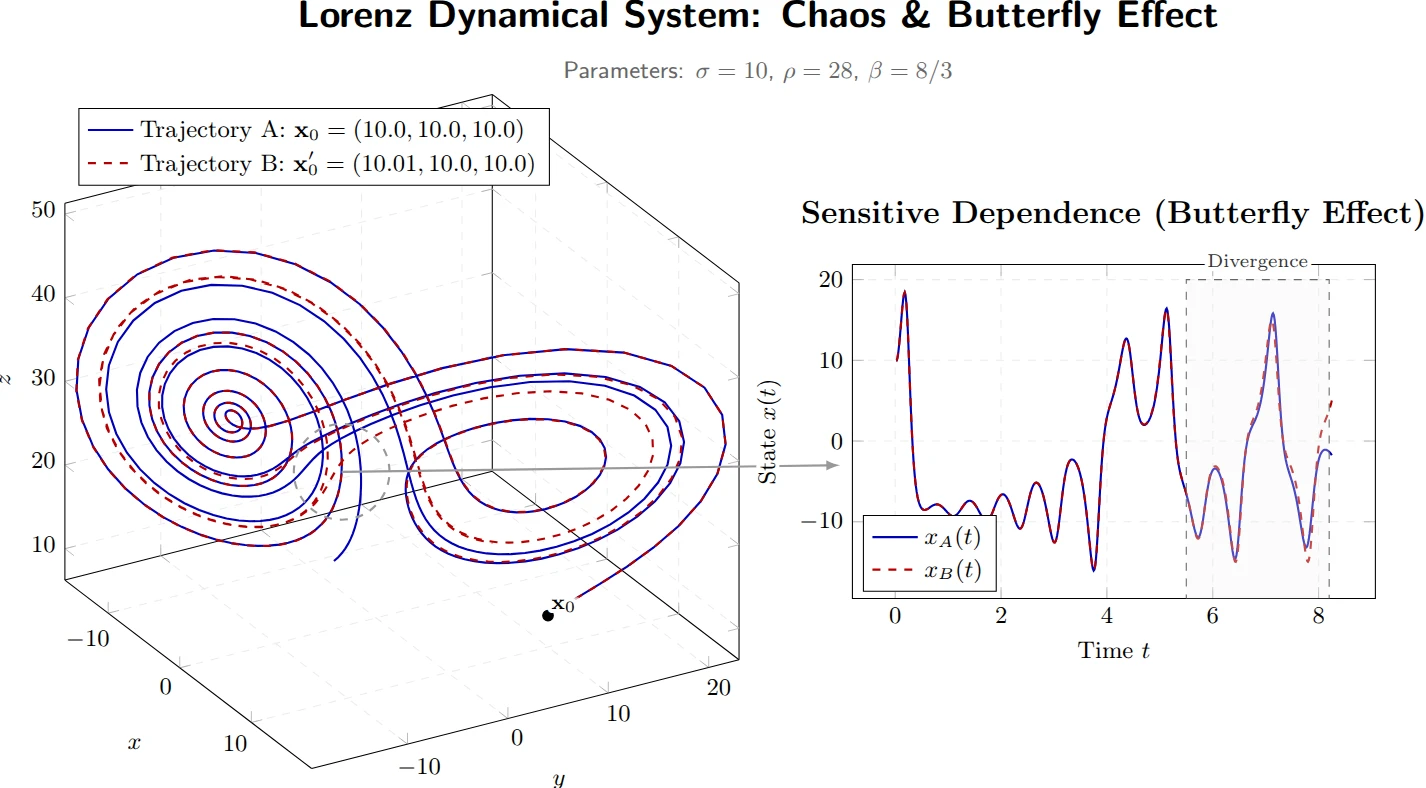
Key Points
Claude Science (launched June 30, 2026) is a major step forward for AI-assisted research — integrating 60+ scientific databases, HPC compute management, and full reproducibility tracking into a single workflow, with a focus on computational biology and drug development.
Certain research tasks require tools built for a different level of precision: LaTeX-native figures that go directly into manuscripts, RDKit-verified reaction mechanisms drawn to ACS publication standards, and multi-model verification for STEM calculations where errors cannot propagate.
The two tools address different research needs. For many researchers, using both is the complete stack.
The launch of Claude Science on June 30, 2026 is one of the most significant product releases in AI research tooling this year. Anthropic built something researchers have been waiting for: a single environment that connects scientific databases, handles HPC compute infrastructure, and tracks reproducibility from first query to final figure. MIT Technology Review called it Anthropic's newest flagship product, putting it in the same tier as Claude Code.
Claude Science is particularly strong in computational biology and drug development — the databases, compute integrations, and built-in agents are calibrated for researchers working in genomics, proteomics, protein structure prediction, and molecular medicine. That is a deliberate and well-executed focus.
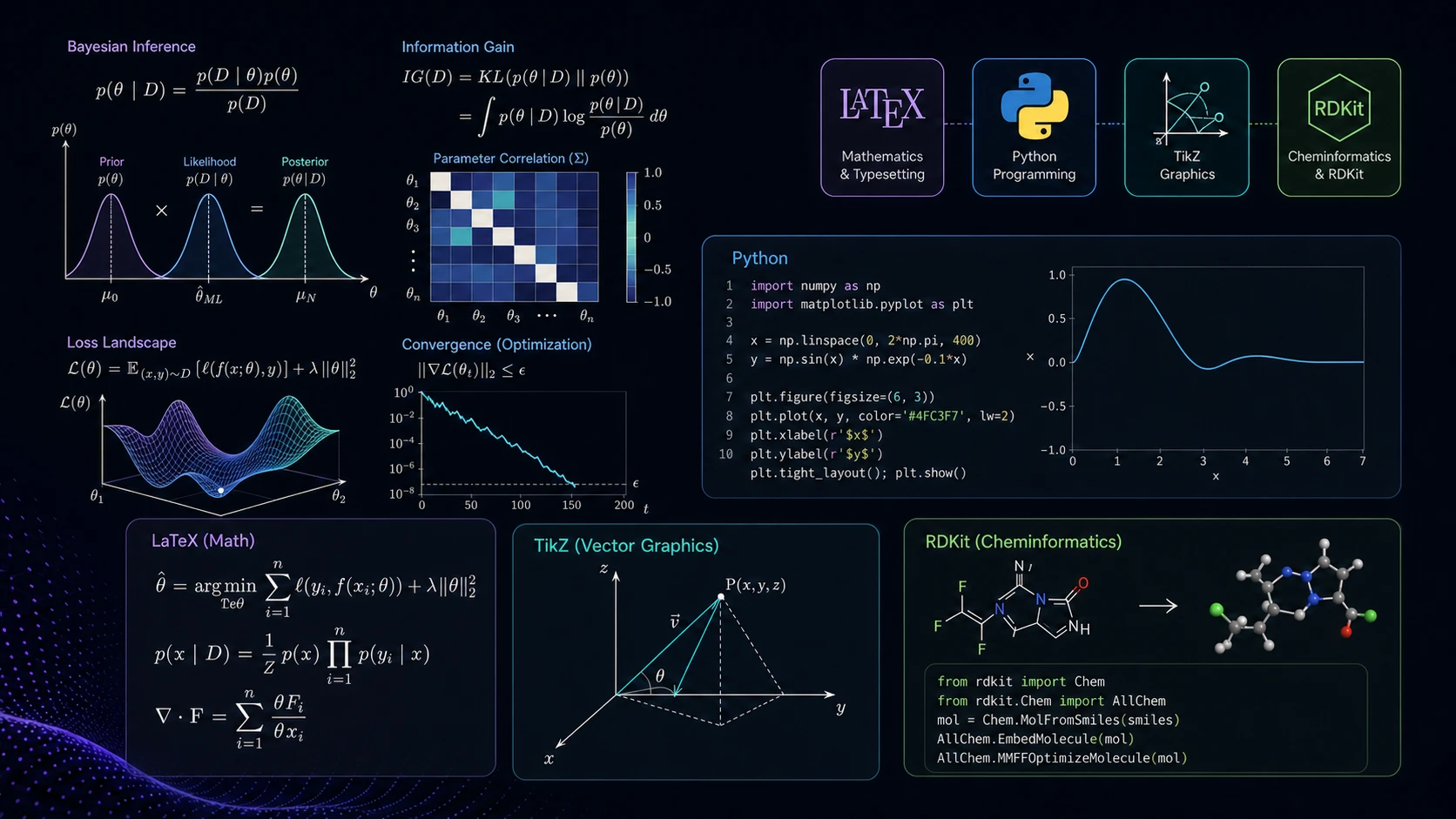
GPAI is built for what comes next in the research workflow — and for the STEM fields outside that focus. TikZ figures that are LaTeX-native by design. RDKit-computed reaction mechanisms that pass peer review. Calculation verification across physics, mathematics, chemistry, and engineering. The platform covers this as an integrated whole — not as separate add-ons, but as the core of what GPAI does.
What Claude Science Does
Claude Science is designed around three capabilities that address real research friction.
Integrated workflow. It brings together the tools researchers actually use — PubMed, Jupyter, R, HPC cluster terminals — in a single environment. End-to-end analysis without application switching: single-cell RNA sequencing, CRISPR screen design, protein structure prediction, genomic epidemiology.
Database connectivity at scale. More than 60 scientific databases pre-configured: UniProt, PDB, ChEMBL, GEO, Ensembl, Reactome, ClinVar, and others across genomics, proteomics, structural biology, and cheminformatics. Natural language queries; specialist agents synthesizing results across sources.
Reproducibility as a first-class feature. Every figure Claude Science generates ships with the exact code and environment that produced it, plus full message history. Results reproducible months later. A reviewer agent that checks citations and flags numbers without traceable sources.
The platform also manages compute resources from laptop to HPC cluster to on-demand GPU, and integrates NVIDIA BioNeMo models (Evo 2, Boltz-2, OpenFold3) for biological structure prediction. During its launch event, Anthropic demonstrated Claude Science autonomously identifying new drug candidates for phenylketonuria — a clear signal of where the platform's deepest capabilities lie. Currently in beta for Pro, Max, Team, and Enterprise users on macOS and Linux.
How GPAI Covers the Rest
Literature and Cross-Disciplinary Research
Both Claude Science and GPAI support literature synthesis — but they cover different terrain. Claude Science's pre-configured databases are built for life sciences: genomics, proteomics, cheminformatics. GPAI works across the full breadth of STEM — physics preprints on arXiv, materials science literature, engineering journals, mathematical proofs — and goes beyond abstract-level summaries to work through the actual technical content of a paper: the framework, the derivations, the experimental logic, and the mathematical claims.
For researchers who work across disciplines, or whose primary field is outside computational biology, this distinction matters in every reading session.
Data Analysis and Computation
Claude Science handles large-scale compute management — SLURM job submission, HPC orchestration, large-scale pipeline execution across many nodes. GPAI handles the quantitative reasoning layer: statistical verification, numerical analysis, physics-informed modeling, symbolic mathematics. Both execute code; the difference is where each is optimized. Claude Science is optimized for scale and infrastructure. GPAI is optimized for correctness and depth of reasoning.
For a researcher who needs to verify whether a statistical result is meaningful, check whether a reported scaling law holds across regimes, or work through a physical derivation — GPAI Problems is the right tool.
LaTeX-Native Figures: Where Claude Science Hasn't Gone Yet
Claude Science generates figures as web-based scientific artifacts — Python or R code that renders in a browser or notebook. For many purposes, this is exactly right.
For researchers writing papers in LaTeX — which means most physicists, mathematicians, and engineers — it is not the right output format. LaTeX is a mathematical typesetting environment. A figure imported from outside that environment (a PNG from matplotlib, an SVG from R) has different typography, different scale behavior, and different vector properties from the text around it. In a paper submitted to Physical Review Letters or the Journal of the American Mathematical Society, that inconsistency is visible.
TikZ solves this by generating figures within LaTeX's own language. A TikZ figure uses the document's fonts automatically, scales without resolution loss, and requires no export or import step. It is part of the document, not attached to it.
GPAI Visuals handles this through its TikZ engine, which generates both a rendered preview and the underlying .tex source code simultaneously. A researcher who needs a phase portrait of a nonlinear dynamical system, a Feynman diagram, a vector field diagram for electromagnetism, or a control system block diagram describes what they need, sees the rendered result immediately, and receives source code that inserts directly into the manuscript. If the output isn't right, the refinement happens conversationally — adjusting geometry, labels, or style — without recompiling outside GPAI.
Under the hood, GPAI Visuals processes every TikZ request through four stages:
Phase | Core Task | Rigor Check |
|---|---|---|
1. Intent Analysis | Natural language and equation parsing | Infers geometric constraints the user didn't specify (e.g., orthogonality, symmetry) |
2. Geometric Solving | Coordinate and parameter calculation | Formalizes dependency relations between variables to ensure coordinate consistency |
3. Code Synthesis | TikZ/PGF macro generation | Produces readable, structured code with LaTeX font matching |
4. Verification | Self-rendering and error correction | Checks for overlapping lines and labels; recalculates if geometric logic errors are found |
GPAI TikZ Agent Output
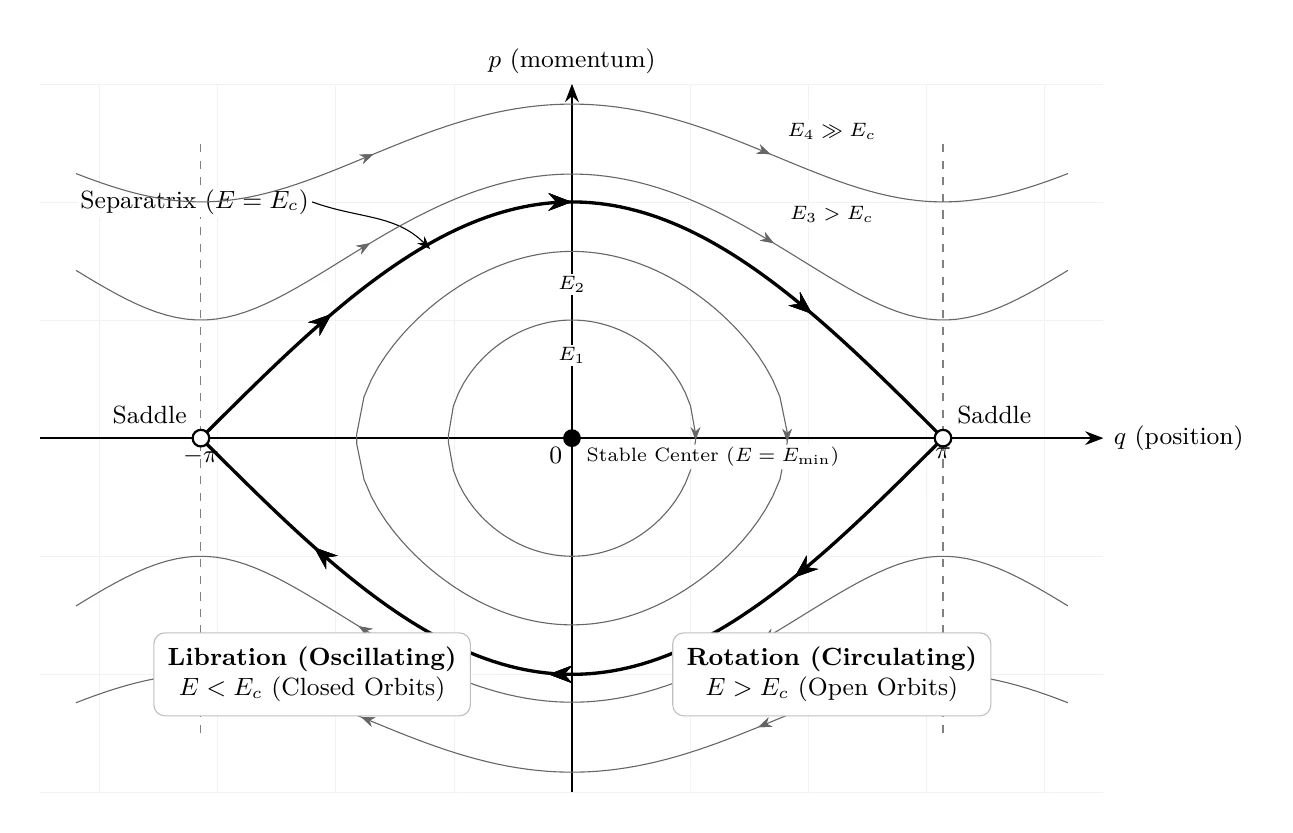
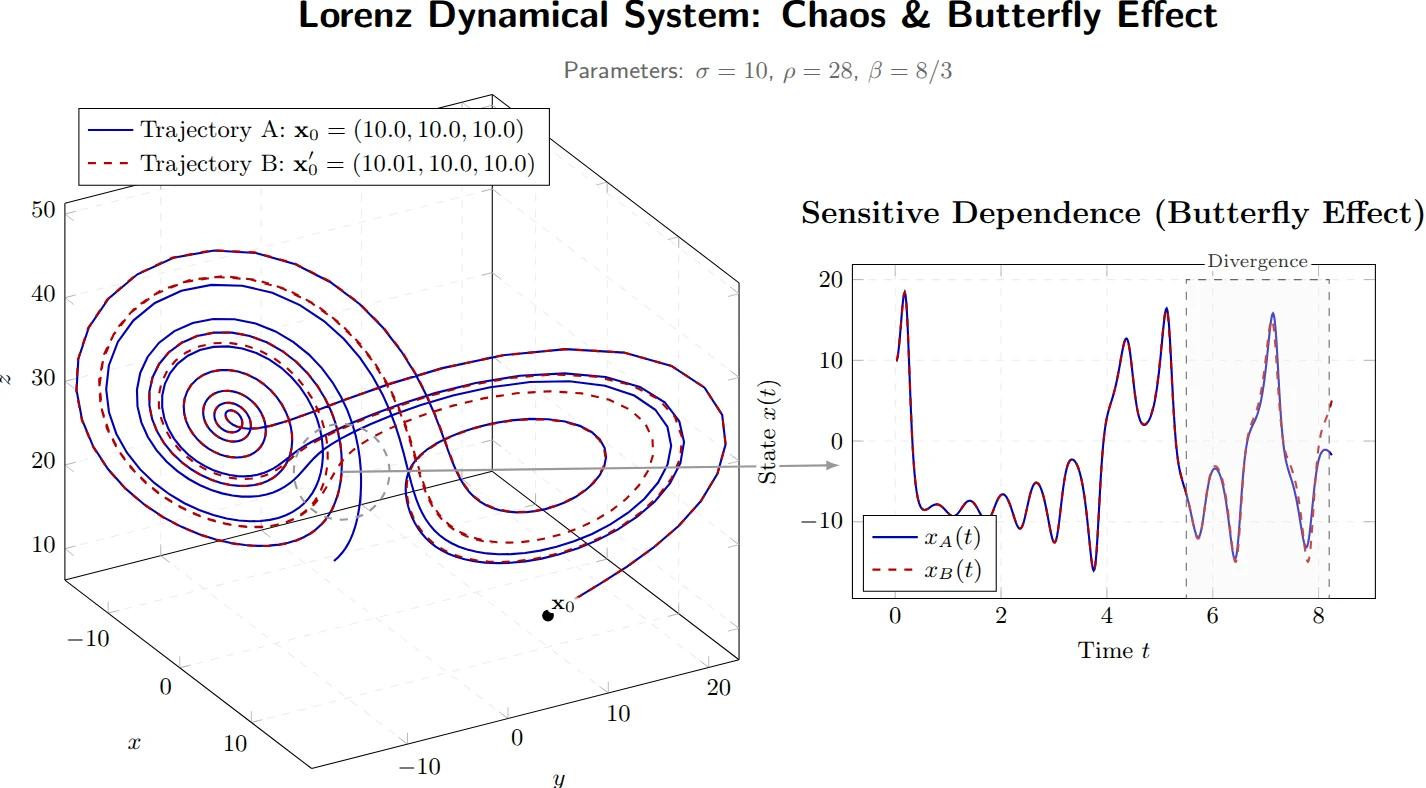
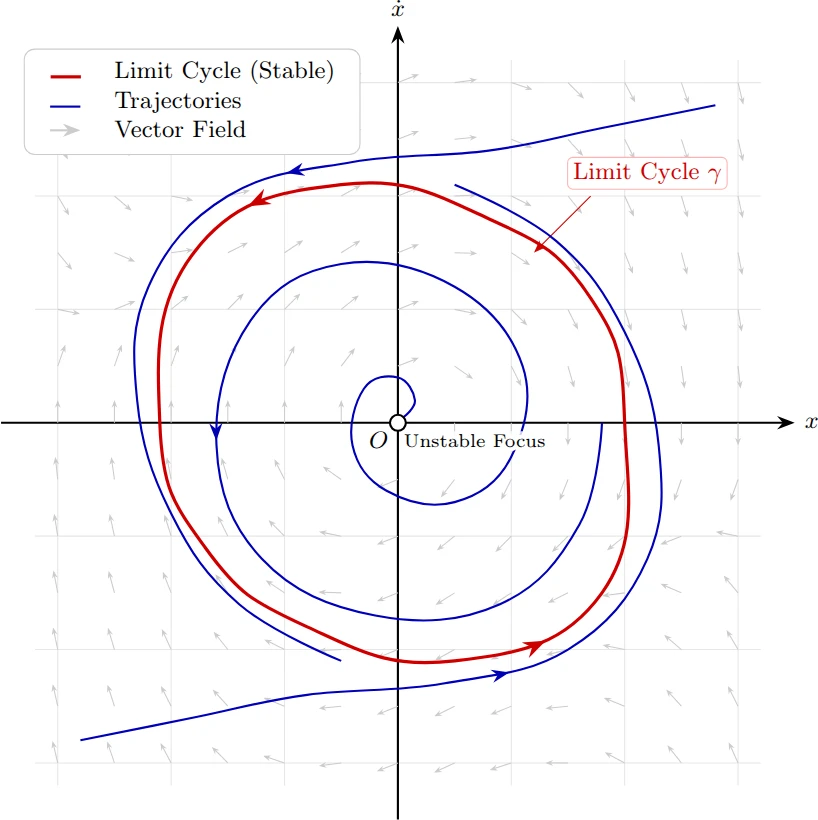
Figure Type | TikZ Agent Output |
|---|---|
Phase portraits and stability diagrams | Mathematically computed trajectories, topologically correct |
Feynman diagrams | Particle physics notation, publication-ready |
Vector field diagrams | Arrow direction and density computed from field equations |
Free body diagrams | Physics-correct geometry, labeled vectors |
Neural network architecture | Layered diagrams at document font and scale |
Control system block diagrams | Engineering standard, LaTeX-native |
Commutative diagrams | Category theory and pure mathematics standard |
RDKit and Reaction Mechanisms: Computation, Not Retrieval
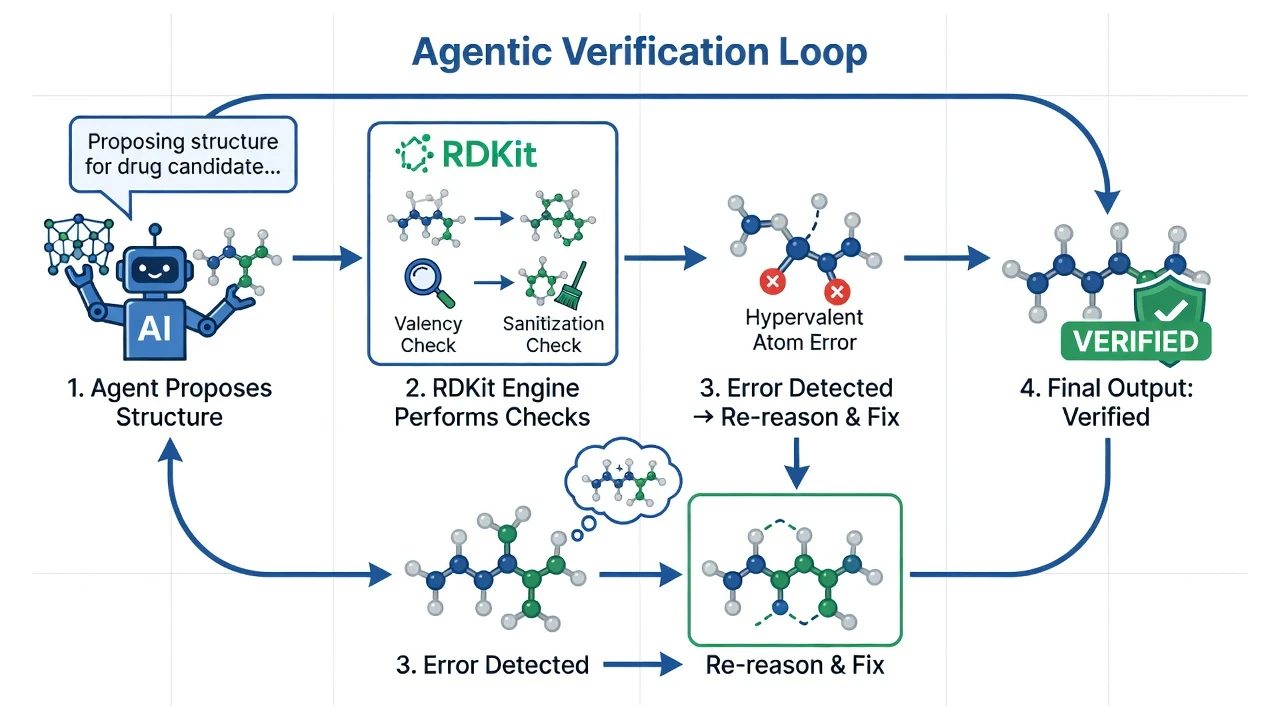
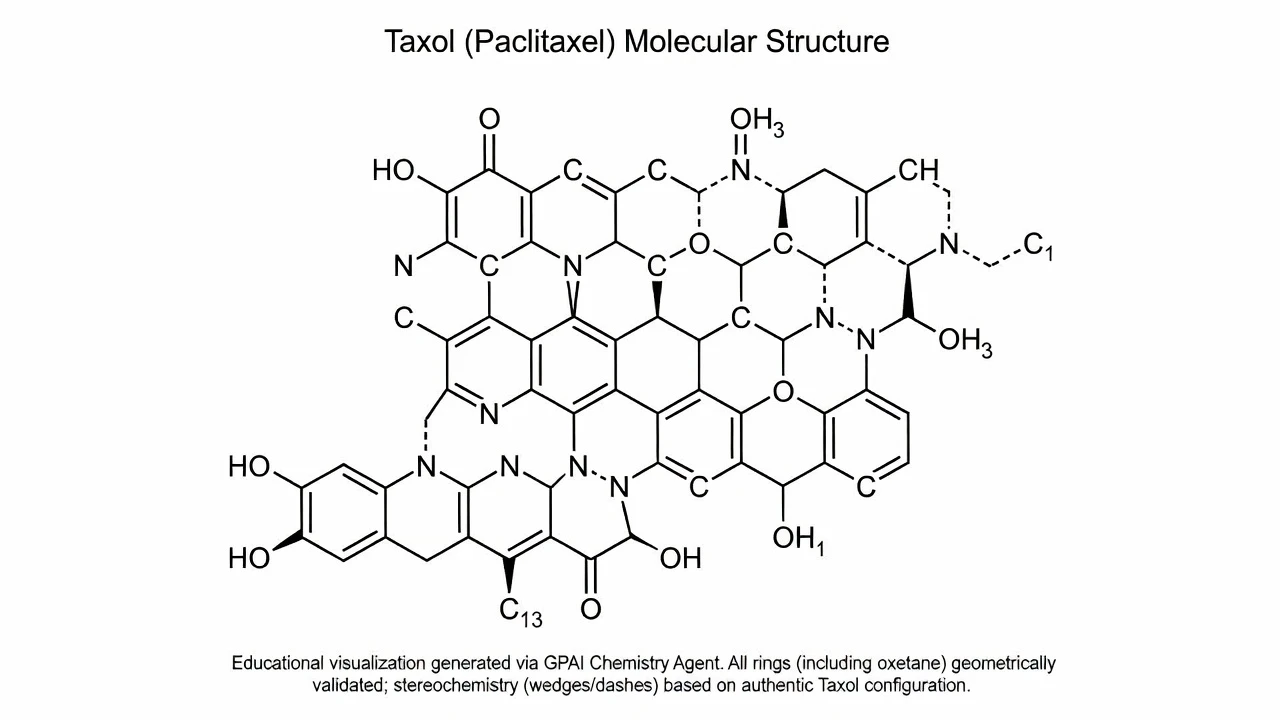
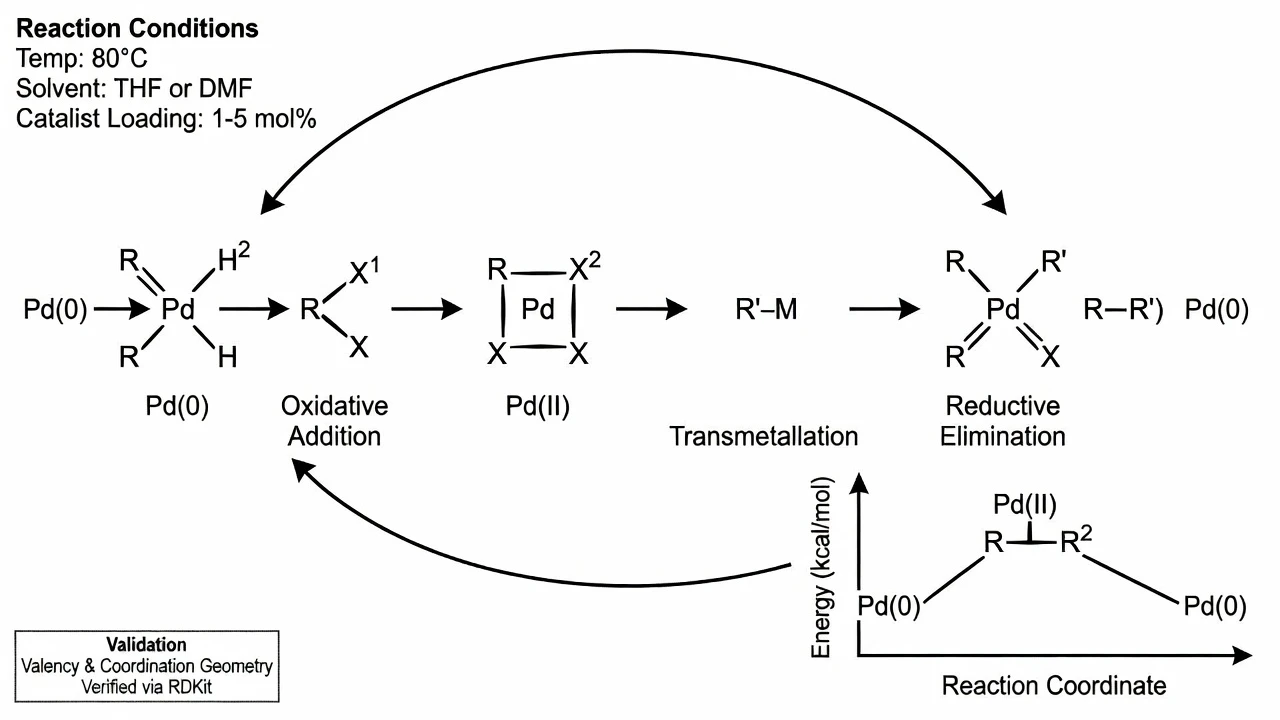
GPAI Visuals handles reaction mechanisms through its Chemistry engine, which combines LLM chemical reasoning with RDKit's deterministic computation. RDKit calculates bond lengths, valency, stereochemistry, and 2D/3D coordinates from chemical graph theory — not from statistical patterns. The LLM reasons about the chemistry; RDKit computes the geometry; and a self-correction loop runs between them: if a generated intermediate fails valency checks, the agent identifies the error, corrects it, and re-renders before the figure is shown to the researcher.
The core capability this enables is reaction mechanism generation: multi-step organic and organometallic reactions drawn with electron-pushing arrows, correct stereochemistry, and ACS publication-standard formatting. Electron-pushing arrows placed according to the actual electronic structure of each intermediate. Oxidation states tracked through every step of a catalytic cycle.
For a chemist designing a new synthetic route or drawing the mechanism of a reaction that hasn't been deposited in any database, this is the tool that produces figures that pass peer review.
GPAI Chemistry Agent Output
Task | Chemistry Agent Output |
|---|---|
Reaction mechanism with electron arrows | Arrow-pushing diagram, ACS-standard bond geometry |
Novel compound from SMILES or IUPAC name | RDKit-computed 2D structure, valency-verified |
Transition metal catalytic cycle | Oxidation states tracked through every step |
Stereochemistry | Wedge/dash bonds, absolute configuration labeled |
Reaction energy profile | Transition states and intermediates at relative energies |
The Complete Research Stack
The two platforms are not alternatives. They address different research tasks, and many researchers will use both.
Task | Claude Science | GPAI |
|---|---|---|
Literature synthesis — life sciences databases (UniProt, PDB, ChEMBL, GEO…) | ✓ 60+ pre-configured databases | ✓ GPAI across all STEM fields |
Data analysis and pipelines | ✓ HPC orchestration, large-scale | ✓ Statistical verification, numerical analysis |
Protein structure prediction (OpenFold3, Boltz-2) | ✓ | — |
Reproducibility tracking, provenance artifacts | ✓ | — |
TikZ figure generation — rendered preview + LaTeX source | — | ✓ GPAI Visuals |
Reaction mechanism drawing, ACS standard | — | ✓ GPAI Visuals |
RDKit-computed molecular structure, self-correction loop | — | ✓ GPAI Visuals |
Multi-model cross-verification for STEM calculations | — | ✓ GPAI Solver - Crosscheck |
Physics, engineering, mathematics research support | — | ✓ GPAI |
Cross-disciplinary paper comprehension | — | ✓ GPAI |
Frequently Asked Questions
What does Claude Science do?
Claude Science is an AI research workbench launched by Anthropic on June 30, 2026. It integrates 60+ scientific databases, manages compute resources from laptop to HPC cluster, generates reproducible scientific artifacts with full provenance tracking, and includes a reviewer agent for citations. It is particularly focused on computational biology and drug development. Available in beta for paid Claude subscribers on macOS and Linux. (MIT Technology Review)
What is TikZ and why does it matter for publication figures?
TikZ is the standard vector graphics system for LaTeX documents. Figures produced in TikZ are defined mathematically — every point, curve, and arrow specified by coordinates — which means they scale without quality loss and automatically use the document's fonts. For physics, mathematics, and engineering journals that require LaTeX submissions, TikZ figures produce publication-ready output with no reformatting, no font mismatch, and no resolution artifacts.
What is RDKit and how does GPAI's Chemistry Agent use it?
RDKit is an open-source cheminformatics library that computes molecular properties from SMILES strings and IUPAC names using chemical graph theory — bond lengths, valency, stereochemistry, 2D/3D coordinates — derived from first principles. GPAI Visuals combines LLM chemical reasoning with RDKit's deterministic computation through a self-correction loop: if a generated intermediate fails valency checks, the agent identifies the error, corrects it, and re-renders automatically. The result is a figure that has been verified against chemical rules before the researcher sees it.
Who is GPAI for?
GPAI is built for researchers, graduate students, and educators across the full breadth of STEM — physics, mathematics, chemistry, engineering, and biology. It is particularly useful for researchers who work in LaTeX, who produce publication-grade figures and reaction mechanism diagrams, and who need calculation results verified across multi-step derivations.
Can GPAI and Claude Science be used together?
Yes — the two platforms address different layers of the research workflow. Claude Science handles research infrastructure: database connectivity, HPC compute management, reproducibility tracking, and biological structure prediction. GPAI handles precision output and STEM breadth across three integrated modes — Visuals (TikZ figures, reaction mechanisms), Problems (calculation verification, numerical analysis), and Chat (cross-disciplinary research and literature) — covering physics, chemistry, mathematics, and engineering. For researchers whose work spans these needs, using both gives the most complete stack.
GPAI is an all-in-one STEM workspace — TikZ Agent, Chemistry Agent, Solver, and Deep Explain in one subscription. Built for researchers who need precision output: LaTeX-native figures, RDKit-verified reaction mechanisms, and calculation verification across physics, chemistry, mathematics, and engineering.