Best AI STEM Problem Solver in 2026: Step-by-Step Solutions, Cross-Verification, and Hallucination Minimization
Jun 17, 2026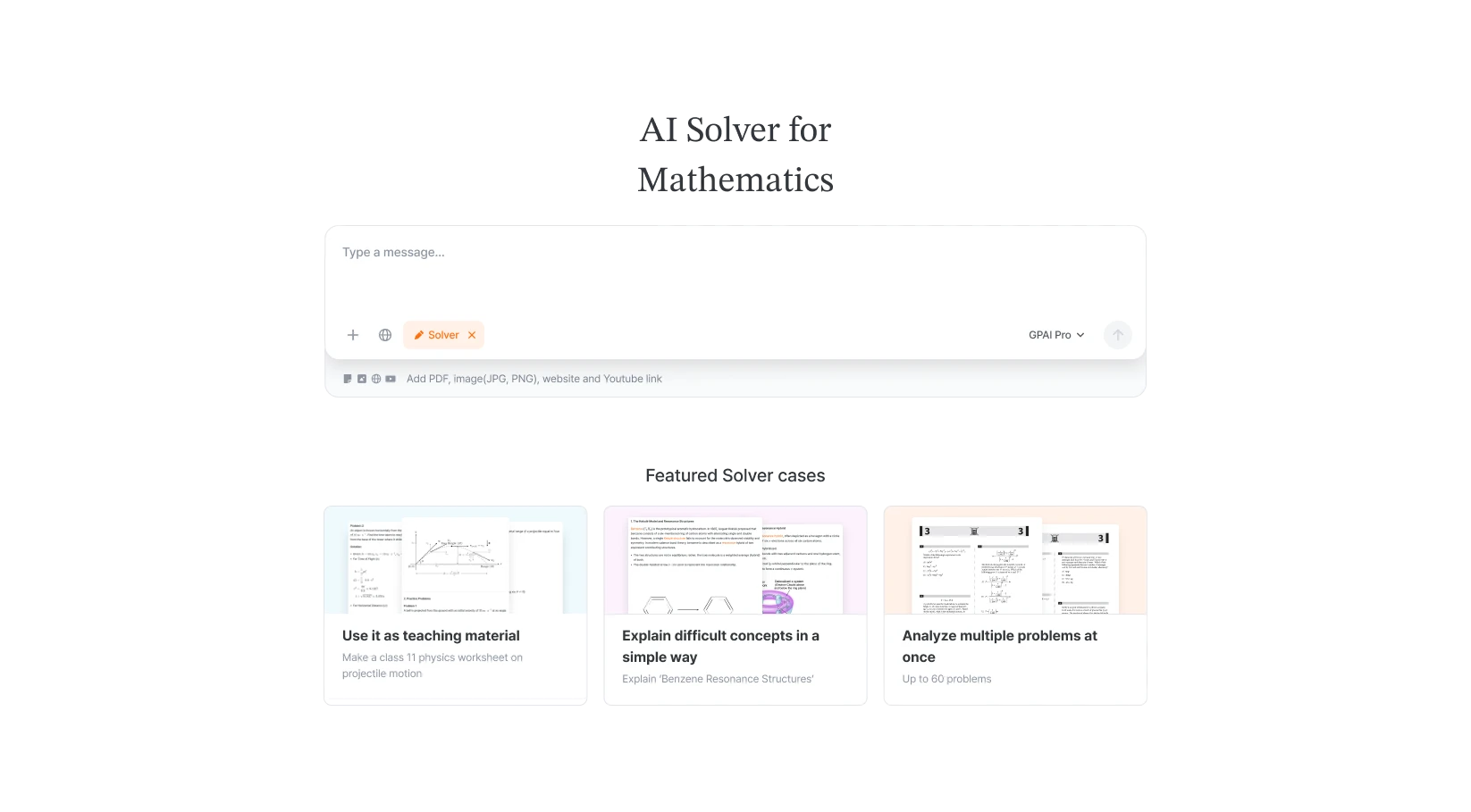
Key Points
Most AI math solvers are built for K–12 homework — but for university-level and graduate STEM, accuracy requirements are fundamentally different.
GPAI Solver uses a proprietary Chain of Thought (CoT) technique to minimize hallucinations, and cross-checks every answer across GPT, Claude, and Gemini simultaneously.
Beyond problem solving, GPAI is used by university instructors and TAs to generate solution sets, and by researchers to work through and explain complex concepts.
AI math and science solvers have become standard tools across education and research. The question in 2026 is not whether AI can solve problems — it's whether a given tool can handle the complexity level where it actually matters: upper-division undergraduate coursework, graduate-level derivations, and research-grade calculations where a hallucinated answer has real consequences.
This guide covers the best AI STEM problem solvers for university students, graduate researchers, and educators who need accuracy and depth — not just quick answers.
What Separates Serious STEM Solvers from Homework Tools
1. Hallucination Control
General-purpose AI models hallucinate with high confidence. In a multi-step physics derivation or a graduate chemistry problem, an error in an intermediate step compounds through the rest of the solution and is nearly impossible to detect from the final answer alone. The solvers that work for serious STEM use either employ structured reasoning techniques to reduce these errors, or verify outputs across multiple independent models.
2. Depth of Explanation
University and graduate-level STEM isn't just harder algebra — it requires understanding why an approach applies, what assumptions are being made, and how each step connects to the next. A solver that gives the right numerical answer without the reasoning is limited in research and teaching contexts.
3. Visual Output for Complex Problems
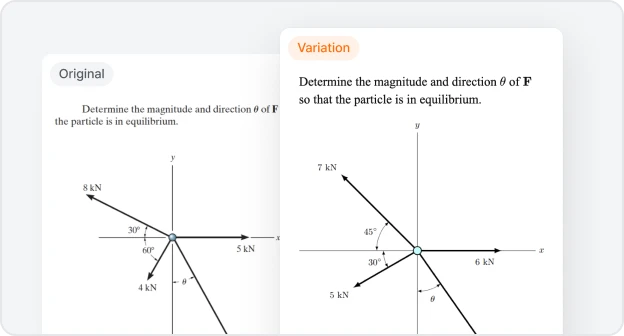
Graduate STEM problems frequently require diagrams that are integral to the solution — free body diagrams for mechanics, circuit schematics for electromagnetism, phase diagrams for thermodynamics. Solvers that generate these inline, rather than expecting you to sketch them separately, handle the full problem.
1. GPAI Solver — Built for University and Graduate-Level STEM
GPAI Solver is designed from the ground up for the complexity level above standard coursework. Its core architecture addresses the two biggest failure modes of AI solvers: hallucination and single-model blind spots.
Proprietary Chain of Thought for Hallucination Minimization
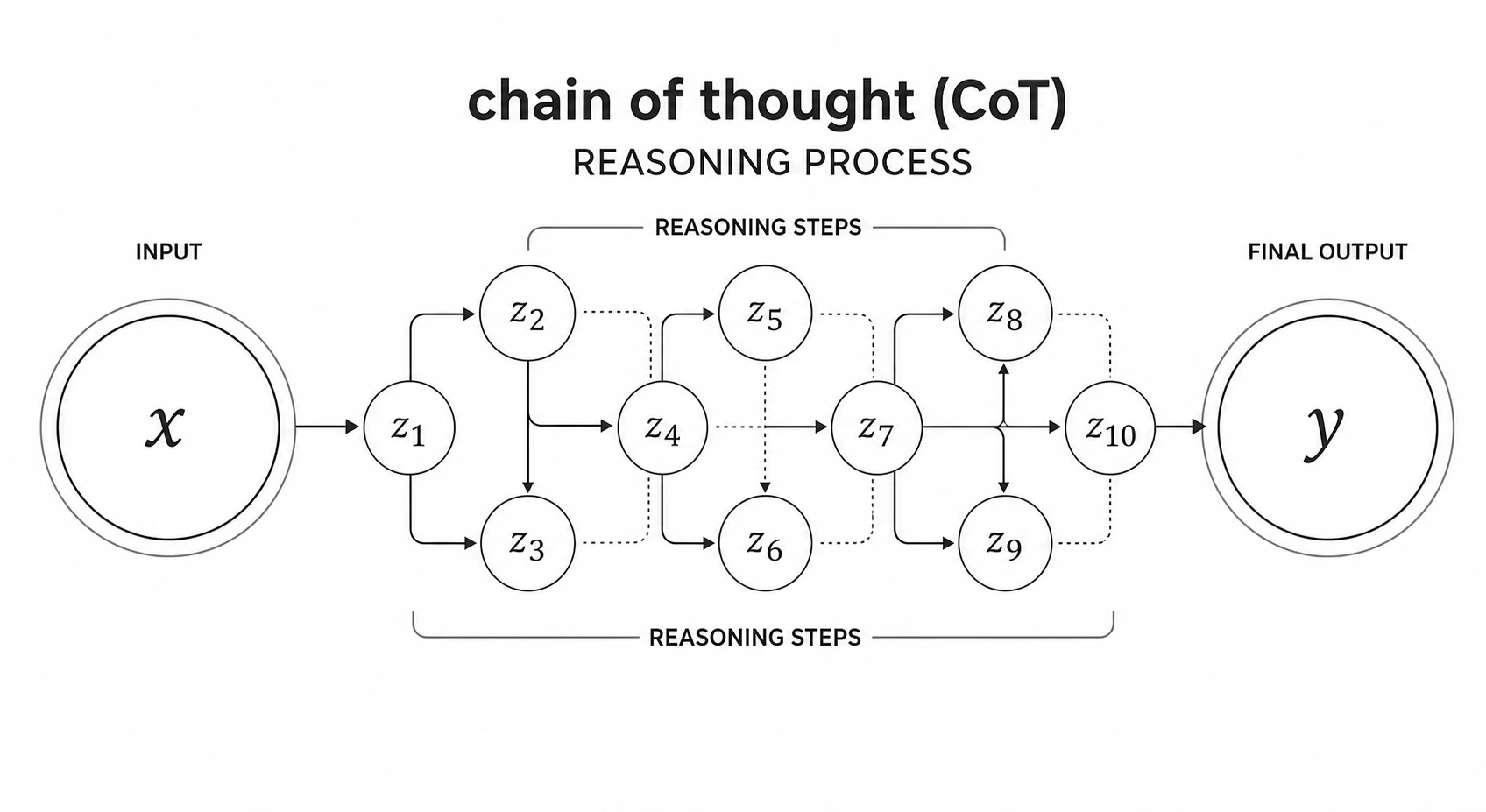
GPAI uses a custom Chain of Thought (CoT) reasoning technique developed in-house. Rather than generating an answer directly, the solver constructs an explicit reasoning chain — breaking the problem into structured logical steps before producing each part of the solution. This significantly reduces hallucination in multi-step problems, where standard models tend to drift or make unsupported leaps.
Cross-Check Across GPT, Claude, and Gemini
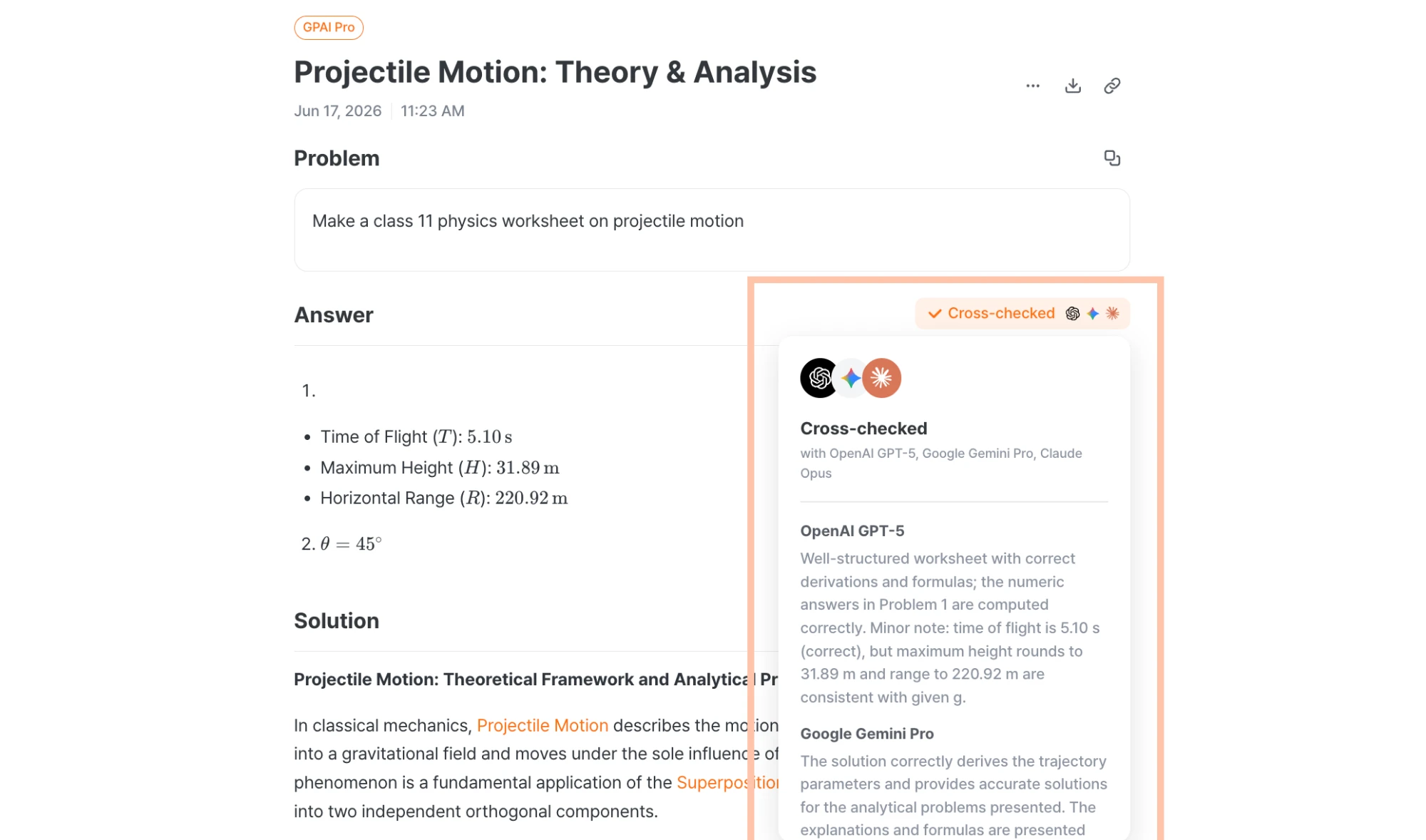
Every problem submitted to GPAI Solver is run through GPT, Claude, and Gemini simultaneously. The outputs are compared, and discrepancies are flagged. This means you get:
A signal when models disagree — the strongest indicator that a result needs closer review
Confirmation when all three align — a meaningful increase in confidence for high-stakes calculations
The only solver in 2026 that makes cross-model verification a standard part of every query
Step-by-Step Solutions That Explain the Why
GPAI's solutions explain the reasoning at each step — not just what to calculate next, but why that approach applies and what assumptions underlie it. This is particularly relevant for:
Graduate coursework in physics, engineering, and mathematics where the derivation method matters as much as the result
Research calculations where a wrong assumption needs to be caught before it propagates
Multi-step problems where the logic between steps must be traceable
Diagram-Embedded Solutions
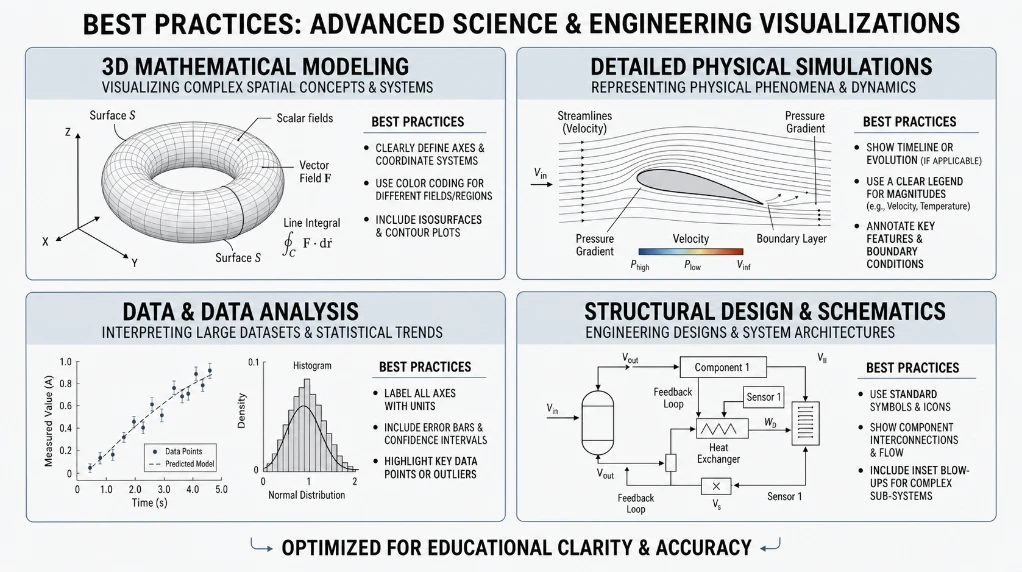
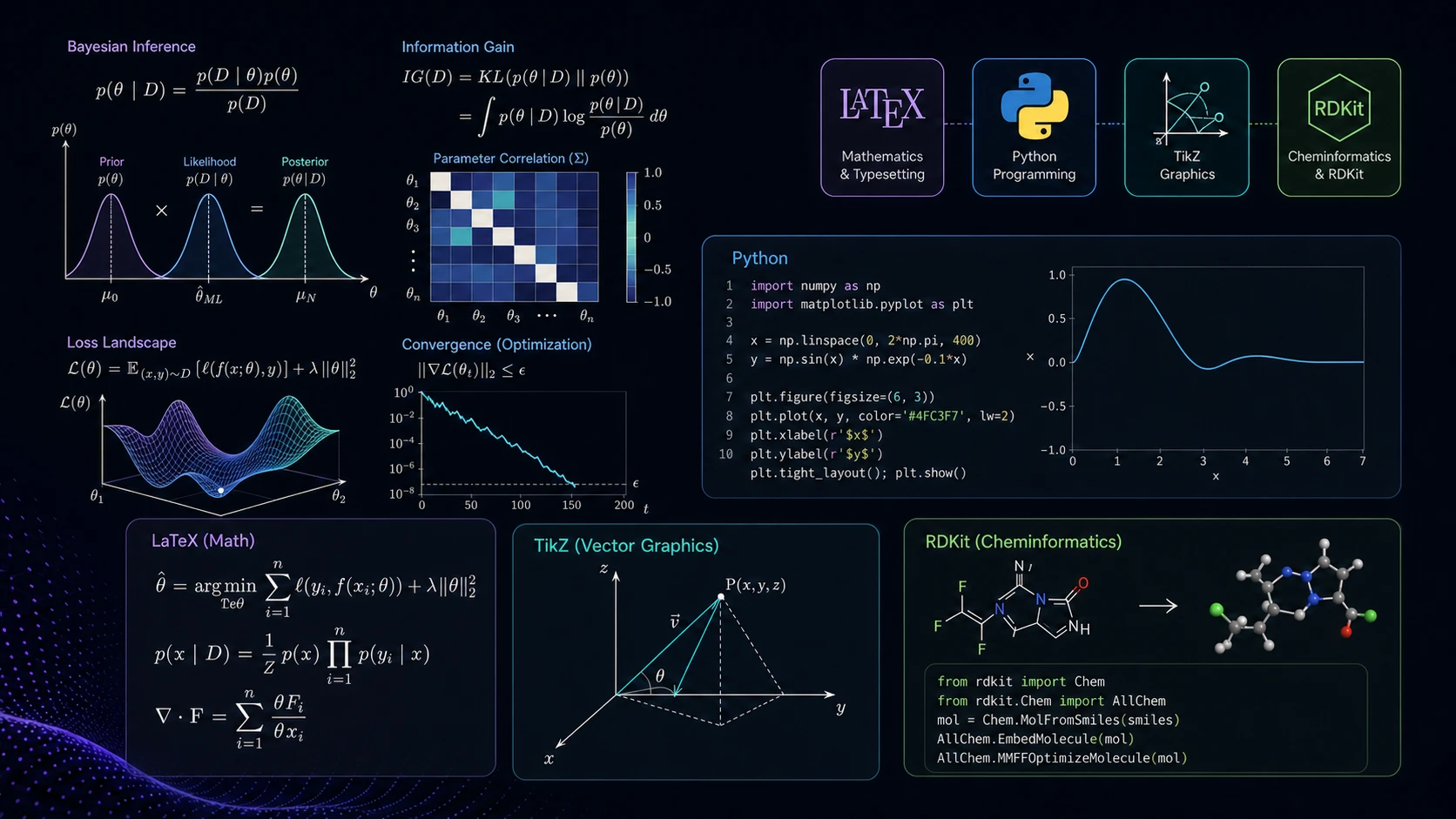
For problems requiring visual representation, GPAI generates the relevant diagram inline with the solution — free body diagrams, circuit schematics, coordinate geometry figures, vector setups, function graphs. No separate tool or manual sketching required.
Coverage
Calculus, differential equations, linear algebra, real and complex analysis, mechanics (classical, quantum, statistical), electromagnetism, thermodynamics, fluid dynamics, organic and physical chemistry, materials science, engineering mechanics, probability and statistics.
Best for: Upper-division undergraduates, graduate students, and researchers who need verified, diagram-inclusive solutions for high-complexity STEM problems.
2. Mathway — Fast Solutions for Standard Math
Mathway is one of the most widely used AI math solvers. It handles algebra, calculus, trigonometry, statistics, and finite math quickly, with step-by-step solutions available on paid plans. Input via text or photo.
Reliable for standard undergraduate math coursework
Step-by-step solutions require subscription
Limited coverage for physics, engineering, and graduate-level problems
No cross-verification or diagram generation
Best for: Undergraduates who need quick, reliable solutions for standard math coursework.
3. Wolfram Alpha — Precise Symbolic Computation
Wolfram Alpha is a computation engine, not an AI tutor. It evaluates formal mathematical expressions with high precision and provides step-by-step breakdowns for standard problem types. Strongest for calculus, differential equations, matrix operations, and unit conversions.
Most reliable tool for symbolic math and exact numerical verification
Explains steps but not the reasoning behind method selection
No diagram generation
No natural language problem interpretation
Best for: Verifying symbolic computations. Most effective as a precision check alongside explanation-focused solvers.
Comparison
GPAI Solver | Mathway | Wolfram Alpha | |
|---|---|---|---|
Custom CoT for hallucination reduction | ✅ | ❌ | ❌ |
Cross-model verification | ✅ | ❌ | ❌ |
Step-by-step with reasoning | ✅ | ✅ (paid) | ⚠️ |
Diagram generation | ✅ | ❌ | ⚠️ |
Graduate-level STEM | ✅ | ⚠️ | ✅ |
Physics & engineering | ✅ | ❌ | ✅ |
Natural language input | ✅ | ✅ | ⚠️ |
Free tier | — | ✅ | ✅ |
✅ Strong · ⚠️ Partial · ❌ Not supported
Frequently Asked Questions
How does Chain of Thought reasoning reduce hallucinations in STEM problems?
Standard AI models generate answers by predicting the next token based on context — which means they can produce plausible-sounding but wrong intermediate steps, especially in multi-step derivations. Chain of Thought (CoT) forces the model to construct an explicit reasoning chain before arriving at each result, making each logical step traceable and reviewable. GPAI's proprietary CoT technique is tuned specifically for STEM reasoning, which reduces the hallucination rate in graduate-level physics and mathematics problems compared to standard model outputs.
Can instructors and TAs use GPAI to generate solution sets?
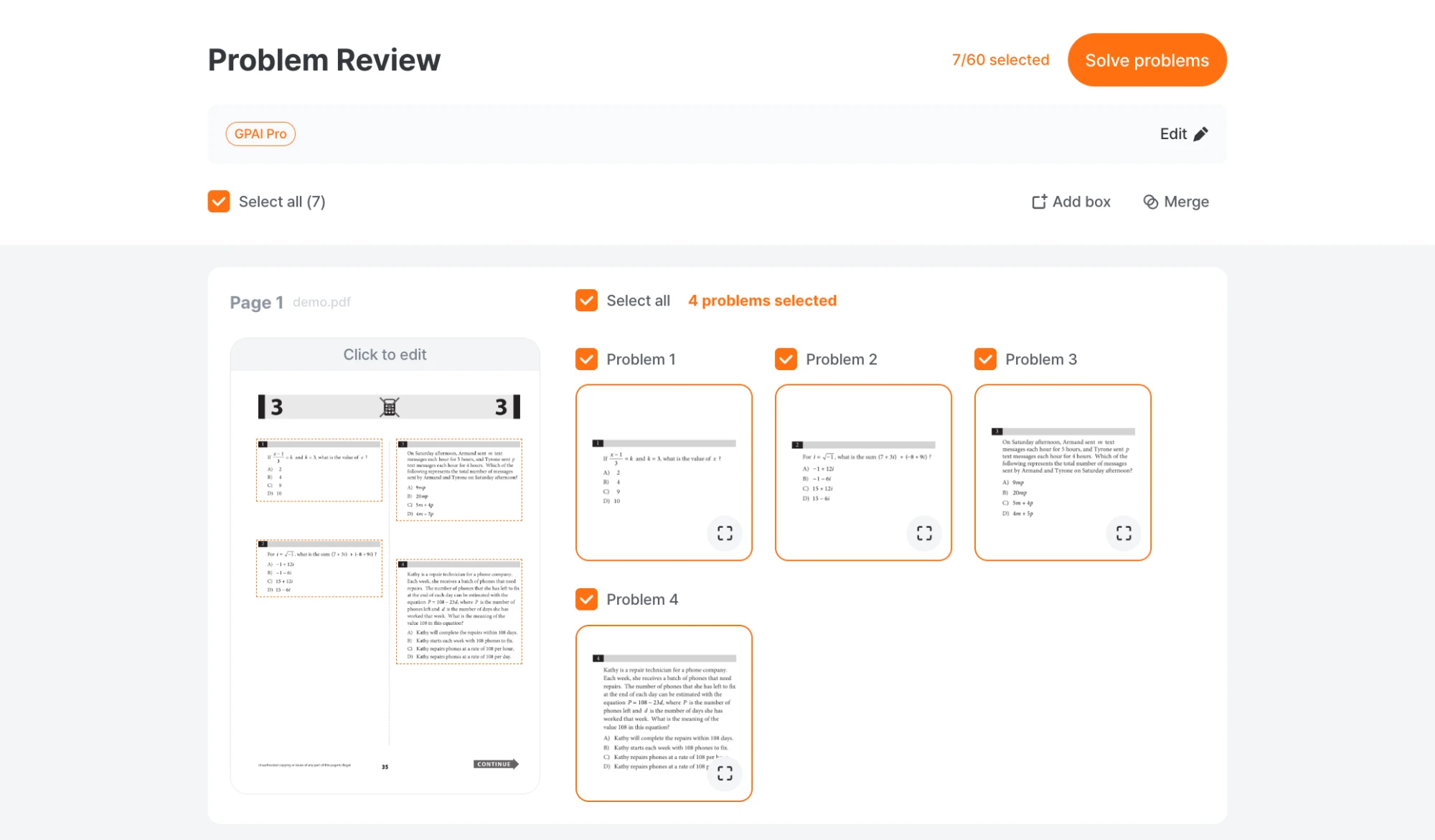
Yes — this is one of the primary use cases. University instructors and teaching assistants use GPAI Solver to generate complete, step-by-step solutions for problem sets, exam questions, and homework assignments. The cross-check system provides an additional layer of confidence before distributing solutions to students, and the inline diagram generation handles figures that would otherwise need to be drawn manually.
Can GPAI be used to explain difficult concepts, not just solve problems?
Yes. GPAI's Chat includes a Deep Explain mode that produces textbook-style, step-by-step conceptual explanations for complex topics — not just problem solutions. Researchers and instructors use it to work through the intuition behind a concept before applying it, or to prepare clear explanations for students. It functions more like a knowledgeable colleague walking you through reasoning than a calculator returning a result.
How do I know if an AI solver is giving me the correct answer?
No single-model solver is reliably accurate for multi-step STEM problems — confident wrong answers are common. Cross-model verification is the most practical safeguard: if GPT, Claude, and Gemini all agree, confidence is meaningfully higher than if any single model reports a result alone. GPAI automates this process and flags discrepancies rather than presenting a single output uncritically.
What is the difference between GPAI Solver and Wolfram Alpha?
Wolfram Alpha computes precisely but doesn't explain why a method applies, doesn't generate diagrams, and doesn't handle natural language framing of problems well. GPAI Solver explains the reasoning at each step, generates diagrams inline, accepts natural language input, and cross-verifies across three models. Most researchers use both: Wolfram Alpha for precise symbolic verification of specific expressions, GPAI for the full solution process — setup, derivation, diagram, and explanation.
What graduate-level STEM topics can GPAI Solver handle?
GPAI Solver covers the full range of graduate-level STEM including: classical and quantum mechanics, electromagnetism, thermodynamics and statistical mechanics, fluid dynamics, real and complex analysis, differential equations (ordinary and partial), linear algebra, abstract algebra, organic and physical chemistry, materials science, and engineering mechanics. For highly specialized or novel research problems, the cross-check system helps identify where model outputs should be treated with additional skepticism.
GPAI is an all-in-one STEM workspace for researchers, graduate students, and educators — Solver, Visualizer, and Chat in one subscription.