Natural Resources Cheatsheet
Cheatsheet Content
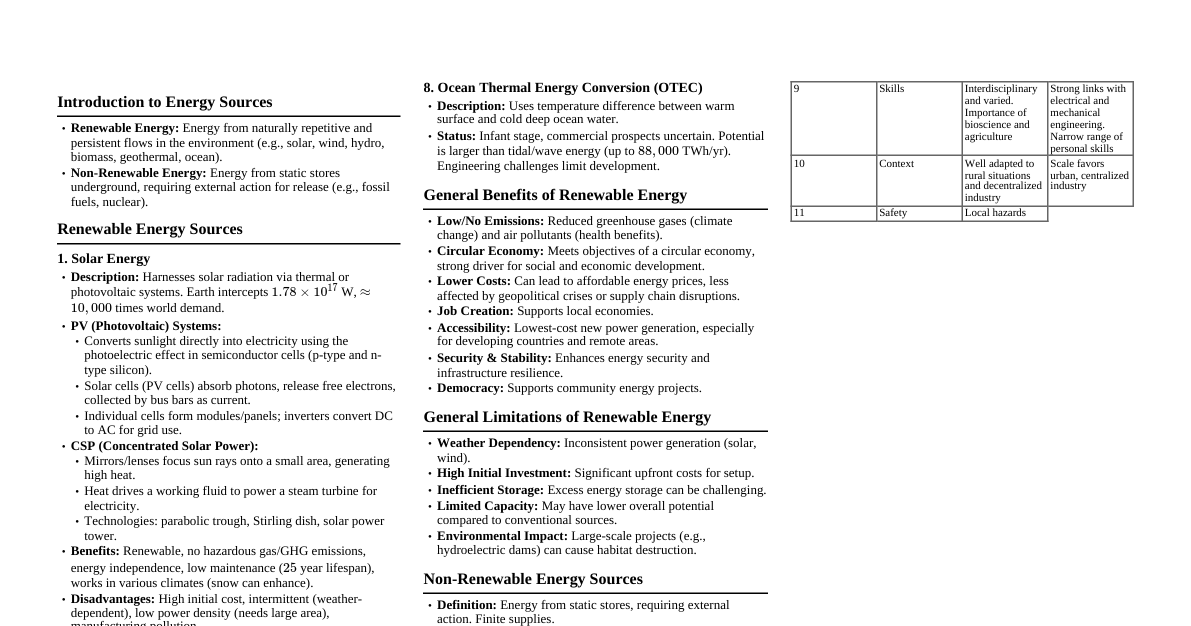
1. Introduction to Natural Resources Definition: Materials or substances occurring in nature which can be exploited for economic gain. Classification: Renewable Resources: Can be replenished naturally over a relatively short period (e.g., solar energy, wind, water, biomass). Non-renewable Resources: Exist in fixed amounts and are consumed much faster than nature can create them (e.g., fossil fuels, minerals). Importance: Essential for human survival, economic development, and industrial growth. 2. Renewable Resources 2.1. Solar Energy Source: Sunlight. Technologies: Photovoltaic (PV) cells convert sunlight directly into electricity; Solar thermal systems heat water or air. Advantages: Clean, abundant, reduces carbon footprint. Disadvantages: Intermittent, high initial cost, requires large land area. 2.2. Wind Energy Source: Wind currents. Technology: Wind turbines convert wind's kinetic energy into electricity. Advantages: Clean, no greenhouse gas emissions, low operating cost. Disadvantages: Intermittent, visual/noise pollution, impacts wildlife. 2.3. Hydropower Source: Flowing water. Technology: Dams create reservoirs; water flows through turbines to generate electricity. Advantages: Reliable, clean, flood control, water supply. Disadvantages: High initial cost, alters ecosystems, displacement of communities. 2.4. Geothermal Energy Source: Heat from Earth's interior. Technology: Taps into hot water/steam reservoirs underground. Advantages: Constant supply, small land footprint, low emissions. Disadvantages: Geographically limited, potential for induced seismicity, high drilling costs. 2.5. Biomass Energy Source: Organic matter (plants, animal waste). Technologies: Combustion, gasification, anaerobic digestion to produce heat, electricity, or biofuels. Advantages: Utilizes waste, renewable, reduces landfill use. Disadvantages: Can produce air pollutants, land use competition, efficiency concerns. 3. Non-renewable Resources 3.1. Fossil Fuels Formation: Formed from the decomposition of buried dead organisms over millions of years. Types: Coal: Sedimentary rock formed from plant matter. Used for electricity generation. Petroleum (Oil): Liquid hydrocarbon mixture. Used for fuels, plastics, chemicals. Natural Gas: Gaseous hydrocarbon mixture. Used for heating, electricity. Advantages: High energy density, established infrastructure, relatively cheap. Disadvantages: Finite supply, major contributor to greenhouse gas emissions, air pollution, environmental degradation (extraction). 3.2. Nuclear Energy Source: Fission of heavy atomic nuclei (e.g., Uranium-235). Technology: Nuclear reactors use controlled chain reactions to generate heat, which produces steam for turbines. Advantages: Low greenhouse gas emissions, high power output, reliable. Disadvantages: Radioactive waste disposal, risk of accidents, high initial cost, security concerns. 3.3. Minerals Definition: Naturally occurring solid chemical substances formed through geological processes. Examples: Metals (iron, copper, gold), industrial minerals (limestone, gypsum), precious stones. Uses: Construction, manufacturing, electronics, jewelry. Environmental Impact: Habitat destruction, soil erosion, water pollution from mining. 4. Biodiversity 4.1. Definition and Levels Biodiversity: The variability among living organisms from all sources and the ecological complexes of which they are part. Levels: Genetic Diversity: Variation in genes within a single species. Species Diversity: Variety of species in an ecosystem or on Earth. Ecosystem Diversity: Variety of habitats, communities, and ecological processes. Hotspots: Regions with high levels of endemic species and significant habitat loss. 4.2. Importance of Biodiversity Ecosystem Services: Provisioning: Food, water, timber, medicines. Regulating: Climate regulation, flood control, disease regulation, water purification. Supporting: Nutrient cycling, soil formation, primary production. Cultural: Aesthetic, spiritual, recreational benefits. Resilience: Diverse ecosystems are more stable and can better recover from disturbances. Economic Value: Ecotourism, pharmaceutical discoveries, agricultural productivity. 4.3. Threats to Biodiversity (HIPPO) Habitat Loss & Degradation: Primary threat; driven by agriculture, urbanization, deforestation, mining. Invasive Species: Non-native species outcompeting or preying on native ones. Pollution: Air, water, soil pollution impacting species. Population (Human): Growing human population increases resource demand and impact. Overexploitation: Overfishing, overhunting, unsustainable logging. Climate Change: Shifting habitats, altered breeding cycles, extreme weather events. 5. Resource Management and Conservation Sustainability: Meeting the needs of the present without compromising the ability of future generations to meet their own needs. 3 R's of Conservation: Reduce: Decrease consumption of resources. Reuse: Extend the life of products. Recycle: Process used materials into new products. Resource Depletion: Exhaustion of a resource faster than it can be replenished. Pollution: Contamination of the environment by harmful substances resulting from resource use (e.g., air pollution from fossil fuels, water pollution from mining). Policy and Regulations: Government initiatives to manage resource extraction, use, and environmental protection (e.g., environmental impact assessments, protected areas, CITES). Technological Innovations: Development of more efficient extraction methods, renewable energy technologies, and sustainable materials. 6. Key Concepts & Terms Ecological Footprint: Measure of human demand on nature. Carrying Capacity: Maximum population size of a species that the environment can sustain indefinitely. Tragedy of the Commons: Economic theory where individuals, acting independently and rationally according to their own self-interest, behave contrary to the common good of all users by depleting or spoiling a shared resource. Life Cycle Assessment (LCA): Evaluates the environmental impacts of a product or service throughout its entire life cycle.