Eukaryotic Cell & Biomolecules
Cheatsheet Content
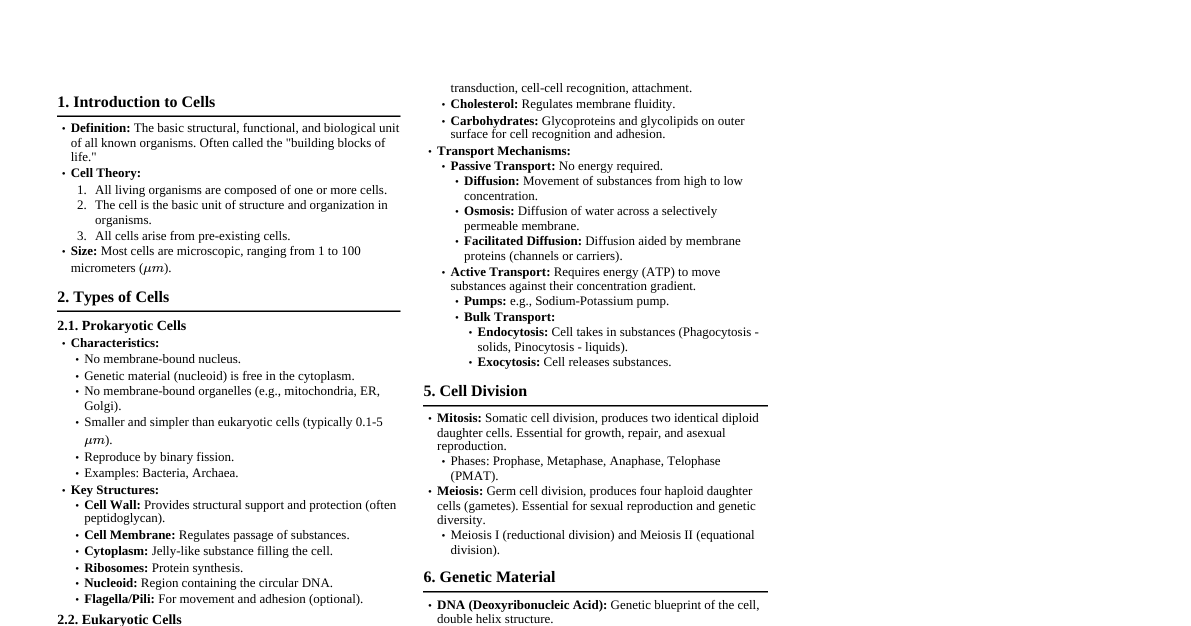
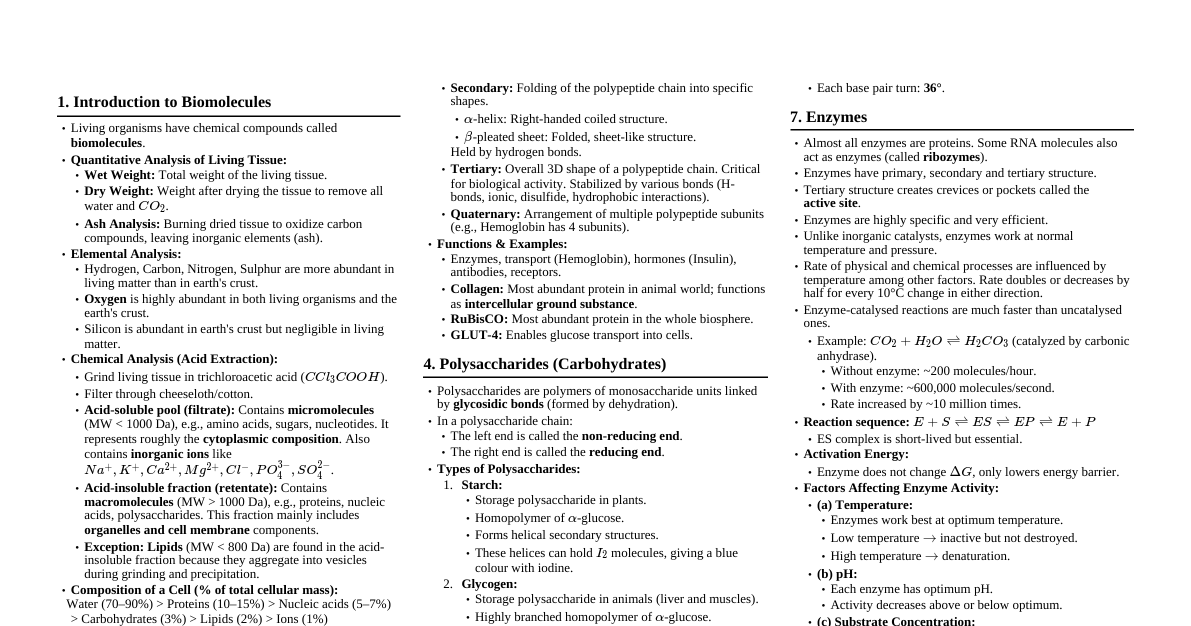
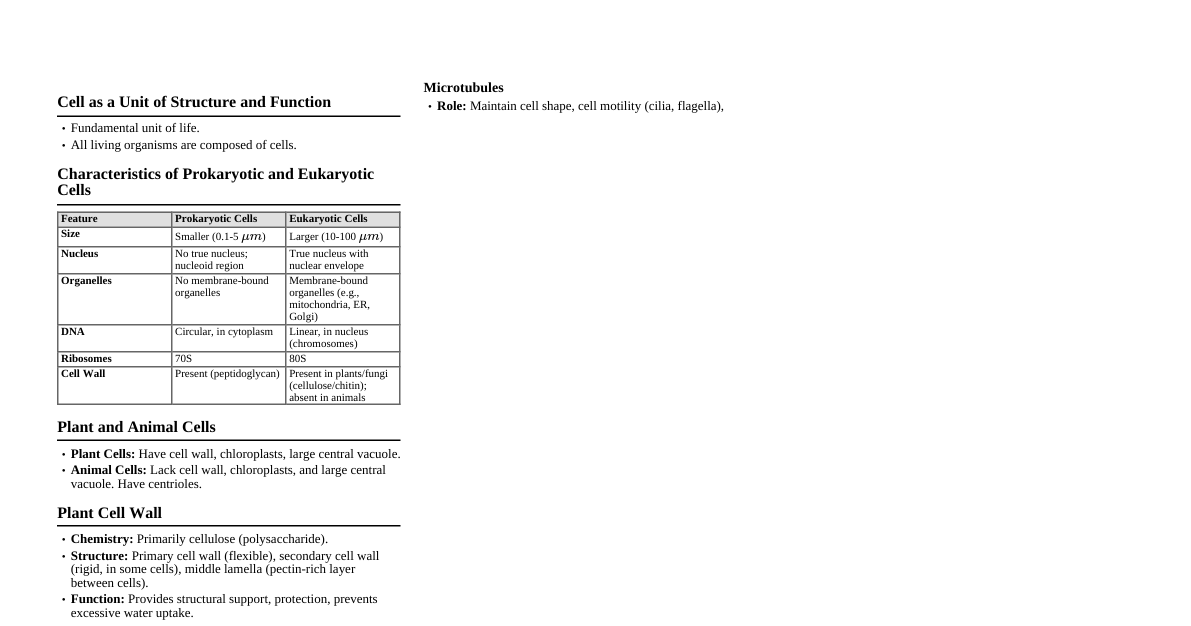
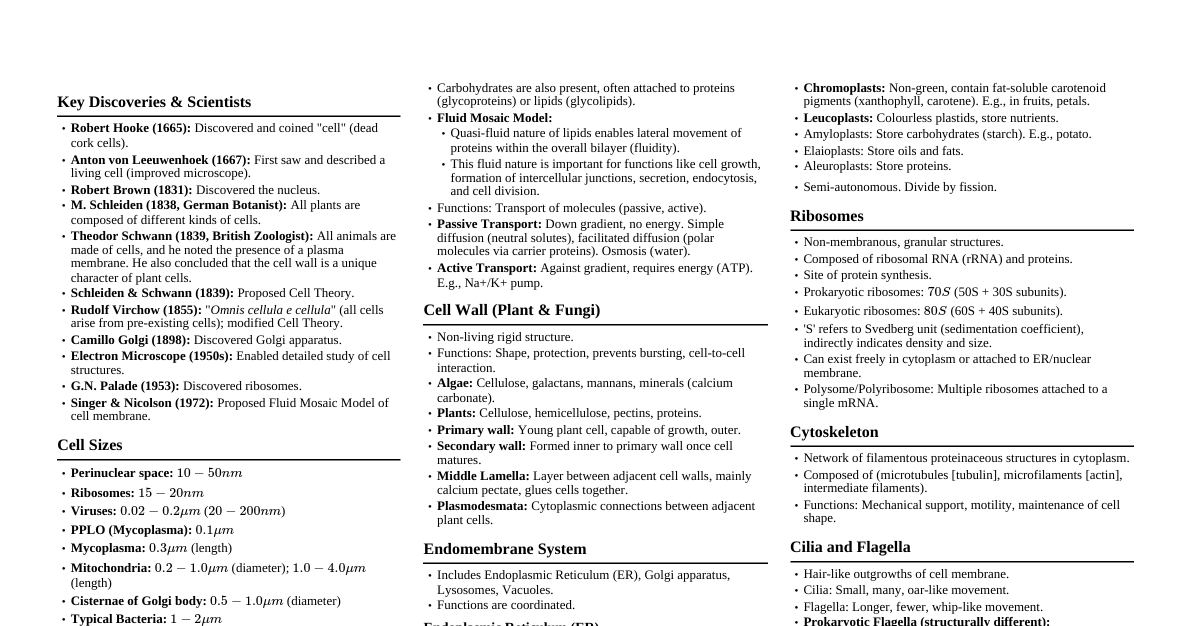
### Eukaryotic Cell Organelles - **Nucleus** (Control Center) - Contains genetic material (DNA). - **Nuclear Envelope:** Double membrane with pores. - **Nucleolus:** Ribosome synthesis. - **Mitochondria** (Powerhouse) - **Function:** ATP production via cellular respiration. - **Structure:** Double membrane; inner membrane folded into **cristae**. - Contains its own DNA and ribosomes. - **Chloroplasts** (Photosynthesis - Plants/Algae) - **Function:** Photosynthesis (light energy to chemical energy). - **Structure:** Double membrane; internal stacks of thylakoids (grana) within **stroma**. - **Endoplasmic Reticulum (ER)** - **Rough ER (RER):** Studded with ribosomes; protein synthesis & modification (for secretion/membranes). - **Smooth ER (SER):** Lipid synthesis, detoxification, calcium storage. - **Golgi Apparatus** (Post Office) - **Function:** Modifies, sorts, and packages proteins and lipids from ER. - Forms vesicles for transport. - **Ribosomes** (Protein Factories) - **Function:** Protein synthesis (translation). - Found free in cytoplasm or attached to RER. - **Lysosomes** (Recycling Centers - Animal Cells) - **Function:** Contain hydrolytic enzymes to break down waste, cellular debris, and pathogens. - **Vacuoles** (Storage) - **Plant Cells:** Large central vacuole for water storage, turgor pressure, waste. - **Animal Cells:** Smaller, temporary vacuoles for storage/transport. - **Cytoskeleton** (Cell Scaffolding) - **Components:** Microtubules, microfilaments (actin), intermediate filaments. - **Function:** Cell shape, movement, organelle transport. - **Centrioles** (Animal Cells) - **Function:** Involved in cell division (form spindle fibers). - Part of centrosome. - **Cell Membrane** (Plasma Membrane) - **Structure:** Phospholipid bilayer with embedded proteins. - **Function:** Selective permeability, cell signaling, transport. - **Cell Wall** (Plants, Fungi, Bacteria) - **Function:** Structural support, protection. - **Plants:** Cellulose; **Fungi:** Chitin. ### Biomolecules - **Carbohydrates** (Sugars) - **Monomer:** Monosaccharides (e.g., glucose). - **Function:** Primary energy source, structural components (cellulose, chitin). - **Examples:** Starch (energy storage in plants), Glycogen (energy storage in animals), Cellulose (plant cell walls). - **Lipids** (Fats) - **Monomer:** Fatty acids + Glycerol (for triglycerides). - **Function:** Long-term energy storage, cell membrane structure (phospholipids), hormones. - **Types:** Triglycerides, Phospholipids, Steroids. - **Proteins** (Workhorses) - **Monomer:** Amino acids (20 types). - **Function:** Enzymes, structural support, transport, defense, signaling. - **Structure:** Primary, Secondary, Tertiary, Quaternary. - **Nucleic Acids** (Genetic Material) - **Monomer:** Nucleotides (sugar, phosphate, nitrogenous base). - **Function:** Store and transmit genetic information. - **Types:** DNA (Deoxyribonucleic Acid), RNA (Ribonucleic Acid). ### Enzymes - **Definition:** Biological catalysts (mostly proteins) that speed up biochemical reactions without being consumed. - **Mechanism:** - **Lock & Key Model:** Substrate (key) fits perfectly into enzyme's **active site** (lock). - **Induced Fit Model:** Active site slightly changes shape to bind substrate more tightly. - **Components:** - **Substrate:** Molecule upon which an enzyme acts. - **Active Site:** Region on enzyme where substrate binds. - **Cofactors:** Non-protein helpers (e.g., metal ions). - **Coenzymes:** Organic cofactors (e.g., vitamins). - **Inhibitors:** - **Competitive:** Binds to active site, competing with substrate. - **Non-competitive:** Binds to allosteric site, changing active site shape. - **Factors Affecting Activity:** - **Temperature:** Optimal temp for max activity; too high = denaturation. - **pH:** Optimal pH for max activity; extreme pH = denaturation. - **Substrate Concentration:** Activity increases with concentration until saturation. - **Enzyme Concentration:** Activity increases with enzyme concentration.