People Management Essentials
Cheatsheet Content
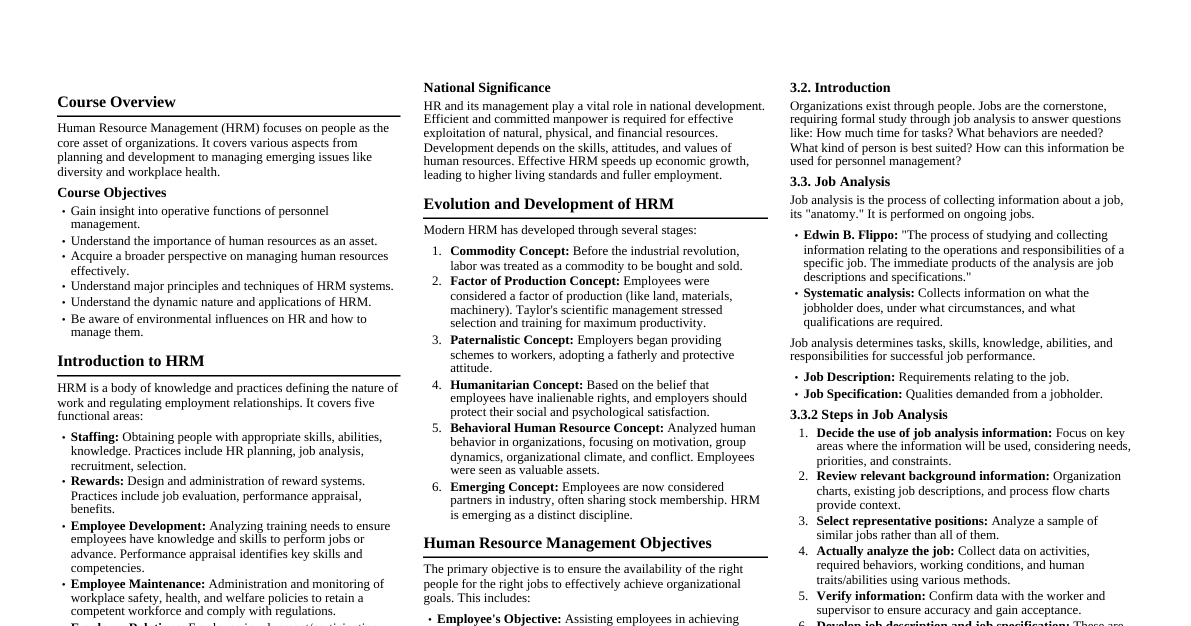
People Management: Meaning Definition: People management refers to the set of practices and processes focused on managing, developing, and optimizing the performance and well-being of employees within an organization. It encompasses all aspects of how people are treated at work, aiming to foster a positive and productive work environment. Often viewed as a holistic approach to employee relations, productivity, and satisfaction. Features of People Management Employee Development: Focus on training, skill enhancement, career planning, and personal growth. Performance Management: Setting goals, monitoring progress, providing feedback, and evaluating performance. Motivation & Engagement: Creating an environment where employees feel valued, motivated, and committed to organizational goals. Communication: Ensuring clear, open, and effective communication channels across all levels. Conflict Resolution: Addressing and resolving workplace disputes and grievances fairly. Team Building: Fostering collaboration, cohesion, and effective teamwork. Work-Life Balance: Supporting employee well-being and helping them balance professional and personal lives. Recognition & Reward: Implementing systems to acknowledge and compensate employees for their contributions. Culture Building: Shaping a positive and inclusive organizational culture. Significance of People Management Increased Productivity: Engaged and well-managed employees tend to be more productive and efficient. Improved Employee Retention: A positive work environment and development opportunities reduce turnover. Enhanced Employee Satisfaction: Employees who feel valued and supported are generally more satisfied with their jobs. Better Organizational Culture: Effective people management fosters a healthy, collaborative, and ethical workplace culture. Innovation & Creativity: Empowered employees are more likely to contribute new ideas and solutions. Adaptability to Change: A well-managed workforce can adapt more readily to market changes and organizational shifts. Stronger Employer Brand: Organizations known for good people management attract top talent. Achievement of Business Goals: Aligning individual performance with strategic objectives helps achieve overall business success. Difference between People Management and Human Resource Management (HRM) Feature People Management Human Resource Management (HRM) Focus Employee well-being, motivation, development, and engagement; holistic approach to people. Administrative and strategic management of human capital; policies, processes, and compliance. Scope Broader, more human-centric; emphasizes soft skills, relationships, and culture. More structured and process-oriented; covers recruitment, payroll, benefits, legal compliance. Approach Relational, empathetic, and developmental. Aims to empower and inspire. Transactional, systematic, and administrative. Aims to optimize and control resources. Goal To create a thriving workplace where employees are happy, productive, and committed. To effectively manage human resources to meet organizational objectives and comply with regulations. Key Activities Mentoring, coaching, feedback, team building, conflict resolution, culture shaping. Recruitment, onboarding, payroll, benefits administration, performance appraisals, legal compliance, HR strategy. Perspective Often seen as a leadership responsibility, integrated into daily management. Typically a distinct department or function within an organization. Evolution Evolved from HRM, focusing more on the "human" aspect rather than just "resources." Traditional function that has evolved to include strategic elements. Overlap: While distinct, the two concepts are highly interconnected. Effective HRM provides the framework and tools, while people management is the daily application of those principles by managers and leaders to foster a positive employee experience.