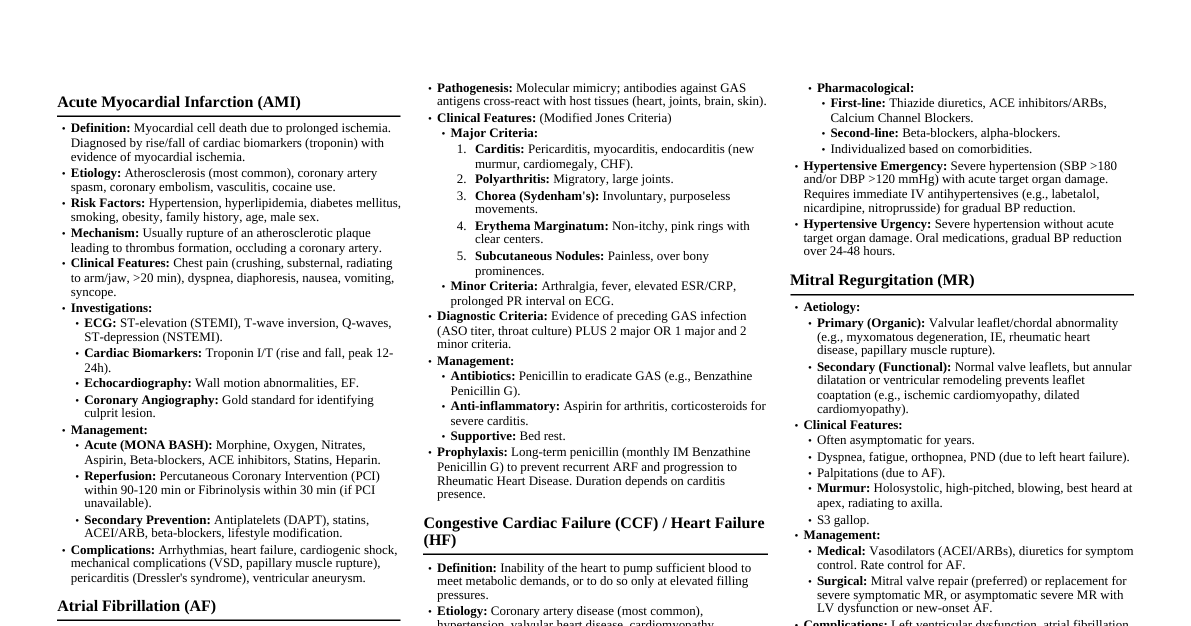
Cardiology Essentials
Cheatsheet Content
Acute Myocardial Infarction (AMI) - Detailed Definition: Acute myocardial infarction (AMI) is defined as myocardial cell death due to prolonged ischemia. The diagnosis requires evidence of myocardial necrosis in a clinical setting consistent with acute myocardial ischemia. This is typically identified by a rise and/or fall of cardiac biomarkers (preferably troponin) with at least one value above the 99th percentile upper reference limit, in conjunction with evidence of myocardial ischemia, such as symptoms of ischemia, new ischemic ECG changes, development of pathological Q waves, or imaging evidence of new loss of viable myocardium or new regional wall motion abnormality. Etiology Type 1 AMI: Spontaneous MI related to atherosclerotic plaque rupture, ulceration, erosion, or dissection with resulting intraluminal thrombus in one or more coronary arteries leading to decreased myocardial blood flow or distal platelet emboli with subsequent myocardial necrosis. This accounts for the vast majority of MIs. Type 2 AMI: Myocardial infarction secondary to an imbalance between myocardial oxygen supply and demand, in the absence of primary coronary artery disease (e.g., severe anemia, hypotension, tachyarrhythmias, respiratory failure, severe hypertension with or without left ventricular hypertrophy). Other Types (less common): Type 3: Sudden unexpected cardiac death, with symptoms suggestive of myocardial ischemia, accompanied by presumed new ischemic ECG changes or LBBB, but death occurring before cardiac biomarkers are available or before they would rise. Type 4a: MI associated with PCI. Type 4b: MI associated with stent thrombosis. Type 5: MI associated with CABG. Risk Factors Modifiable: Dyslipidemia: Elevated LDL-C, low HDL-C, high triglycerides. Hypertension: Sustained elevated blood pressure damages endothelium. Diabetes Mellitus: Accelerates atherosclerosis, causes endothelial dysfunction. Smoking: Causes endothelial injury, promotes thrombosis, increases LDL oxidation. Obesity: Associated with dyslipidemia, hypertension, insulin resistance. Physical Inactivity: Contributes to obesity, dyslipidemia, hypertension. Psychosocial Stress: Chronic stress can increase catecholamines, affecting BP and heart rate. Unhealthy Diet: High in saturated/trans fats, cholesterol, sodium, refined sugars. Non-modifiable: Age: Risk increases with age (men >45, women >55). Sex: Men generally have a higher risk at younger ages; risk equalizes in older age. Family History: Premature CAD in a first-degree relative (men Genetic Predisposition. Mechanism (Pathophysiology) The primary mechanism for Type 1 AMI is the rupture or erosion of an atherosclerotic plaque in a coronary artery. This exposes thrombogenic material (e.g., collagen, tissue factor) to the circulating blood, leading to platelet activation, adhesion, and aggregation, forming a platelet-rich thrombus. This is followed by activation of the coagulation cascade, resulting in fibrin formation and stabilization of the thrombus. If the thrombus severely occludes the coronary artery, it leads to a critical reduction in blood flow (ischemia) to the myocardial tissue supplied by that artery. Prolonged ischemia (typically >20-30 minutes) causes irreversible damage and necrosis of cardiomyocytes, leading to myocardial infarction. The extent of myocardial damage depends on the duration and severity of the ischemia, the size of the occluded vessel, and the presence of collateral circulation. Clinical Features Chest Pain: The hallmark symptom. Typically described as severe, crushing, squeezing, pressure, tightness, or fullness. Located retrosternally, often radiating to the left arm, shoulder, jaw, neck, back, or epigastrium. It is usually prolonged (>20 minutes), not relieved by rest or nitroglycerin. Associated Symptoms: Dyspnea: Due to left ventricular dysfunction and pulmonary congestion. Diaphoresis: Profuse sweating, often cold and clammy skin. Nausea and Vomiting: Common, especially with inferior wall MI (due to vagal stimulation). Palpitations: Due to arrhythmias. Syncope or Near-Syncope: Due to severe bradycardia, tachyarrhythmias, or hypotension. Anxiety or Sense of Impending Doom. Atypical Presentations: More common in women, elderly patients, and diabetics. Symptoms may include unexplained fatigue, dyspnea, epigastric pain, indigestion, or isolated arm/shoulder pain without classic chest pain. Investigations Electrocardiogram (ECG): STEMI (ST-segment Elevation MI): New ST-segment elevation in two contiguous leads ($>1$ mm in limb leads, $>2$ mm in chest leads) or new left bundle branch block (LBBB). NSTEMI (Non-ST-segment Elevation MI): ST-segment depression, T-wave inversion, or non-specific changes, in the presence of elevated cardiac biomarkers. Pathological Q-waves: Reflect transmural necrosis, developing hours to days after MI. Cardiac Biomarkers: High-sensitivity Cardiac Troponin (hs-cTn I or T): Most sensitive and specific markers. A rise and/or fall pattern with at least one value above the 99th percentile URL is diagnostic. Troponins typically rise within 3-12 hours of symptom onset, peak at 24-48 hours, and remain elevated for 5-14 days. Creatine Kinase-MB (CK-MB): Less sensitive and specific than troponin. Rises within 3-12 hours, peaks at 24 hours, and returns to normal within 48-72 hours. Useful for detecting re-infarction. Echocardiography: Assesses left ventricular function (ejection fraction), identifies regional wall motion abnormalities consistent with ischemia, evaluates for mechanical complications (e.g., papillary muscle rupture, VSD), and excludes other diagnoses. Coronary Angiography: The gold standard for visualizing coronary artery anatomy, identifying the culprit lesion, and guiding revascularization strategies (PCI). Performed emergently in STEMI and high-risk NSTEMI. Blood Tests: Complete blood count (CBC), electrolytes, renal function, lipid profile, glucose. Management Management aims to restore blood flow to the ischemic myocardium, limit infarct size, prevent complications, and improve long-term prognosis. Initial Stabilisation (MONA B): Morphine: For pain relief and anxiolysis. Oxygen: If hypoxemic (SaO2 Nitroglycerin: Sublingual for chest pain, IV for persistent pain or hypertension, but use with caution in inferior MI (risk of hypotension). Aspirin: 150-300 mg chewed, antiplatelet effect. Beta-blockers: Oral or IV, reduce myocardial oxygen demand, limit infarct size, prevent arrhythmias. Contraindicated in acute heart failure, bradycardia, hypotension. Reperfusion Therapy (for STEMI): Primary Percutaneous Coronary Intervention (PCI): Preferred method. Timely restoration of blood flow by balloon angioplasty and stent placement. Door-to-balloon time target is Fibrinolysis (Thrombolysis): If PCI is not available within the recommended time window. Administered within 30 minutes of hospital arrival. Contraindicated in patients with high bleeding risk. Antithrombotic Therapy: Dual Antiplatelet Therapy (DAPT): Aspirin + P2Y12 inhibitor (Clopidogrel, Prasugrel, Ticagrelor) for at least 12 months after ACS. Anticoagulation: Heparin (unfractionated or LMWH) during PCI and for a period post-PCI/fibrinolysis. Adjunctive Medications: Statins: High-intensity statins (e.g., Atorvastatin, Rosuvastatin) to lower LDL-C and stabilize plaques. ACE Inhibitors/ARBs: Started within 24 hours in patients with anterior MI, heart failure, or reduced EF, to prevent LV remodeling. Mineralocorticoid Receptor Antagonists (MRAs): Spironolactone or Eplerenone in patients with LVEF Cardiac Rehabilitation: Structured exercise and education program for secondary prevention. Complications Arrhythmias: Most common complication. Ventricular tachycardia (VT), ventricular fibrillation (VF), bradyarrhythmias, heart blocks (especially with inferior MI). Heart Failure: Due to extensive myocardial damage or mechanical complications. Can progress to cardiogenic shock. Cardiogenic Shock: Severe pump failure, hypotension, and tissue hypoperfusion. Mechanical Complications: Papillary Muscle Rupture: Leads to acute severe mitral regurgitation. Ventricular Septal Rupture: Causes a left-to-right shunt. Left Ventricular Free Wall Rupture: Catastrophic, leading to cardiac tamponade and death. Ventricular Aneurysm: Dilated, scarred segment of ventricle, risk of mural thrombus and arrhythmias. Pericarditis: Early Pericarditis: Within a few days, due to inflammation over the infarcted area. Dressler's Syndrome (Post-MI Syndrome): Late pericarditis (weeks to months post-MI) with fever, pleurisy, and pericardial effusion, thought to be autoimmune. Thromboembolism: Mural thrombus formation in the left ventricle, leading to systemic embolization (e.g., stroke). Atrial Fibrillation (AF) - Detailed Definition: Atrial fibrillation is a supraventricular tachyarrhythmia characterized by uncoordinated atrial electrical activity and ineffective atrial contraction. On ECG, it manifests as irregularly irregular R-R intervals, absence of distinct P waves, and irregular, chaotic fibrillatory waves (f waves). Types of AF The classification is based on the duration and spontaneous termination of AF episodes: Paroxysmal AF: Episodes that terminate spontaneously or with intervention within 7 days of onset. These episodes can recur. Persistent AF: Episodes that last for more than 7 days, including those terminated by pharmacological or electrical cardioversion. Long-standing Persistent AF: Continuous AF of more than 12 months' duration. Permanent AF: A term used when the patient and physician decide to accept AF and no further attempts at rhythm control (e.g., cardioversion, ablation) will be pursued. This is a treatment strategy, not a pathophysiological state. New-onset AF: AF diagnosed for the first time, regardless of duration or symptoms. Characteristics that Differentiate AF Types Duration of Episodes: The primary differentiator. Paroxysmal is 7 days, long-standing persistent is >12 months. Spontaneous Termination: Paroxysmal AF can terminate on its own, while persistent and long-standing persistent AF typically require intervention. Progression: AF is a progressive disease. Paroxysmal AF can evolve into persistent and then long-standing persistent AF over time, often due to increasing atrial remodeling. Treatment Goals: For paroxysmal and persistent AF, rhythm control (maintaining sinus rhythm) is often a primary goal, though rate control is also an option. For long-standing persistent and permanent AF, rate control and stroke prevention become paramount, and rhythm control strategies are often more challenging or less successful. Pathogenesis and Development of Common Arrhythmias Involved in Heart Failure, Particularly Atrial Fibrillation Atrial fibrillation and heart failure (HF) have a complex, bidirectional relationship. HF can cause AF, and AF can worsen HF. The pathogenesis of AF involves a combination of triggers, a susceptible substrate, and a modulator. Triggers: Ectopic beats, often originating from the pulmonary veins, are common initiators of AF. These rapidly firing foci can overwhelm the atrial tissue. Substrate: The atrial myocardium undergoes structural and electrical remodeling, creating a substrate conducive to the maintenance of AF. This remodeling includes: Atrial Dilation: Increased atrial pressure and volume overload (common in HF) stretch the atrial walls, leading to dilation. Fibrosis: Chronic pressure/volume overload and neurohormonal activation (e.g., RAAS, sympathetic nervous system in HF) promote atrial fibrosis. Fibrotic tissue creates areas of slow conduction and conduction block, facilitating re-entrant circuits. Electrical Remodeling: Changes in ion channel expression and function lead to shortened atrial refractory periods, further promoting re-entry. Inflammation and Oxidative Stress: These processes, often elevated in HF, contribute to atrial remodeling. Mechanisms in Heart Failure: Increased Left Atrial Pressure: In HF, particularly with diastolic dysfunction (HFpEF) or systolic dysfunction (HFrEF), increased left ventricular end-diastolic pressure is transmitted to the left atrium, leading to left atrial enlargement and stretch. Neurohormonal Activation: Chronic HF activates the sympathetic nervous system and the renin-angiotensin-aldosterone system (RAAS), which contribute to atrial fibrosis and electrical instability. Inflammation: Systemic inflammation in HF can directly impact atrial tissue. Ischemia: Coronary artery disease, a common cause of HF, can also contribute to atrial remodeling. The development of AF in HF patients increases morbidity and mortality. AF leads to loss of atrial kick, which can significantly reduce cardiac output in patients with stiff ventricles (HFpEF). The rapid, irregular ventricular response in AF can also lead to tachycardia-induced cardiomyopathy, worsening pre-existing HF. Furthermore, AF significantly increases the risk of stroke due to thrombus formation in the dilated, poorly contracting left atrium. Management of Atrial Fibrillation Management strategies for AF focus on three main pillars: rate control, rhythm control, and stroke prevention. 1. Stroke Prevention (Anticoagulation): This is paramount due to the high risk of thromboembolic events. The CHA2DS2-VASc score is used to assess stroke risk: C - Congestive heart failure (1 point) H - Hypertension (1 point) A2 - Age $\ge 75$ years (2 points) D - Diabetes mellitus (1 point) S2 - Prior Stroke/TIA/Thromboembolism (2 points) V - Vascular disease (MI, PAD, aortic plaque) (1 point) A - Age 65-74 years (1 point) Sc - Sex category (Female) (1 point) Recommendations: Score $\ge 2$ in males or $\ge 3$ in females: Oral anticoagulation (OAC) is recommended. Score 1 in males or 2 in females: OAC should be considered. Score 0 in males or 1 in females: OAC is usually not needed. Anticoagulants: Non-vitamin K oral anticoagulants (NOACs/DOACs): Apixaban, Rivaroxaban, Dabigatran, Edoxaban are generally preferred over Warfarin due to comparable efficacy, lower bleeding risk (especially intracranial hemorrhage), and no need for routine INR monitoring. Warfarin: Vitamin K antagonist, requires regular INR monitoring (target 2.0-3.0). 2. Rate Control: Aims to slow the ventricular response to AF, improving symptoms and preventing tachycardia-induced cardiomyopathy. Beta-blockers: (e.g., Metoprolol, Bisoprolol, Carvedilol) are first-line, especially in patients with co-existing CAD or HF. Non-dihydropyridine Calcium Channel Blockers: (e.g., Diltiazem, Verapamil) are effective, but should be used with caution or avoided in patients with HFrEF. Digoxin: Less effective for rate control during exertion, but useful in sedentary patients or those with HFrEF where beta-blockers/CCBs are contraindicated. Target resting heart rate is typically 3. Rhythm Control: Aims to restore and maintain sinus rhythm. It is often considered in symptomatic patients, younger patients, or those with new-onset AF. Electrical Cardioversion: Synchronized direct current (DC) shock to reset the heart rhythm. Requires anticoagulation before and after if AF duration is >48 hours. Pharmacological Cardioversion: Antiarrhythmic drugs (e.g., Flecainide, Propafenone, Amiodarone, Dofetilide, Ibutilide) can be used to convert AF to sinus rhythm. Antiarrhythmic Drugs for Rhythm Maintenance: (e.g., Amiodarone, Sotalol, Flecainide, Propafenide, Dofetilide) are used to prevent AF recurrence, but have potential side effects and may become less effective over time. Catheter Ablation: A procedure to isolate or destroy tissue responsible for initiating or maintaining AF (often pulmonary vein isolation). More effective than antiarrhythmic drugs for maintaining sinus rhythm, especially in paroxysmal AF. Considered for symptomatic patients refractory to antiarrhythmic drugs or as a first-line option in selected patients. Infective Endocarditis (IE) - Detailed Definition: Infective endocarditis (IE) is a microbial infection of the endocardial surface of the heart, most commonly affecting heart valves (native or prosthetic) but also able to involve septal defects, chordae tendineae, or endocardial surfaces near turbulent blood flow. It is characterized by the formation of vegetations, which are masses of platelets, fibrin, microorganisms, and inflammatory cells. Etiology IE is caused by various microorganisms, with bacteria being the most common. The causative organism often dictates the clinical course and prognosis. Bacteria: Staphylococcus aureus: The most frequent cause of acute IE, especially in intravenous drug users (IVDU) and patients with prosthetic valves or indwelling catheters. It causes rapid valve destruction and systemic complications. Streptococcus viridans group: Common cause of subacute IE, typically affecting previously damaged native valves (e.g., rheumatic heart disease, bicuspid aortic valve). Enterococci: Increasingly recognized cause, especially in elderly men undergoing genitourinary or gastrointestinal procedures. Coagulase-negative Staphylococci (e.g., S. epidermidis ): Predominant cause of prosthetic valve endocarditis, particularly within the first year after surgery. HACEK group ( Haemophilus, Aggregatibacter, Cardiobacterium, Eikenella, Kingella ): Fastidious gram-negative bacteria, often causing large vegetations and embolic events. Other bacteria: Less common, e.g., Bartonella, Brucella, Coxiella burnetii. Fungi: (e.g., Candida, Aspergillus) Less common but highly virulent, often seen in immunocompromised patients, IVDU, or after prolonged antibiotic use. Associated with large vegetations and high mortality. Clinical Features (Modified Duke Criteria) The clinical presentation of IE is highly variable, ranging from an acute fulminant illness to a subacute, indolent course. Symptoms and signs arise from infection, valvular damage, embolization, and immunological phenomena. Major Criteria: Positive Blood Cultures: Typical microorganisms consistent with IE from two separate blood cultures (e.g., S. viridans , S. aureus , Enterococci, HACEK group). Persistently positive blood cultures (e.g., $\ge 2$ positive cultures drawn >12 hours apart, or all of 3 or a majority of $\ge 4$ cultures with first and last drawn $\ge 1$ hour apart). Single positive blood culture for Coxiella burnetii or anti-phase I IgG antibody titer $\ge 1:800$. Evidence of Endocardial Involvement: Echocardiography: Oscillating intracardiac mass on valve or supporting structures, in the path of regurgitant jets, or on implanted material in the absence of an alternative explanation. Abscess, pseudoaneurysm, intracardiac fistula. New partial dehiscence of a prosthetic valve. New valvular regurgitation (worsening or changing of a pre-existing murmur is not sufficient). Minor Criteria: Predisposition: Predisposing heart condition (e.g., prosthetic valve, prior IE, congenital heart disease, valvular heart disease) or IV drug use. Fever: Temperature $\ge 38^\circ C$ ($100.4^\circ F$). Vascular Phenomena: Arterial emboli, septic pulmonary infarcts, mycotic aneurysm, intracranial hemorrhage, conjunctival hemorrhages, Janeway lesions (non-tender, erythematous macules on palms/soles). Immunologic Phenomena: Glomerulonephritis, Osler's nodes (tender, reddish-purple nodules on fingertips/toes), Roth spots (retinal hemorrhages with pale centers), rheumatoid factor. Microbiological Evidence: Positive blood culture not meeting major criteria or serological evidence of active infection with organism consistent with IE. Non-specific Symptoms: Fatigue, malaise, weight loss, myalgias, arthralgias. Diagnosis: Definite IE is diagnosed by 2 major criteria, or 1 major and 3 minor criteria, or 5 minor criteria. Investigations Blood Cultures: The most crucial diagnostic test. At least three sets of blood cultures (each from a different venipuncture site) should be obtained over a 1-hour period (or 30 min if acute presentation) before initiating empiric antibiotic therapy. Cultures should ideally include aerobic and anaerobic bottles. Echocardiography: Transthoracic Echocardiography (TTE): Initial imaging modality, useful for detecting large vegetations, assessing valvular function, and identifying complications. Transesophageal Echocardiography (TEE): More sensitive and specific than TTE, especially for detecting small vegetations, prosthetic valve endocarditis, abscesses, and other perivalvular complications. It is recommended for all suspected cases of IE, especially with prosthetic valves or equivocal TTE findings. Laboratory Tests: Complete Blood Count (CBC): Anemia (normochromic, normocytic), leukocytosis. Inflammatory Markers: Elevated ESR and CRP. Renal Function Tests: May show impaired renal function due to glomerulonephritis or drug toxicity. Urinalysis: Microscopic hematuria, proteinuria. Other Imaging: CT scan: Useful for detecting systemic emboli (e.g., cerebral, splenic), mycotic aneurysms, or to assess for paravalvular extension. PET/CT: Emerging role, particularly for prosthetic valve endocarditis, to detect active infection. Management Management of IE involves prolonged antimicrobial therapy and often surgical intervention. 1. Antimicrobial Therapy: Empiric Therapy: Initiated promptly after obtaining blood cultures, based on clinical suspicion, patient characteristics (e.g., native vs. prosthetic valve, IVDU, hospital-acquired). Common empiric regimens include Vancomycin (for Staphylococci, Streptococci, Enterococci) often combined with an Aminoglycoside (e.g., Gentamicin) or Ceftriaxone. Targeted Therapy: Once the causative organism and its sensitivities are identified, the antibiotic regimen is narrowed. High-dose, bactericidal antibiotics are administered intravenously for a prolonged duration (typically 2-6 weeks, sometimes longer). Staphylococcal IE: Nafcillin or Oxacillin (for MSSA), Vancomycin (for MRSA). Streptococcal IE: Penicillin G or Ceftriaxone, often with Gentamicin for synergy. Enterococcal IE: Penicillin G or Ampicillin plus Gentamicin. 2. Surgical Intervention: Surgery (valve repair or replacement) is often necessary and should be considered early in patients with: Heart Failure: Due to severe valvular dysfunction (e.g., acute severe regurgitation). Uncontrolled Infection: Persistent bacteremia despite appropriate antibiotics, perivalvular extension (abscess, fistula), prosthetic valve dehiscence. Prevention of Embolism: Large vegetations (>10 mm), recurrent emboli despite antibiotics. Fungal Endocarditis: Generally requires surgery due to poor response to antifungals. 3. Management of Complications: Embolic Events: Anticoagulation for stroke prevention in IE is controversial and generally avoided unless there's a strong indication (e.g., prosthetic valve with AF). Heart Failure: Standard HF therapy, but surgical intervention typically required. Renal Failure: Supportive care, dialysis if needed. Mycotic Aneurysm: May require surgical or endovascular repair. Prevention and Prophylaxis Antibiotic prophylaxis for IE is recommended for a very limited group of high-risk patients undergoing specific dental procedures. High-Risk Cardiac Conditions (for which prophylaxis is recommended): Prosthetic cardiac valve or prosthetic material used for cardiac valve repair. Previous IE. Congenital heart disease (CHD): Unrepaired cyanotic CHD. Repaired CHD with prosthetic material or device, whether placed by surgery or catheter intervention, during the first 6 months after the procedure. Repaired CHD with residual defects at the site or adjacent to the site of a prosthetic patch or prosthetic device. Cardiac transplantation recipients who develop cardiac valvulopathy. Procedures for which Prophylaxis is Recommended: All dental procedures that involve manipulation of gingival tissue or the periapical region of teeth or perforation of the oral mucosa. Antibiotic Regimens (30-60 minutes before procedure): Oral: Amoxicillin 2g (adults). Unable to take oral meds: Ampicillin 2g IM/IV or Cefazolin/Ceftriaxone 1g IM/IV. Allergic to Penicillin/Ampicillin (oral): Clindamycin 600mg or Azithromycin/Clarithromycin 500mg. Allergic to Penicillin/Ampicillin (IV): Cefazolin/Ceftriaxone 1g IV or Clindamycin 600mg IV. Good Oral Hygiene: Emphasized for all patients, as it reduces the risk of bacteremia. Acute Rheumatic Fever (ARF) - Detailed Definition: Acute Rheumatic Fever (ARF) is a non-suppurative, acute inflammatory multi-system disease that occurs as a delayed immune-mediated complication of a pharyngeal infection with Group A Streptococcus (GAS), typically Streptococcus pyogenes . It can affect the heart, joints, brain, and skin. Recurrent episodes can lead to chronic Rheumatic Heart Disease (RHD), characterized by permanent damage to the heart valves. Etiology ARF is exclusively caused by an antecedent upper respiratory tract infection with specific rheumatogenic strains of Group A Streptococcus (GAS). Skin infections with GAS typically do not lead to ARF. The exact mechanism explaining why only certain strains are rheumatogenic is not fully understood, but it's linked to the M protein variability of the bacteria. Pathogenesis The pathogenesis of ARF is believed to be an autoimmune phenomenon triggered by "molecular mimicry." Streptococcal Infection: A pharyngeal infection with GAS leads to an immune response against streptococcal antigens. Antibody Production: The body produces antibodies against various streptococcal components, particularly the M protein. Molecular Mimicry: Certain epitopes of the M protein share structural similarities with host proteins found in the heart (myosin, laminin), joints, brain (basal ganglia), and skin. Cross-reactivity: The antibodies and T-lymphocytes generated against the streptococcal antigens cross-react with these host tissues, leading to an autoimmune inflammatory response in various organs. Organ Involvement: Heart (Carditis): Inflammation of all layers (pancarditis), leading to valvulitis (mitral and aortic most common), myocarditis, and pericarditis. Valvular damage is the most serious manifestation, potentially leading to RHD. Joints (Polyarthritis): Self-limiting, migratory inflammation of large joints. Brain (Chorea): Inflammation of the basal ganglia. Skin (Erythema Marginatum, Subcutaneous Nodules): Inflammatory reactions. Clinical Features and Diagnostic Criteria (Modified Jones Criteria) The diagnosis of ARF is primarily clinical, based on the Modified Jones Criteria, which require evidence of a preceding GAS infection plus a specific combination of major and minor clinical manifestations. The criteria are applied differently based on the risk of ARF in the population (low-risk vs. moderate-to-high-risk populations). Evidence of Preceding Group A Streptococcal Infection: At least one of the following is required: Positive throat culture or rapid streptococcal antigen test. Elevated or rising streptococcal antibody titer (e.g., Antistreptolysin O (ASO), anti-DNase B). History of recent scarlet fever. Major Criteria: Carditis: Inflammation of the heart, which can affect the pericardium, myocardium, or endocardium. Clinical evidence includes new or changing heart murmurs (mitral regurgitation, aortic regurgitation), cardiomegaly, pericardial friction rub, signs of heart failure. Echocardiographic evidence of valvulitis (e.g., mitral or aortic regurgitation) is crucial for diagnosis. Polyarthritis: Migratory arthritis affecting large joints (knees, ankles, elbows, wrists). It is typically acute, painful, and responsive to salicylates. Each joint is inflamed for a short period (days) before the inflammation migrates to another joint. Sydenham's Chorea: Neurological disorder characterized by involuntary, purposeless, jerky movements (chorea), emotional lability, and muscle weakness. It has a delayed onset (weeks to months after infection) and can be unilateral or bilateral. Erythema Marginatum: A transient, non-pruritic, serpiginous (snake-like) rash with a red border and clear center. It typically appears on the trunk and proximal extremities, sparing the face. Subcutaneous Nodules: Firm, painless, mobile nodules, typically found over bony prominences (elbows, knees, spine) and tendons. They are rare and usually indicate severe carditis. Minor Criteria: Arthralgia: Joint pain without objective signs of inflammation (in patients without polyarthritis as a major criterion). Fever: $\ge 38^\circ C$ ($100.4^\circ F$) in low-risk populations; $\ge 38^\circ C$ ($100.4^\circ F$) or $\ge 37.5^\circ C$ ($99.5^\circ F$) with additional risk factors in moderate-to-high-risk populations. Elevated Acute Phase Reactants: Elevated Erythrocyte Sedimentation Rate (ESR) or C-reactive protein (CRP). Prolonged PR Interval: On ECG (after accounting for age and heart rate, and in patients without carditis as a major criterion). Diagnosis for Initial Episode of ARF: Low-risk populations: 2 Major criteria OR 1 Major + 2 Minor criteria. Moderate-to-high-risk populations: 2 Major criteria OR 1 Major + 2 Minor criteria (with slightly modified fever and ESR/CRP cutoffs). Laboratory Investigations Evidence of Recent GAS Infection: Throat Culture: To detect current GAS infection. Rapid Streptococcal Antigen Detection Test (RADT): Quick but less sensitive than culture. Streptococcal Antibody Titers: Antistreptolysin O (ASO) Titer: Elevated in 80-85% of ARF cases. A rising titer is more significant than a single elevated value. Anti-DNase B Titer: Elevated in 70-75% of ARF cases, useful if ASO is negative, especially after skin infections (though ARF is usually associated with pharyngeal infections). Acute Phase Reactants: Erythrocyte Sedimentation Rate (ESR): Elevated. C-reactive protein (CRP): Elevated. Both indicate systemic inflammation. Electrocardiogram (ECG): May show prolonged PR interval (first-degree AV block) in up to 30% of patients, even without clinical carditis. Arrhythmias can also occur. Echocardiography with Doppler: Essential for diagnosing carditis, even in the absence of clinical signs. It can detect valvulitis (e.g., mitral or aortic regurgitation), chamber dilation, and pericardial effusion. Other Tests: CBC (may show leukocytosis), blood cultures (usually negative as ARF is a post-infectious phenomenon). Treatment of Acute Rheumatic Fever Treatment of ARF is primarily supportive and aims to eradicate the streptococcal infection, suppress inflammation, and prevent cardiac damage. 1. Eradication of Group A Streptococcus: Despite ARF being a post-infectious autoimmune disease, treating the residual streptococcal infection is crucial to prevent further immune stimulation and subsequent recurrence. Penicillin: The drug of choice. Benzathine Penicillin G: Single intramuscular injection (1.2 million units for adults, 600,000 units for children Oral Penicillin V: 250 mg 2-3 times daily for 10 days (less reliable due to compliance issues). For Penicillin-allergic patients: Erythromycin (250 mg 4 times daily for 10 days) or other macrolides. 2. Anti-inflammatory Treatment: Salicylates (Aspirin): For arthritis and fever. High doses (e.g., 60-100 mg/kg/day in divided doses) are used until symptoms subside, then tapered. Aspirin effectively relieves joint pain and fever but does not prevent cardiac damage. Corticosteroids (Prednisone): For moderate-to-severe carditis (e.g., with cardiomegaly, heart failure, or significant valvulitis). Prednisone (1-2 mg/kg/day) is given until inflammatory markers normalize, then gradually tapered over several weeks. Corticosteroids can reduce acute inflammation and may lessen immediate cardiac damage, but their long-term effect on preventing RHD is unproven. No Anti-inflammatory Treatment: For mild arthritis (arthralgia only) or chorea without carditis. 3. Management of Chorea: Sydenham's chorea is self-limiting but can be distressing. Supportive care: A quiet environment. Medications: Haloperidol, valproic acid, carbamazepine, or benzodiazepines (e.g., clonazepam) can be used to control severe choreiform movements. 4. Supportive Care: Bed Rest: Recommended during the acute inflammatory phase, especially with carditis, until inflammatory markers normalize. Heart Failure Management: Diuretics, ACE inhibitors, etc., if severe carditis leads to heart failure. Rheumatic Fever Prophylaxis Prophylaxis is critical to prevent recurrent episodes of ARF, which progressively worsen cardiac damage, leading to chronic rheumatic heart disease. 1. Primary Prophylaxis: Aims to prevent the initial episode of ARF by promptly and adequately treating all GAS pharyngitis. Antibiotic Regimen: Same as for eradication of GAS in ARF patients (e.g., single dose Benzathine Penicillin G IM or 10 days of oral Penicillin V). 2. Secondary Prophylaxis: Aims to prevent recurrent episodes of ARF in individuals who have already had one episode. This is the most effective way to prevent RHD progression. Antibiotic Regimen: Continuous administration of antibiotics. Benzathine Penicillin G: 1.2 million units intramuscularly every 3-4 weeks. This is the preferred method due to its reliability. Oral Penicillin V: 250 mg twice daily. Oral Sulfadiazine: 1g once daily (for penicillin-allergic patients). Oral Macrolides (Erythromycin): 250 mg twice daily (for penicillin-allergic patients). Duration of Secondary Prophylaxis: Depends on the clinical manifestations of the initial ARF episode. ARF without carditis: 5 years after the last attack or until age 21 years (whichever is longer). ARF with carditis but no residual heart disease (no valvular involvement on echo): 10 years after the last attack or until age 21 years (whichever is longer). ARF with carditis and residual heart disease (persistent valvular disease on echo): 10 years after the last attack or until age 40 years (whichever is longer), or even lifelong in some cases, especially with severe valvular disease or after valve surgery. Congestive Cardiac Failure (CCF) / Heart Failure (HF) - Detailed Definition: Heart failure (HF) is a complex clinical syndrome resulting from any structural or functional cardiac disorder that impairs the ability of the ventricle to fill with or eject blood. It is characterized by typical symptoms (e.g., dyspnea, fatigue) and signs (e.g., elevated jugular venous pressure, pulmonary crackles, peripheral edema) caused by structural and/or functional cardiac abnormality, leading to reduced cardiac output and/or elevated intracardiac pressures at rest or during stress. Congestive cardiac failure (CCF) is often used to describe HF with prominent fluid retention, leading to congestion. Etiology (Causes) HF is a common final pathway for many cardiovascular diseases. The causes can be broadly categorized as conditions that directly injure the myocardium, increase its workload, or impair its ability to fill. Coronary Artery Disease (CAD): The most common cause, leading to myocardial ischemia, infarction, and subsequent loss of viable myocardium, causing systolic and/or diastolic dysfunction (e.g., ischemic cardiomyopathy). Hypertension: Chronic uncontrolled hypertension leads to increased afterload, causing left ventricular hypertrophy (LVH) and eventually diastolic dysfunction (HFpEF) or systolic dysfunction (HFrEF). Valvular Heart Disease: Stenosis: Aortic stenosis (increased afterload), mitral stenosis (pulmonary congestion). Regurgitation: Aortic regurgitation (volume overload), mitral regurgitation (volume overload). Cardiomyopathies: Primary diseases of the heart muscle. Dilated Cardiomyopathy (DCM): Enlarged ventricles with impaired systolic function (idiopathic, viral, alcohol, genetic). Hypertrophic Cardiomyopathy (HCM): LVH with impaired diastolic function (genetic). Restrictive Cardiomyopathy (RCM): Stiff ventricles with impaired filling (amyloidosis, sarcoidosis). Arrhythmias: Persistent Tachyarrhythmias: (e.g., uncontrolled atrial fibrillation, sustained ventricular tachycardia) can lead to tachycardia-induced cardiomyopathy. Sustained Bradyarrhythmias: Can reduce cardiac output. Diabetes Mellitus: Contributes to CAD, hypertension, and can cause diabetic cardiomyopathy directly. Thyroid Disease: Hyperthyroidism (high-output HF) or hypothyroidism (bradycardia, pericardial effusion). Drug-induced: Chemotherapeutic agents (e.g., doxorubicin), some anti-arrhythmics. Alcohol Abuse: Can cause dilated cardiomyopathy. Infections: Myocarditis (viral, bacterial), Chagas disease. Infiltrative Diseases: Hemochromatosis, sarcoidosis. High-Output Heart Failure: Less common; heart can't meet metabolic demands (e.g., severe anemia, hyperthyroidism, large AV fistula, beriberi). Clinical Features Symptoms and signs of HF are due to reduced cardiac output (forward failure) and/or elevated intracardiac and pulmonary/systemic venous pressures (backward failure/congestion). Symptoms (Subjective): Dyspnea: Shortness of breath. Exertional Dyspnea: Occurs with physical activity. Orthopnea: Dyspnea when lying flat, relieved by sitting up. Paroxysmal Nocturnal Dyspnea (PND): Sudden awakening at night with severe dyspnea, relieved by sitting up or standing. Fatigue and Weakness: Due to reduced cardiac output and impaired tissue perfusion. Peripheral Edema: Swelling in the ankles, feet, legs, or sacrum, typically worse in the evening. Weight Gain: Due to fluid retention. Nocturnal Cough: Often dry, due to pulmonary congestion. Abdominal Symptoms: Nausea, anorexia, early satiety, right upper quadrant discomfort (due to hepatic congestion). Palpitations: Due to arrhythmias. Cerebral Symptoms: Dizziness, confusion (especially in elderly), due to reduced cerebral perfusion. Signs (Objective): General Appearance: Can be anxious, pale, diaphoretic. Cachexia in advanced HF. Vital Signs: Tachycardia, tachypnea, hypotension or hypertension. Elevated Jugular Venous Pressure (JVP): Reflects increased right atrial pressure and systemic venous congestion. Hepatojugular reflux may be present. Pulmonary Auscultation: Crackles (Rales): Inspiratory crackles at lung bases, indicating pulmonary edema. Wheezing: "Cardiac asthma" due to bronchospasm from pulmonary congestion. Dullness to Percussion: With decreased breath sounds if pleural effusions are present. Cardiac Auscultation: S3 Gallop: A low-pitched extra heart sound in early diastole, often heard with systolic dysfunction (ventricular dilation and rapid filling). S4 Gallop: A presystolic extra heart sound, often heard with diastolic dysfunction (stiff ventricle and atrial contraction). Murmurs: May indicate underlying valvular disease or functional mitral/tricuspid regurgitation due to chamber dilation. Peripheral Edema: Pitting edema in dependent areas. Hepatomegaly and Ascites: Due to hepatic congestion and fluid retention. Displaced Apex Beat: Laterally and/or inferiorly displaced in cardiomegaly. Investigations Investigations aim to confirm the diagnosis of HF, identify the underlying cause, assess severity, and guide management. 1. Electrocardiogram (ECG): Rarely normal in HF. Can show signs of previous MI (Q waves), LVH (hypertension), arrhythmias (AF, VT), bundle branch blocks. 2. Chest X-ray (CXR): Cardiomegaly: Cardiothoracic ratio >0.5. Pulmonary Venous Congestion: Cephalization of pulmonary vessels. Interstitial Edema: Kerley B lines. Alveolar Edema: Bat-wing appearance. Pleural Effusions: Blunting of costophrenic angles. 3. Echocardiography: The most important imaging test. Assesses: Left Ventricular Ejection Fraction (LVEF): Crucial for classifying HF (HFrEF, HFmrEF, HFpEF). Chamber Sizes and Wall Thickness: LV and LA dilation, LVH. Valvular Function: Stenosis, regurgitation. Diastolic Function: Impaired filling. Regional Wall Motion Abnormalities: Suggestive of ischemia. Pericardial Disease. 4. Natriuretic Peptides (BNP/NT-proBNP): Elevated levels are highly sensitive for HF and useful for diagnosis (especially in acute dyspnea), prognosis, and monitoring treatment response. Normal levels virtually rule out HF. 5. Blood Tests: Complete Blood Count (CBC): Anemia can exacerbate HF. Electrolytes, Renal Function (BUN, Creatinine): Assess kidney function (often impaired in HF), monitor for electrolyte imbalances (e.g., hyperkalemia with ACEi/ARBs/MRAs, hypokalemia with loop diuretics). Liver Function Tests (LFTs): May be abnormal due to hepatic congestion. Thyroid Function Tests: To rule out thyroid disease as a cause or exacerbating factor. Fasting Glucose/HbA1c: To screen for diabetes. Lipid Profile: To assess for CAD risk factors. 6. Other Imaging (as needed): Cardiac MRI: Detailed assessment of myocardial tissue (fibrosis, inflammation), viability, and accurate chamber quantification. Coronary Angiography: If CAD is suspected as the underlying cause, especially in HFrEF. Management of Congestive Cardiac Failure Management aims to relieve symptoms, improve quality of life, reduce hospitalizations, and prolong survival. It is tailored based on the LVEF. 1. Lifestyle Modifications: Sodium Restriction: Fluid Restriction: In severe HF or hyponatremia. Daily Weight Monitoring: To detect early fluid retention. Regular Exercise: Cardiac rehabilitation programs improve functional capacity. Smoking Cessation and Alcohol Avoidance. Vaccinations: Influenza and pneumococcal vaccines. 2. Pharmacological Therapy (for Heart Failure with Reduced Ejection Fraction - HFrEF, LVEF $\le 40\%$): This involves a combination of drugs that have been shown to reduce morbidity and mortality. Angiotensin-Converting Enzyme (ACE) Inhibitors or Angiotensin Receptor Blockers (ARBs): Mechanism: Block the renin-angiotensin-aldosterone system (RAAS), leading to vasodilation, reduced preload and afterload, and prevention of cardiac remodeling. Examples: Lisinopril, Enalapril, Ramipril (ACEi); Valsartan, Losartan, Candesartan (ARBs). Recommendation: All HFrEF patients, unless contraindicated. Angiotensin Receptor-Neprilysin Inhibitors (ARNIs): Mechanism: Sacubitril/Valsartan (Entresto) combines an ARB with a neprilysin inhibitor, which increases levels of natriuretic peptides, leading to vasodilation and natriuresis. Recommendation: Preferred over ACEi/ARBs in symptomatic HFrEF patients who tolerate ACEi/ARBs, as it further reduces morbidity and mortality. Beta-Blockers: Mechanism: Block sympathetic nervous system activity, reduce heart rate, improve LV function over time, and prevent arrhythmias. Examples: Carvedilol, Bisoprolol, Metoprolol Succinate (extended-release). Recommendation: All stable HFrEF patients, started at low doses and titrated slowly. Mineralocorticoid Receptor Antagonists (MRAs): Mechanism: Block aldosterone receptors, reducing sodium and water retention, preventing fibrosis, and improving potassium balance. Examples: Spironolactone, Eplerenone. Recommendation: HFrEF patients with LVEF $\le 35\%$ and NYHA class II-IV symptoms, or post-MI with LVEF $\le 40\%$ and HF/diabetes. Sodium-Glucose Cotransporter 2 (SGLT2) Inhibitors: Mechanism: Primarily used for diabetes, but Dapagliflozin and Empagliflozin have shown significant cardiovascular benefits in HFrEF (and now HFpEF), reducing hospitalizations and mortality. Recommendation: All HFrEF patients, regardless of diabetes status. Diuretics (Loop Diuretics): Mechanism: Promote excretion of sodium and water, reducing fluid overload and symptoms of congestion. Examples: Furosemide, Torsemide. Recommendation: For symptomatic relief of congestion; do not improve survival. Digoxin: Mechanism: Positive inotropic effect, slows AV nodal conduction. Recommendation: Considered in patients with HFrEF and persistent symptoms despite optimal guideline-directed medical therapy, especially if comorbid AF. Improves symptoms and reduces hospitalizations, but no mortality benefit. Hydralazine/Isosorbide Dinitrate: Recommendation: In African-American patients with NYHA class III-IV HFrEF already on optimal therapy, or in patients unable to tolerate ACEi/ARBs. 3. Device Therapy (for HFrEF): Implantable Cardioverter-Defibrillator (ICD): For primary prevention of sudden cardiac death in selected HFrEF patients with LVEF $\le 35\%$ and NYHA class II-III symptoms, after at least 3 months of optimal medical therapy. Cardiac Resynchronization Therapy (CRT): For HFrEF patients with LVEF $\le 35\%$, NYHA class II-IV symptoms, and wide QRS (LBBB morphology, $\ge 150$ ms), to improve LV function and symptoms. Heart Failure with Preserved Ejection Fraction (HFpEF) - Brief Note Definition: HFpEF is a clinical syndrome of heart failure with a preserved left ventricular ejection fraction (LVEF $\ge 50\%$) but with evidence of structural and/or functional cardiac abnormalities leading to elevated left ventricular filling pressures. The primary defect is often impaired diastolic relaxation and increased myocardial stiffness. Etiology: Strongly associated with comorbidities such as hypertension (most common), diabetes mellitus, obesity, chronic kidney disease, and atrial fibrillation. Clinical Features: Similar to HFrEF (dyspnea, fatigue, edema), but often with more prominent signs of congestion and preserved systolic function. Diagnosis: Requires typical HF symptoms/signs, LVEF $\ge 50\%$, and objective evidence of elevated LV filling pressures (e.g., elevated BNP/NT-proBNP, echocardiographic signs of diastolic dysfunction). Management: Historically, management focused on treating comorbidities and symptom control (e.g., diuretics for congestion). Recent trials have shown that SGLT2 inhibitors (Dapagliflozin, Empagliflozin) significantly reduce heart failure hospitalizations and cardiovascular mortality in HFpEF, making them a cornerstone of therapy. Control of blood pressure, heart rate (especially in AF), and blood glucose is crucial. Weight loss and regular exercise are important lifestyle interventions. Hypertension - Detailed Definition: Hypertension is a chronic medical condition characterized by persistently elevated arterial blood pressure. It is typically defined as a systolic blood pressure (SBP) $\ge 140$ mmHg and/or a diastolic blood pressure (DBP) $\ge 90$ mmHg, based on multiple readings taken on separate occasions. It is a major risk factor for cardiovascular disease, stroke, renal disease, and premature death. Causes of Hypertension 1. Primary (Essential) Hypertension (90-95% of cases): The vast majority of hypertension cases have no identifiable single cause. It is thought to be multifactorial, resulting from a complex interplay of genetic predisposition and environmental factors. Genetic Predisposition: Family history of hypertension significantly increases risk. Environmental/Lifestyle Factors: High dietary sodium intake. Obesity and sedentary lifestyle. Excessive alcohol consumption. Psychosocial stress. Low potassium and calcium intake. Pathophysiology: Involves abnormalities in several systems: Increased sympathetic nervous system activity. Overactivity of the renin-angiotensin-aldosterone system (RAAS). Endothelial dysfunction and increased vascular tone. Impaired renal sodium excretion. Insulin resistance. 2. Secondary Hypertension (5-10% of cases): Hypertension with an identifiable and potentially reversible underlying cause. Suspect secondary hypertension in patients with: Sudden onset of hypertension before age 30 or after age 50. Resistant hypertension (uncontrolled despite $\ge 3$ antihypertensive drugs). Hypertension with target organ damage out of proportion to BP elevation. Presence of specific signs/symptoms suggesting a secondary cause. Common Secondary Causes: Renal Parenchymal Disease: Chronic kidney disease (CKD) is a very common cause, as damaged kidneys struggle to excrete sodium and water, and activate the RAAS. Renovascular Hypertension: Renal artery stenosis (atherosclerotic or fibromuscular dysplasia) reduces renal blood flow, activating the RAAS. Primary Aldosteronism: Excess aldosterone production (adrenal adenoma or bilateral adrenal hyperplasia) leads to sodium retention, potassium wasting, and hypertension. Often associated with hypokalemia. Obstructive Sleep Apnea: Intermittent hypoxia and hypercapnia activate the sympathetic nervous system. Drug-Induced Hypertension: Nonsteroidal anti-inflammatory drugs (NSAIDs). Oral contraceptives. Corticosteroids. Decongestants (pseudoephedrine). Cocaine, amphetamines. Immunosuppressants (cyclosporine, tacrolimus). Pheochromocytoma: Catecholamine-producing tumor (usually in adrenal medulla), causing paroxysmal or sustained hypertension, often with headaches, palpitations, and sweating. Cushing's Syndrome: Excess cortisol production, leading to hypertension, central obesity, striae. Thyroid Disease: Hyperthyroidism (systolic HTN, wide pulse pressure) or hypothyroidism. Coarctation of the Aorta: Congenital narrowing of the aorta, causing hypertension in the upper extremities and hypotension in the lower extremities. Clinical Signs and Symptoms Hypertension is often asymptomatic, earning it the moniker "the silent killer." Symptoms, when present, are often non-specific or indicate target organ damage. Asymptomatic: Most individuals with hypertension have no symptoms and are diagnosed during routine screening. Non-Specific Symptoms (when BP is very high or fluctuates): Headache: Often occipital, worse in the morning. Dizziness or Lightheadedness. Epistaxis (nosebleeds). Tinnitus (ringing in the ears). Blurred Vision. Palpitations. Symptoms/Signs of Target Organ Damage: Cardiac: Dyspnea (due to LVH, HF), angina (CAD), peripheral edema. Neurological: Weakness, numbness, speech difficulties (TIA/stroke), severe headache, confusion, seizures (hypertensive encephalopathy). Renal: Polyuria, nocturia, edema (CKD). Vascular: Claudication (PAD), cold extremities. Ocular: Visual disturbances, floaters. Physical Examination Findings: Blood Pressure: Elevated readings are the primary sign. Measure in both arms. Retinal Examination (Fundoscopy): Hypertensive retinopathy (arteriolar narrowing, AV nicking, hemorrhages, exudates, papilledema in severe cases). Cardiac Examination: S4 heart sound (due to LVH and stiff ventricle). Sustained and displaced apex beat (LVH). Murmurs (e.g., aortic stenosis, which can cause hypertension, or aortic regurgitation). Vascular Examination: Diminished or absent peripheral pulses, bruits (carotid, renal, femoral). Radio-femoral delay (coarctation of aorta). Abdominal Examination: Renal bruits (renal artery stenosis), pulsatile mass (AAA). Neurological Examination: Focal deficits if stroke has occurred. Complications (Organ Manifestations) Chronic uncontrolled hypertension leads to damage in various target organs, significantly increasing morbidity and mortality. 1. Heart: Left Ventricular Hypertrophy (LVH): Increased afterload causes the LV to thicken, initially compensatory, but eventually leads to impaired diastolic function (HFpEF) and then systolic dysfunction (HFrEF). Coronary Artery Disease (CAD): Hypertension accelerates atherosclerosis, increasing risk of angina, myocardial infarction, and sudden cardiac death. Heart Failure: Both HFpEF and HFrEF. Arrhythmias: Atrial fibrillation is more common due to left atrial enlargement. 2. Brain: Stroke: Both ischemic (due to atherosclerosis of cerebral vessels) and hemorrhagic (due to rupture of cerebral microaneurysms) stroke risk is significantly increased. Transient Ischemic Attack (TIA): "Mini-stroke" with temporary neurological symptoms. Hypertensive Encephalopathy: Acute syndrome with severe headache, confusion, seizures, and altered mental status due to cerebral edema from very high BP. Vascular Dementia: Chronic hypertension contributes to cognitive decline. 3. Kidneys: Nephrosclerosis: Hypertensive damage to renal arterioles, leading to gradual loss of renal function. Chronic Kidney Disease (CKD) and End-Stage Renal Disease (ESRD): Hypertension is a leading cause of kidney failure. Proteinuria: Early sign of renal damage. 4. Eyes (Hypertensive Retinopathy): Arteriolar Narrowing: "Copper wire" or "silver wire" arteries. Arteriovenous Nicking: Artery crosses and compresses a vein. Hemorrhages, Exudates (Hard and Soft/Cotton Wool Spots): Indicate severe damage. Papilledema: Swelling of the optic disc, seen in malignant hypertension. Can lead to blindness. 5. Blood Vessels: Atherosclerosis: Accelerates plaque formation in all arteries. Peripheral Artery Disease (PAD): Claudication, limb ischemia. Aortic Aneurysm and Dissection: Weakens the aortic wall, increasing risk of dilation and rupture. Management of Hypertension Management involves a combination of lifestyle modifications and pharmacotherapy, individualized for each patient. 1. Lifestyle Modifications (Cornerstone of Management): Dietary Approaches to Stop Hypertension (DASH) Diet: Rich in fruits, vegetables, whole grains, low-fat dairy; low in saturated/total fat, cholesterol, and refined sugars. Sodium Restriction: Regular Physical Activity: $\ge 150$ minutes of moderate-intensity aerobic activity per week. Weight Management: Achieve and maintain a healthy weight (BMI 18.5-24.9 kg/m2). Moderation of Alcohol Consumption: Limit to $\le 2$ drinks/day for men, $\le 1$ drink/day for women. Smoking Cessation. 2. Pharmacological Therapy: Initiated when lifestyle modifications are insufficient or for higher risk patients. The choice of drug depends on the degree of BP elevation, presence of comorbidities, and patient characteristics. First-Line Agents (for most patients without compelling indications for other classes): Thiazide Diuretics: (e.g., Hydrochlorothiazide, Chlorthalidone) Mechanism: Increase sodium and water excretion, leading to decreased plasma volume and systemic vascular resistance. Benefits: Effective, inexpensive, good for volume-sensitive hypertension. Side Effects: Hypokalemia, hyponatremia, hyperglycemia, hyperuricemia. ACE Inhibitors (ACEi): (e.g., Lisinopril, Ramipril) Mechanism: Block the conversion of Angiotensin I to Angiotensin II, leading to vasodilation, reduced aldosterone, and prevention of cardiac/renal remodeling. Benefits: Excellent for patients with heart failure, post-MI, CKD, or diabetes. Side Effects: Dry cough, angioedema, hyperkalemia, acute renal failure (in bilateral renal artery stenosis). Angiotensin Receptor Blockers (ARBs): (e.g., Valsartan, Losartan) Mechanism: Block AT1 receptors, preventing angiotensin II effects. Similar benefits to ACEi but without the cough. Benefits: Used in patients who cannot tolerate ACEi due to cough. Side Effects: Similar to ACEi, but less cough. Calcium Channel Blockers (CCBs): Dihydropyridines (e.g., Amlodipine, Nifedipine): Primarily vasodilators. Benefits: Effective for isolated systolic hypertension, good for African-American patients. Side Effects: Peripheral edema, headache, flushing. Non-dihydropyridines (e.g., Verapamil, Diltiazem): Affect heart rate and contractility. Benefits: Also used for angina and rate control in AF. Side Effects: Bradycardia, constipation (verapamil). Second-Line and Add-on Agents: Beta-Blockers: (e.g., Metoprolol, Carvedilol) Mechanism: Reduce heart rate, contractility, and renin release. Benefits: Used for hypertension with compelling indications like CAD, heart failure (selected), tachyarrhythmias. Less effective as initial therapy for uncomplicated HTN. Side Effects: Bradycardia, fatigue, bronchospasm, erectile dysfunction. Alpha-Blockers: (e.g., Prazosin, Doxazosin) Mechanism: Block $\alpha$-adrenergic receptors, causing vasodilation. Benefits: Useful in patients with benign prostatic hyperplasia (BPH). Side Effects: Orthostatic hypotension (first-dose syncope). Aldosterone Antagonists (MRAs): (e.g., Spironolactone, Eplerenone) Mechanism: Block aldosterone receptors, leading to natriuresis and diuresis. Benefits: Particularly effective in resistant hypertension and primary aldosteronism. Side Effects: Hyperkalemia, gynecomastia (spironolactone). Direct Vasodilators: (e.g., Hydralazine, Minoxidil) Mechanism: Directly relax arterial smooth muscle. Used: For severe or refractory hypertension, often in combination with beta-blockers and diuretics. Central Alpha-2 Agonists: (e.g., Clonidine) Mechanism: Reduce sympathetic outflow from the brain. Used: For resistant hypertension, but side effects (sedation, dry mouth, rebound hypertension with abrupt withdrawal) limit use. Treatment Goals: Generally, target BP is Goals may vary based on age, comorbidities, and individual risk assessment. Mitral Regurgitation (MR) - Detailed Definition: Mitral regurgitation (MR) is a valvular heart disease characterized by the abnormal backflow of blood from the left ventricle (LV) into the left atrium (LA) during systole due to incomplete closure of the mitral valve leaflets. This leads to volume overload of both the LA and LV, with subsequent chamber dilation and potential heart failure. Aetiology MR can be broadly classified into primary (organic) and secondary (functional) types, depending on whether the valve leaflets/apparatus themselves are diseased or if the regurgitation is a consequence of LV remodeling. 1. Primary (Organic) Mitral Regurgitation: Involves structural abnormalities of the mitral valve leaflets, chordae tendineae, papillary muscles, or annulus. Degenerative Mitral Valve Disease (Myxomatous Degeneration): The most common cause in developed countries. It involves thickening and prolapse of one or both mitral leaflets (Mitral Valve Prolapse - MVP) into the LA during systole, often with chordal elongation or rupture. Rheumatic Heart Disease: The most common cause worldwide. Chronic rheumatic fever can lead to thickening, retraction, and calcification of the mitral leaflets and chordae, resulting in impaired coaptation. Often coexists with mitral stenosis. Infective Endocarditis: Infection of the mitral valve can cause leaflet perforation, destruction, or chordal rupture, leading to acute severe MR. Ischemic Papillary Muscle Dysfunction/Rupture: Acute myocardial infarction (especially inferior wall MI) can cause papillary muscle dysfunction or rupture, leading to acute severe MR. This is a life-threatening complication. Congenital Mitral Valve Anomalies: Rare, such as cleft mitral valve, parachute mitral valve. Trauma: Chest trauma can cause chordal rupture. Connective Tissue Disorders: Marfan syndrome, Ehlers-Danlos syndrome can predispose to myxomatous degeneration. Drug-Induced: Fenfluramine-phentermine, ergot derivatives. 2. Secondary (Functional) Mitral Regurgitation: Occurs in the setting of normal mitral valve leaflets but altered geometry of the left ventricle, leading to incomplete leaflet coaptation. It is typically a consequence of LV dysfunction and remodeling. Left Ventricular Dilatation: Conditions causing chronic LV volume overload (e.g., dilated cardiomyopathy, chronic aortic regurgitation) or pressure overload (e.g., severe aortic stenosis, hypertension) can lead to LV remodeling and annular dilation, pulling the leaflets apart. Ischemic Cardiomyopathy: Myocardial ischemia or infarction can cause regional wall motion abnormalities, leading to papillary muscle displacement and leaflet tethering, preventing proper coaptation. Clinical Features The clinical presentation of MR depends on its severity, acuteness, and the underlying cause. Acute severe MR presents differently from chronic MR. Acute Severe MR: Often presents with sudden onset of severe symptoms due to abrupt volume overload of a non-compliant LA and LV. Symptoms: Acute pulmonary edema (severe dyspnea, orthopnea, pink frothy sputum), cardiogenic shock (hypotension, cold extremities), profound fatigue. Signs: Pulmonary crackles, S3 gallop, soft or absent S1, a hyperdynamic precordium, and sometimes a soft, short systolic murmur (due to rapid equalization of LA-LV pressures). Chronic MR: The heart adapts to the volume overload over time, so patients may remain asymptomatic for years, even with severe MR. Symptoms develop as the heart's compensatory mechanisms fail. Symptoms: Dyspnea: Exertional dyspnea, orthopnea, paroxysmal nocturnal dyspnea (PND) due to pulmonary congestion. Fatigue and Weakness: Due to reduced forward cardiac output. Palpitations: Often due to atrial fibrillation (common complication of LA enlargement). Symptoms of Right-Sided Heart Failure: Peripheral edema, ascites, hepatomegaly (in advanced disease with pulmonary hypertension). Signs: Holosystolic Murmur: The classic finding. A high-pitched, blowing, holosystolic murmur, best heard at the apex with radiation to the axilla (primary MR) or to the sternum (secondary MR). S3 Gallop: Due to rapid ventricular filling in early diastole, indicating significant volume overload. Displaced and Hyperdynamic Apex Beat: Due to left ventricular enlargement and volume overload. Atrial Fibrillation: Irregularly irregular pulse, common due to left atrial dilation. Signs of Pulmonary Hypertension: Loud P2, right ventricular heave (in advanced disease). Management Management of MR depends on its severity, the presence of symptoms, LV function, and the underlying etiology. Surgical intervention is often required for severe MR. 1. Medical Management: For Asymptomatic Patients with Severe MR and Preserved LV Function: Surveillance with regular clinical and echocardiographic follow-up. For Symptomatic Patients or those with LV Dysfunction: Diuretics: (e.g., Furosemide) for symptom relief of pulmonary and systemic congestion. Vasodilators (ACE Inhibitors/ARBs): May be used in patients with hypertension or heart failure symptoms, especially in secondary MR, to reduce afterload and improve forward flow. They are not recommended as primary therapy to delay surgery in asymptomatic primary MR with normal LV function. Beta-Blockers: For rate control in atrial fibrillation or for heart failure. Anticoagulation: For patients with atrial fibrillation or a history of thromboembolism. Infective Endocarditis Prophylaxis: As per guidelines for high-risk patients. For Acute Severe MR: Emergent management involves IV vasodilators (e.g., sodium nitroprusside) to reduce afterload and improve forward flow, diuretics for pulmonary edema, and inotropes if hypotensive. Intra-aortic balloon pump (IABP) may be used as a bridge to surgery. Definitive treatment is usually urgent surgery. 2. Surgical Intervention: Surgery is the definitive treatment for severe MR. The choice between repair and replacement depends on valve morphology and surgeon experience. Mitral Valve Repair: (e.g., annuloplasty, leaflet resection, chordal repair) Preferred option: Whenever feasible, especially for primary MR (e.g., degenerative). It preserves LV function, has lower operative mortality, and better long-term outcomes than replacement. Mitral Valve Replacement (MVR): Indicated when repair is not technically feasible or in cases of severe valve destruction (e.g., extensive rheumatic disease, severe endocarditis). Patients will require lifelong anticoagulation if a mechanical prosthetic valve is used. Indications for Surgery (ACC/AHA Guidelines for Primary MR): Symptomatic severe primary MR: Surgery is indicated. Asymptomatic severe primary MR with LV dysfunction: LVEF $\le 60\%$ and/or LV end-systolic dimension (LVESD) $\ge 40$ mm. Asymptomatic severe primary MR with preserved LV function but new onset atrial fibrillation or pulmonary hypertension: Surgery is considered. Indications for Surgery (for Secondary MR): Surgical intervention for secondary MR is more complex and often considered in conjunction with coronary artery bypass grafting (CABG) for ischemic MR, or in patients with severe symptoms despite optimal medical therapy for heart failure. 3. Transcatheter Mitral Valve Repair (TMVR): MitraClip: A percutaneous edge-to-edge repair device. Indication: Recommended for symptomatic severe primary MR in high-risk surgical patients who are not candidates for surgery, and for symptomatic severe secondary MR in selected patients with heart failure on optimal medical therapy. Complications Heart Failure: Both acute and chronic, due to volume overload and eventual LV dysfunction. Pulmonary Hypertension: Due to chronic elevation of left atrial and pulmonary venous pressures. Can lead to right ventricular dysfunction and right-sided heart failure. Atrial Fibrillation: Common due to chronic left atrial dilation and pressure overload, increasing the risk of stroke. Infective Endocarditis: Damaged mitral valves are susceptible to infection. Sudden Cardiac Death: Rarely, in severe MR, especially with significant LV dysfunction or arrhythmias. Angina Pectoris - Detailed Definition: Angina pectoris is a clinical syndrome characterized by discomfort in the chest or adjacent areas, caused by transient myocardial ischemia. It occurs when there is an imbalance between myocardial oxygen supply and demand, typically due to atherosclerotic narrowing of coronary arteries. The discomfort is usually described as pressure, squeezing, heaviness, or tightness, rather than sharp or stabbing pain. Risk Factors The risk factors for angina pectoris are essentially the same as those for coronary artery disease (CAD), as angina is a manifestation of CAD. Modifiable Risk Factors: Dyslipidemia: Elevated LDL-cholesterol, low HDL-cholesterol, high triglycerides. Hypertension: Chronic high blood pressure contributes to endothelial damage and atherosclerosis. Diabetes Mellitus: Accelerates atherosclerosis, causes endothelial dysfunction, and impairs nitric oxide production. Smoking: Causes endothelial injury, promotes thrombosis, increases LDL oxidation, and reduces HDL. Obesity/Overweight: Especially abdominal obesity, contributes to insulin resistance, hypertension, and dyslipidemia. Physical Inactivity: Lack of exercise is associated with obesity, hypertension, and dyslipidemia. Unhealthy Diet: High intake of saturated and trans fats, cholesterol, sodium, and refined sugars. Psychosocial Factors: Chronic stress, depression, anxiety. Non-modifiable Risk Factors: Age: Risk increases with age (men >45 years, women >55 years or post-menopause). Sex: Men generally have a higher risk at younger ages; risk equalizes in women after menopause. Family History: Premature CAD (first-degree male relative Genetic Predisposition. Clinical Features Angina can be classified into several types based on its presentation and stability. The most common types are stable angina, unstable angina, and Prinzmetal's angina. 1. Stable Angina Pectoris: Characteristics: Predictable chest discomfort that occurs with a consistent level of physical exertion or emotional stress. It is relieved by rest or sublingual nitroglycerin within a few minutes (typically 1-5 minutes). Nature of Discomfort: Described as pressure, squeezing, heaviness, tightness, burning, or aching. Rarely sharp or stabbing. Location: Typically substernal, but can radiate to the left arm, shoulder, jaw, neck, back, or epigastrium. Duration: Usually lasts for 1-10 minutes. Associated Symptoms: Dyspnea, nausea, diaphoresis, fatigue, lightheadedness. Precipitating Factors: Physical exertion (walking uphill, carrying heavy objects), emotional stress, cold weather, heavy meals. 2. Unstable Angina Pectoris (a form of Acute Coronary Syndrome - ACS): Characteristics: More severe and dangerous form of angina. It is defined as: New onset angina of at least CCS (Canadian Cardiovascular Society) Class III severity. Angina that is rapidly worsening in frequency, intensity, or duration (e.g., from CCS Class I to III). Angina that occurs at rest and lasts for more than 20 minutes. Mechanism: Usually due to a sudden reduction in coronary blood flow, often caused by a rupture of an atherosclerotic plaque with subsequent non-occlusive thrombus formation. Clinical Significance: Indicates an increased risk of myocardial infarction and death. Requires immediate medical attention. 3. Prinzmetal's (Variant) Angina: Characteristics: Angina that occurs at rest, often at night or in the early morning hours, typically without a clear precipitating factor. Mechanism: Caused by transient coronary artery spasm, leading to temporary occlusion of a coronary artery. ECG Changes: Often shows transient ST-segment elevation during episodes, which resolves when the spasm subsides. Risk Factors: More common in younger individuals, often associated with smoking. Other Angina Equivalents: Some patients, particularly women, elderly, and diabetics, may experience atypical symptoms such as dyspnea, fatigue, nausea, or arm/jaw pain without classic chest discomfort. Management Management of angina pectoris aims to relieve symptoms, improve quality of life, prevent myocardial infarction, and prolong survival. It involves lifestyle modifications, pharmacotherapy, and sometimes revascularization. 1. Lifestyle Modifications: Smoking Cessation: The most impactful intervention. Dietary Changes: Low in saturated and trans fats, cholesterol, and sodium (e.g., Mediterranean or DASH diet). Regular Exercise: Gradual increase in physical activity, participation in cardiac rehabilitation programs. Weight Management: Achieve and maintain a healthy body weight. Blood Pressure Control: Maintain BP Diabetes Control: Optimize glycemic control (HbA1c Stress Management. 2. Pharmacological Therapy: Medications are used to reduce myocardial oxygen demand, increase oxygen supply, prevent thrombus formation, and manage risk factors. A. For Acute Symptom Relief: Nitrates (Sublingual Nitroglycerin): Mechanism: Potent vasodilator, reduces preload and afterload, and causes coronary vasodilation. Use: Sublingual tablet or spray for rapid relief of angina. Can be used prophylactically before activities known to cause angina. B. For Chronic Management (to prevent symptoms and events): Antiplatelet Therapy: Aspirin: 75-162 mg daily. Inhibits platelet aggregation, reducing the risk of MI and stroke. Recommended for all patients with CAD. P2Y12 Inhibitors: (e.g., Clopidogrel) If aspirin is contraindicated or for dual antiplatelet therapy after ACS or PCI. Beta-Blockers: (e.g., Metoprolol, Atenolol, Bisoprolol, Carvedilol) Mechanism: Reduce heart rate, contractility, and blood pressure, thereby decreasing myocardial oxygen demand. Increase myocardial perfusion time by prolonging diastole. Use: First-line anti-anginal therapy, especially in patients with prior MI or left ventricular dysfunction. Calcium Channel Blockers (CCBs): Mechanism: Reduce myocardial oxygen demand by decreasing afterload (vasodilation) and/or heart rate (non-dihydropyridines). Increase oxygen supply by coronary vasodilation. Use: Added if beta-blockers are insufficient or contraindicated. Non-dihydropyridines (Verapamil, Diltiazem) for rate control and anti-anginal effects. Dihydropyridines (Amlodipine, Nifedipine) primarily for vasodilation. Preferred for Prinzmetal's angina. Long-Acting Nitrates: (e.g., Isosorbide mononitrate, nitroglycerin patch) Mechanism: Systemic and coronary vasodilation. Use: For persistent symptoms despite beta-blockers and/or CCBs. Requires a nitrate-free interval (e.g., 8-12 hours) to prevent tolerance. Statins: (e.g., Atorvastatin, Rosuvastatin) Mechanism: Lower LDL-cholesterol, stabilize atherosclerotic plaques, and have anti-inflammatory effects. Use: High-intensity statin therapy recommended for all patients with CAD. ACE Inhibitors/ARBs: (e.g., Lisinopril, Valsartan) Mechanism: Reduce blood pressure, improve endothelial function, prevent ventricular remodeling. Use: Recommended for patients with CAD who also have hypertension, diabetes, left ventricular dysfunction, or chronic kidney disease. Ranolazine: Mechanism: Inhibits the late sodium current in cardiomyocytes, reducing myocardial oxygen demand. Use: As an add-on therapy for chronic stable angina refractory to other treatments. 3. Revascularization (PCI or CABG): Considered for patients with persistent, debilitating symptoms despite optimal medical therapy, or for those with high-risk coronary anatomy (e.g., left main disease, multi-vessel disease with reduced LV function). Percutaneous Coronary Intervention (PCI): Balloon angioplasty with stent placement to open narrowed coronary arteries. Coronary Artery Bypass Grafting (CABG): Surgical procedure to bypass blocked coronary arteries using grafts (e.g., saphenous vein, internal mammary artery). Mitral Stenosis (MS) - Detailed Definition: Mitral stenosis (MS) is a valvular heart disease characterized by narrowing of the mitral valve orifice, which obstructs blood flow from the left atrium (LA) to the left ventricle (LV) during diastole. This obstruction leads to increased pressure in the LA and pulmonary circulation, while the LV remains underfilled. Etiology Rheumatic Heart Disease: Accounts for virtually all cases of clinically significant mitral stenosis. Chronic rheumatic fever causes inflammation and fibrosis of the mitral valve leaflets, commissures, and chordae tendineae, leading to fusion of the commissures and thickening/shortening of the chordae, resulting in a "fish-mouth" or "buttonhole" appearance. The process is slow and progressive, with symptoms typically appearing 20-40 years after the initial rheumatic fever episode. Congenital Mitral Stenosis: A rare cause, often presenting in infancy or childhood. Mitral Annular Calcification: Severe calcification of the mitral annulus in elderly patients can sometimes extend to the leaflets, causing a mild degree of functional stenosis, but rarely severe. Other Rare Causes: Left atrial myxoma (tumor obstructing the inflow), thrombus, endocarditis with large vegetations. Symptoms Symptoms typically develop when the mitral valve area (MVA) narrows to approximately Dyspnea: The most common symptom. Exertional Dyspnea: Occurs with physical activity, as increased cardiac output demand leads to further elevation of LA and pulmonary pressures. Orthopnea and Paroxysmal Nocturnal Dyspnea (PND): Due to redistribution of blood to the lungs in the supine position. Acute Pulmonary Edema: Can be precipitated by conditions that increase heart rate or blood volume (e.g., exercise, fever, pregnancy, atrial fibrillation). Hemoptysis: Coughing up blood, due to rupture of small bronchial veins engorged by high pulmonary venous pressure. Fatigue and Weakness: Due to reduced forward cardiac output as the LV is underfilled. Palpitations: Often due to the onset of atrial fibrillation, which is a common complication. Hoarseness (Ortner's Syndrome): Rare, due to compression of the left recurrent laryngeal nerve by a dilated left atrium or enlarged pulmonary artery. Symptoms of Right-Sided Heart Failure: In advanced disease with severe pulmonary hypertension, patients may develop peripheral edema, ascites, and hepatomegaly. Embolic Events: Stroke or systemic emboli can occur, especially in the presence of atrial fibrillation or a dilated left atrium with spontaneous echo contrast (smoke). Signs General Appearance: Malar Flush: A reddish-purple discoloration of the cheeks, due to cutaneous vasodilation and cyanosis from low cardiac output and impaired oxygenation. Cyanosis: In severe cases, especially in the lips and nail beds. Pulse: Small volume pulse. Irregularly irregular pulse if atrial fibrillation is present. Jugular Venous Pressure (JVP): May be elevated if right heart failure or significant pulmonary hypertension is present. Cardiac Palpation: Loud, Tapping Apex Beat: Due to a palpable, loud S1. Right Ventricular Heave: If pulmonary hypertension leads to RV hypertrophy. Cardiac Auscultation: Loud S1 (Snapping S1): Due to delayed closure of the stiff mitral valve leaflets. As stenosis worsens or leaflets calcify, S1 may become softer. Opening Snap (OS): A high-pitched, sharp sound occurring in early diastole, after S2. It signifies abrupt opening of the stenotic mitral valve. The interval between S2 and OS shortens with increasing severity of MS. Diastolic Rumble: A low-pitched, mid-diastolic murmur, best heard at the apex with the bell of the stethoscope, with the patient in the left lateral decubitus position. It is typically non-radiating. Pre-systolic Accentuation: If the patient is in sinus rhythm, there may be an increase in murmur intensity just before S1 due to atrial contraction pushing blood through the stenotic valve. This is absent in atrial fibrillation. Pulmonary Hypertension Signs: Loud P2 (pulmonic component of S2), Graham Steell murmur (diastolic murmur of pulmonary regurgitation). Lung Auscultation: Crackles (rales) at the lung bases if pulmonary congestion is present. Management Management of MS focuses on symptom relief, preventing complications, and ultimately relieving the obstruction to blood flow. 1. Medical Management: Diuretics: (e.g., Furosemide) for symptom relief of pulmonary congestion and peripheral edema. Beta-Blockers or Non-Dihydropyridine Calcium Channel Blockers: (e.g., Metoprolol, Diltiazem) to control heart rate, especially in patients with atrial fibrillation. Slower heart rates prolong diastole, allowing more time for LV filling. Anticoagulation: Warfarin: Indicated for patients with: Atrial fibrillation (paroxysmal, persistent, or permanent). Prior systemic embolism. Left atrial thrombus (detected on echo). NOACs are generally not recommended for MS due to rheumatic etiology. Antibiotic Prophylaxis for Infective Endocarditis: As per guidelines for high-risk patients. Management of Atrial Fibrillation: Rate control with beta-blockers/CCBs/digoxin, and anticoagulation. Rhythm control may be attempted but is often challenging. 2. Intervention (Percutaneous Mitral Commissurotomy - PMC): Mechanism: A balloon catheter is used to dilate the stenotic mitral valve, separating the fused commissures. Indication: First-line treatment for symptomatic severe MS (MVA $\le 1.5$ cm$^2$) in patients with favorable valve anatomy (e.g., pliable, non-calcified leaflets, no significant mitral regurgitation, no left atrial thrombus). Benefits: Less invasive than surgery, good immediate and long-term results in selected patients. 3. Surgical Intervention (Mitral Valve Surgery): Surgical Commissurotomy: (Open-heart surgery to separate fused commissures) May be considered if PMC is unsuccessful or contraindicated. Mitral Valve Replacement (MVR): Indication: For symptomatic severe MS when PMC is contraindicated (e.g., heavily calcified valve, significant MR, LA thrombus) or unsuccessful. Choice of Valve: Mechanical (requires lifelong anticoagulation) or bioprosthetic valve (less durable but avoids lifelong anticoagulation). Complications Atrial Fibrillation: The most common arrhythmia, occurring due to chronic left atrial dilation and pressure overload. Increases risk of stroke. Systemic Embolism (Stroke): Due to thrombus formation in the dilated, stagnant left atrium, especially in the presence of atrial fibrillation. Pulmonary Hypertension: A direct consequence of increased left atrial pressure, leading to remodeling of pulmonary arterioles. Can progress to irreversible pulmonary vascular disease. Right Ventricular Failure: Due to chronic pulmonary hypertension. Infective Endocarditis: Stenotic valves are susceptible to infection, though less common than in regurgitant lesions. Congestive Heart Failure: Due to severe pulmonary congestion or eventual right heart failure. Conducting System of the Heart - Detailed The heart's conducting system is a specialized network of cardiac muscle cells that initiates and propagates electrical impulses throughout the myocardium, ensuring coordinated contraction of the atria and ventricles. This electrical activity is responsible for the rhythmic beating of the heart. Diagram of the Conducting System of the Heart Right Atrium Left Atrium Right Ventricle Left Ventricle SA Node AV Node Bundle of His RBB LBB Purkinje Fibers Purkinje Fibers Components and Function: Sinoatrial (SA) Node: Location: Located in the upper posterior wall of the right atrium, near the superior vena cava opening. Function: The primary pacemaker of the heart, initiating electrical impulses that determine the heart rate. It has the highest intrinsic rate of automaticity (60-100 beats/minute). Internodal Pathways: Function: Specialized conduction pathways that rapidly transmit the impulse from the SA node throughout the atria and to the AV node. Atrioventricular (AV) Node: Location: Located in the floor of the right atrium, near the interatrial septum. Function: Receives impulses from the atria. Crucially, it delays the impulse transmission to the ventricles (AV nodal delay), allowing the atria to fully contract and empty their blood into the ventricles before ventricular contraction begins. It can also act as a secondary pacemaker (40-60 beats/minute) if the SA node fails. Bundle of His (AV Bundle): Location: Extends from the AV node through the fibrous skeleton into the interventricular septum. Function: The only electrical connection between the atria and ventricles. Right and Left Bundle Branches: Location: The Bundle of His divides into the right bundle branch (RBB) and the left bundle branch (LBB) within the interventricular septum. The LBB further divides into anterior and posterior fascicles. Function: Carry the impulse quickly down the septum towards the apex of the heart. Purkinje Fibers: Location: A vast network of specialized conducting fibers that spread throughout the ventricular myocardium, originating from the bundle branches. Function: Rapidly distribute the electrical impulse to the ventricular muscle cells, ensuring a synchronized and efficient ventricular contraction from the apex upwards. Purkinje fibers have an intrinsic rate of 20-40 beats/minute and can act as a tertiary pacemaker. Various Atrioventricular (AV) Blocks AV blocks are disorders of impulse conduction from the atria to the ventricles through the AV node and/or His-Purkinje system. They are classified into three degrees based on the severity of the conduction delay or interruption. 1. First-Degree AV Block Definition: All atrial impulses are conducted to the ventricles, but with a prolonged delay at the AV node. Illustrative ECG: Every P wave is followed by a QRS complex. The PR interval is consistently prolonged ($>0.20$ seconds or $>5$ small squares). The rhythm is usually regular (unless underlying atrial arrhythmia). Clinical Significance: Usually asymptomatic and benign. Does not typically require treatment. May be a normal variant, or associated with increased vagal tone, certain medications (e.g., beta-blockers, calcium channel blockers, digoxin), or underlying heart disease. 2. Second-Degree AV Block Some, but not all, atrial impulses are conducted to the ventricles. There are two main types: a. Mobitz Type I (Wenckebach Phenomenon): Definition: Progressive lengthening of the PR interval over several beats until an atrial impulse is completely blocked, resulting in a dropped QRS complex. The cycle then repeats. Illustrative ECG: P waves occur regularly. PR interval progressively lengthens with each beat until a P wave is not followed by a QRS complex. The R-R interval progressively shortens before the dropped beat. The ventricular rhythm is irregular. Clinical Significance: Often benign and usually occurs at the level of the AV node. May be asymptomatic or cause mild symptoms (dizziness, fatigue). Often transient and due to increased vagal tone, inferior MI, or medications. Usually does not progress to complete heart block. Treatment (e.g., atropine, temporary pacing) only if symptomatic bradycardia. b. Mobitz Type II: Definition: Intermittent non-conduction of an atrial impulse to the ventricles without progressive lengthening of the PR interval. Illustrative ECG: P waves occur regularly. PR interval of conducted beats is constant (may be normal or prolonged). A P wave is occasionally not followed by a QRS complex (dropped beat). The ventricular rhythm is irregular, but the conducted R-R intervals are usually regular. Clinical Significance: More serious than Mobitz Type I, as it usually occurs below the AV node (in the Bundle of His or bundle branches). Higher risk of progression to complete heart block and symptomatic bradycardia. Often associated with structural heart disease (e.g., anterior MI, idiopathic fibrosis of conduction system). Often requires permanent pacemaker implantation, even if asymptomatic due to risk of progression. 3. Third-Degree (Complete) AV Block Definition: Complete dissociation between atrial and ventricular activity. No atrial impulses are conducted to the ventricles. The atria and ventricles beat independently. Illustrative ECG: P waves occur regularly at their own rate (atrial rate, usually faster). QRS complexes occur regularly at their own, slower rate (ventricular escape rhythm). There is no consistent relationship between P waves and QRS complexes. The ventricular escape rhythm can originate from the AV node (narrow QRS, 40-60 bpm) or the Purkinje fibers (wide QRS, 20-40 bpm). Clinical Significance: Always a serious condition, as the ventricular rate is very slow, leading to reduced cardiac output. Symptoms: Syncope, dizziness, severe fatigue, dyspnea, heart failure, sometimes sudden cardiac death. Causes: Extensive conduction system disease, inferior or anterior MI, severe hyperkalemia, drug toxicity (e.g., digoxin, beta-blockers). Treatment: Requires urgent treatment. Atropine or temporary transcutaneous/transvenous pacing initially, followed by permanent pacemaker implantation. Classify Cardiomyopathy? What are the Clinical Features Each Type? Outline the Treatment? - Detailed Definition: Cardiomyopathies are a heterogeneous group of diseases of the myocardium associated with structural and functional abnormalities of the heart muscle, in the absence of coronary artery disease, hypertension, valvular disease, or congenital heart disease sufficient to cause the observed myocardial abnormality. They are a major cause of heart failure, sudden cardiac death, and arrhythmias. Classification of Cardiomyopathy Cardiomyopathies are primarily classified based on their predominant pathophysiological and morphological characteristics. The most widely accepted classification is the World Heart Federation/American Heart Association classification, which identifies five main types: 1. Dilated Cardiomyopathy (DCM): Characterized by ventricular dilation and impaired systolic function. 2. Hypertrophic Cardiomyopathy (HCM): Characterized by left ventricular hypertrophy (LVH) that is not explained by abnormal loading conditions (e.g., hypertension, aortic stenosis). 3. Restrictive Cardiomyopathy (RCM): Characterized by impaired ventricular filling (diastolic dysfunction) due to increased myocardial stiffness, with relatively preserved ventricular wall thickness and systolic function. 4. Arrhythmogenic Right Ventricular Cardiomyopathy (ARVC/ARVD): Characterized by progressive fibrofatty replacement of the right ventricular myocardium, leading to RV dilation, dysfunction, and ventricular arrhythmias. 5. Unclassified Cardiomyopathies: Rare forms that do not fit into the other categories. Additionally, cardiomyopathies can be classified by their etiology (e.g., genetic, ischemic, inflammatory, toxic, stress-induced). Clinical Features and Treatment for Each Type 1. Dilated Cardiomyopathy (DCM) Characteristics: Marked dilation and thinning of one or both ventricles (predominantly the left ventricle). Significantly reduced systolic function (low LVEF). Often associated with functional mitral or tricuspid regurgitation due to annular dilation. Etiology: Idiopathic (most common): No identifiable cause. Genetic/Familial: Accounts for 30-50% of cases, often inherited in an autosomal dominant pattern (e.g., mutations in genes encoding cytoskeletal or sarcomeric proteins). Ischemic: Extensive coronary artery disease leading to large areas of myocardial damage and remodeling (sometimes classified as ischemic cardiomyopathy rather than primary DCM). Myocarditis: Viral infections (e.g., Coxsackievirus, adenovirus), leading to inflammation and subsequent damage. Toxic: Alcohol abuse, chemotherapy drugs (e.g., Doxorubicin), cocaine. Metabolic: Thyroid disease, nutritional deficiencies (e.g., thiamine). Peripartum Cardiomyopathy: Occurs during late pregnancy or early postpartum period. Tachycardia-induced Cardiomyopathy: Prolonged, uncontrolled tachyarrhythmias. Clinical Features: Primarily symptoms and signs of heart failure (both left and right-sided) due to reduced cardiac output and elevated filling pressures. Symptoms: Progressive dyspnea (exertional, orthopnea, PND), fatigue, weakness, peripheral edema, abdominal distension, palpitations, chest pain (less common). Signs: Tachycardia, S3 gallop, displaced and diffuse apex beat, crackles on lung auscultation, elevated JVP, peripheral edema, hepatomegaly, functional mitral/tricuspid regurgitation murmurs. Arrhythmias: Atrial fibrillation, ventricular arrhythmias (PVCs, VT), and conduction disturbances are common. Thromboembolism: Due to stasis in dilated chambers, increasing risk of stroke or systemic emboli. Treatment: Standard Heart Failure Therapy (Guideline-Directed Medical Therapy - GDMT): ACE Inhibitors/ARBs or ARNIs (Sacubitril/Valsartan). Beta-blockers (Carvedilol, Bisoprolol, Metoprolol succinate). Mineralocorticoid Receptor Antagonists (Spironolactone, Eplerenone). SGLT2 Inhibitors (Dapagliflozin, Empagliflozin). Diuretics for symptom relief. Arrhythmia Management: Antiarrhythmic drugs or catheter ablation for symptomatic arrhythmias. Device Therapy: Implantable Cardioverter-Defibrillator (ICD) for primary prevention of sudden cardiac death in selected patients with LVEF $\le 35\%$ and NYHA Class II-III symptoms. Cardiac Resynchronization Therapy (CRT) for patients with LVEF $\le 35\%$, wide QRS, and NYHA Class II-IV symptoms. Anticoagulation: For patients with atrial fibrillation or documented intraventricular thrombus. Heart Transplant: For end-stage refractory HF. Address underlying cause: Abstinence from alcohol, immunosuppression for myocarditis. 2. Hypertrophic Cardiomyopathy (HCM) Characteristics: Unexplained left ventricular hypertrophy (LVH) (wall thickness $\ge 15$ mm in adults) in the absence of conditions that cause secondary hypertrophy (e.g., hypertension, aortic stenosis). Often asymmetric, typically involving the interventricular septum. Normal or supranormal systolic function (preserved LVEF). Impaired diastolic filling (diastolic dysfunction) due to stiff ventricle. Often dynamic left ventricular outflow tract (LVOT) obstruction due to systolic anterior motion (SAM) of the mitral valve and septal hypertrophy. Etiology: Primarily genetic , inherited in an autosomal dominant pattern. Caused by mutations in genes encoding sarcomeric proteins (e.g., $\beta$-myosin heavy chain, myosin-binding protein C). Clinical Features: Highly variable, ranging from asymptomatic to severe symptoms and sudden cardiac death. Symptoms: Dyspnea: Most common, due to diastolic dysfunction and elevated LV filling pressures. Chest Pain (Angina): Due to myocardial ischemia (supply-demand mismatch, microvascular dysfunction). Syncope or Pre-syncope: Often exertional, due to LVOT obstruction, arrhythmias, or inadequate cardiac output. Palpitations: Due to supraventricular (AF) or ventricular arrhythmias (VT). Signs: Systolic Murmur: A crescendo-decrescendo systolic murmur, best heard at the left sternal border or apex, that typically increases with maneuvers that decrease LV volume (e.g., Valsalva, standing) and decreases with maneuvers that increase LV volume or afterload (e.g., squatting, handgrip). S4 gallop. Double apical impulse (due to prominent atrial kick and LV dyskinesis). Sudden Cardiac Death (SCD): A devastating complication, especially in young athletes, often due to ventricular arrhythmias. Treatment: Medical Therapy: To improve symptoms and prevent complications. Beta-blockers: First-line, reduce heart rate, improve diastolic filling, and decrease LVOT gradient. Non-dihydropyridine Calcium Channel Blockers: (e.g., Verapamil, Diltiazem) Improve diastolic function and reduce LVOT gradient. Disopyramide: An antiarrhythmic with negative inotropic effects, useful for reducing LVOT obstruction. Avoid: Vasodilators (nitrates, ACEi/ARBs) and diuretics (unless for congestion) if LVOT obstruction is present, as they can worsen obstruction. Arrhythmia Management: Anticoagulation for atrial fibrillation. Antiarrhythmic drugs for symptomatic arrhythmias. Device Therapy: Implantable Cardioverter-Defibrillator (ICD): For primary or secondary prevention of SCD in high-risk patients (e.g., prior cardiac arrest, spontaneous VT, family history of SCD, unexplained syncope, extreme LVH). Invasive Procedures for LVOT Obstruction (if symptomatic and refractory to medical therapy): Surgical Septal Myectomy: Surgical resection of a portion of the hypertrophied septum. Highly effective. Alcohol Septal Ablation: Percutaneous injection of alcohol into a septal perforator artery to induce a controlled infarction of the hypertrophied septum. Less invasive, but carries risk of complete heart block. 3. Restrictive Cardiomyopathy (RCM) Characteristics: Impaired ventricular filling (diastolic dysfunction) due to abnormally stiff ventricular walls, leading to high filling pressures. Relatively preserved ventricular systolic function and wall thickness in the early stages. Bi-atrial enlargement is common due to high atrial pressures. Etiology: Often secondary to infiltrative diseases or storage disorders. Amyloidosis: Most common cause in adults (e.g., light chain (AL) amyloidosis, transthyretin (ATTR) amyloidosis). Sarcoidosis: Granulomatous infiltration. Hemochromatosis: Iron overload. Fabry Disease: Lysosomal storage disorder. Scleroderma. Radiation-induced fibrosis. Idiopathic RCM: No identifiable cause. Clinical Features: Predominantly symptoms and signs of right-sided heart failure due to elevated systemic venous pressures, and dyspnea due to elevated pulmonary venous pressures. Symptoms: Prominent peripheral edema, ascites, hepatomegaly, fatigue, dyspnea (exertional, orthopnea). Signs: Markedly elevated JVP with a prominent 'y' descent, Kussmaul's sign (paradoxical increase in JVP with inspiration), S3 and S4 gallops, peripheral edema, ascites. Arrhythmias: Atrial fibrillation and conduction abnormalities are common. Low Voltage ECG with LVH on Echo: Classic finding in amyloidosis (discrepancy between ECG and echo). Treatment: Supportive: Focus on symptom control and managing fluid overload. Diuretics: To reduce congestion, but careful titration is needed to avoid excessive preload reduction, which can compromise cardiac output in a stiff ventricle. ACE Inhibitors/ARBs: May be used carefully to reduce afterload and improve symptoms. Beta-blockers/Calcium Channel Blockers: May be used to slow heart rate and prolong diastolic filling, but use with caution due to negative inotropic effects. Treat Underlying Cause: Amyloidosis: Chemotherapy for AL amyloidosis, specific therapies for ATTR amyloidosis (e.g., Tafamidis). Hemochromatosis: Phlebotomy or chelation therapy. Sarcoidosis: Corticosteroids. Heart Transplant: An option for selected patients with end-stage RCM, especially if the underlying disease is not systemic or can be controlled. Arrhythmia Management: Pacemaker for bradyarrhythmias, ICD for ventricular arrhythmias if indicated by underlying disease. 4. Arrhythmogenic Right Ventricular Cardiomyopathy (ARVC/ARVD) Characteristics: Progressive fibrofatty replacement of the right ventricular (RV) myocardium (and sometimes the LV). Leads to RV dilation, dysfunction, and aneurysm formation. Predominantly affects the RV inflow tract, outflow tract, and apex (the "triangle of dysplasia"). High propensity for life-threatening ventricular arrhythmias, especially ventricular tachycardia (VT) of RV origin. Etiology: Primarily genetic , inherited in an autosomal dominant pattern with incomplete penetrance. Caused by mutations in genes encoding desmosomal proteins (e.g., Plakophilin-2, Desmoglein-2, Desmocollin-2), which are crucial for cell-to-cell adhesion in cardiac muscle. Clinical Features: Often present in young adults. Arrhythmias: Most common presentation. Palpitations, syncope, near-syncope, or sudden cardiac death (often during exercise). Ventricular tachycardia with left bundle branch block (LBBB) morphology is characteristic. Heart Failure: Symptoms of right-sided heart failure (fatigue, dyspnea, peripheral edema) can develop in later stages due to progressive RV dysfunction. Physical Exam: Often normal in early stages. May show signs of RV dysfunction (elevated JVP, peripheral edema) in advanced disease. Diagnosis: Based on Task Force Criteria, which combine major and minor criteria from ECG (T-wave inversion in V1-V3, Epsilon wave), imaging (Echocardiography, Cardiac MRI showing RV dilation/dysfunction and fibrofatty infiltration), histology, and family history/genetics. Treatment: Prevention of Sudden Cardiac Death: Implantable Cardioverter-Defibrillator (ICD): The cornerstone of therapy for patients at high risk of SCD (e.g., prior cardiac arrest, sustained VT, syncope, severe RV dysfunction). Antiarrhythmic Drugs: Beta-blockers: First-line for symptomatic ventricular arrhythmias. Sotalol, Amiodarone: May be used for refractory VT. Catheter Ablation: For recurrent VT refractory to medical therapy, but often has a high recurrence rate due to the diffuse nature of the disease. Heart Failure Management: Standard HF therapy for RV failure. Activity Restriction: Patients with ARVC are generally advised to avoid competitive sports and strenuous exercise due to increased risk of arrhythmias. Hypertensive Left Ventricular Failure (HLVF) - Detailed Definition: Hypertensive Left Ventricular Failure (HLVF), often presenting as acute decompensated heart failure with concomitant severe hypertension, refers to the acute inability of the left ventricle to pump blood effectively, leading to symptoms and signs of pulmonary congestion, in the setting of markedly elevated systemic blood pressure. It is a form of hypertensive emergency, where severe hypertension directly causes or exacerbates acute heart failure. Clinical Features HLVF typically presents acutely and can rapidly escalate to a life-threatening condition. The clinical picture is dominated by severe respiratory distress and signs of pulmonary edema, coupled with very high blood pressure. 1. Severe Hypertension: Systolic blood pressure (SBP) typically $\ge 180$ mmHg and/or diastolic blood pressure (DBP) $\ge 120$ mmHg. The elevated BP is not merely an associated finding but a direct contributor to the acute cardiac decompensation. 2. Acute Onset Dyspnea: Rapidly progressive shortness of breath, often severe, that can occur at rest. Orthopnea and paroxysmal nocturnal dyspnea are common. 3. Signs and Symptoms of Acute Pulmonary Edema: Tachypnea: Rapid, shallow breathing. Cough: Often productive of frothy, sometimes pink-tinged (hemoptysis) sputum. Crackles (Rales): Diffuse, bilateral inspiratory crackles heard on lung auscultation, often extending up to the apices. Wheezing: "Cardiac asthma" due to bronchospasm. Hypoxemia: Low oxygen saturation. 4. Cardiac Findings: Tachycardia: Reflex response to low cardiac output or sympathetic activation. S3 Gallop: May be present, indicating severe left ventricular dysfunction and rapid filling. Muffled Heart Sounds: If significant pulmonary edema or pleural effusions are present. Elevated Jugular Venous Pressure (JVP): Reflects increased right-sided pressures, often due to pulmonary hypertension secondary to left heart failure. 5. Other Non-Specific Symptoms: Anxiety, restlessness, diaphoresis (sweating). Cold, clammy extremities (due to sympathetic vasoconstriction and low cardiac output). Pathophysiology: Sudden, severe increase in afterload (due to high SBP) acutely increases the workload on the already compromised left ventricle. This leads to a sharp rise in left ventricular end-diastolic pressure, which is transmitted backwards to the left atrium and pulmonary veins. The rapid increase in pulmonary capillary hydrostatic pressure forces fluid into the pulmonary interstitium and alveoli, causing acute pulmonary edema. Many patients with HLVF have underlying heart failure with preserved ejection fraction (HFpEF) due to chronic hypertension, where the stiff, hypertrophied ventricle is particularly vulnerable to acute increases in afterload. Investigations Rapid assessment is crucial to confirm the diagnosis, assess severity, and rule out other causes of acute dyspnea. 1. Electrocardiogram (ECG): May show signs of left ventricular hypertrophy (LVH), previous myocardial infarction (Q waves), current myocardial ischemia (ST-T changes, if coexisting ACS), or arrhythmias (e.g., atrial fibrillation). 2. Chest X-ray (CXR): Rapidly performed, typically shows signs of acute pulmonary edema: Cardiomegaly: May be present due to chronic hypertension-induced LVH. Pulmonary Vascular Congestion: Prominent hilar vessels, cephalization of pulmonary vasculature. Interstitial Edema: Kerley B lines (horizontal lines at lung bases). Alveolar Edema: Bilateral patchy opacities (butterfly or bat-wing pattern). Pleural Effusions: Blunting of costophrenic angles. 3. Echocardiography: Should be performed as soon as feasible to assess: Left Ventricular Function: Ejection fraction (may be reduced or preserved), wall motion abnormalities. Diastolic Function: Often impaired, especially in HFpEF. Valvular Function: To rule out severe valvular disease (e.g., acute severe aortic stenosis or regurgitation) as a primary cause. Chamber Sizes: LVH, left atrial enlargement. 4. Arterial Blood Gases (ABGs) or Pulse Oximetry: To assess the degree of hypoxemia and respiratory acidosis/alkalosis. 5. Blood Tests: Brain Natriuretic Peptide (BNP) or N-terminal pro-BNP (NT-proBNP): Markedly elevated, confirming acute heart failure. Cardiac Troponins: May be mildly elevated due to demand ischemia, or significantly elevated if concomitant acute coronary syndrome (ACS) is present. Electrolytes, Renal Function (BUN, Creatinine): Assess for kidney injury (common in hypertensive emergencies) and electrolyte imbalances. Complete Blood Count (CBC): To rule out anemia or infection. Treatment HLVF is a medical emergency requiring prompt and aggressive management to rapidly reduce blood pressure, relieve pulmonary congestion, and improve oxygenation. The goal is to reduce afterload and preload without causing hypotension or hypoperfusion. 1. Initial Stabilization and Oxygenation: Positioning: Sit the patient upright. Oxygen Supplementation: High-flow oxygen via non-rebreather mask. Non-Invasive Positive Pressure Ventilation (NIPPV): (CPAP or BiPAP) is highly effective for improving oxygenation, reducing work of breathing, and decreasing preload and afterload in acute pulmonary edema. It can often prevent the need for intubation. Endotracheal Intubation and Mechanical Ventilation: If respiratory failure is severe and refractory to NIPPV. 2. Rapid Blood Pressure Reduction (with IV Vasodilators): The primary goal is to rapidly reduce the afterload on the left ventricle. Intravenous (IV) vasodilators are preferred for their rapid onset and titratability. Nitroglycerin (IV): Mechanism: Potent venodilator (reduces preload) and arterial vasodilator (reduces afterload). Also causes coronary vasodilation. Dose: Start at low dose (e.g., 5-10 mcg/min) and titrate rapidly upwards (e.g., every 5-10 minutes) until BP is controlled or symptoms improve. Benefits: Ideal due to balanced veno- and arterial dilation, and rapid onset/offset. Sodium Nitroprusside (IV): Mechanism: Potent direct arterial and venodilator. Dose: Start at 0.25-0.5 mcg/kg/min and titrate. Benefits: Very rapid and effective BP reduction. Cautions: Risk of cyanide toxicity with prolonged use or renal insufficiency; requires arterial line monitoring. Nicardipine (IV): Mechanism: Dihydropyridine calcium channel blocker, primarily arterial vasodilator. Dose: Start at 5 mg/hour and titrate up. Benefits: Rapid and sustained BP control. Labetalol (IV): Mechanism: Combined alpha- and beta-blocker. Cautions: Use with caution in acute heart failure due to beta-blocking effects, which can depress myocardial contractility. Generally not preferred as first-line for HLVF unless other agents are contraindicated or ineffective. 3. Diuretic Therapy: Loop Diuretics (e.g., Furosemide IV): Mechanism: Promote rapid diuresis, reducing preload and pulmonary congestion. Dose: Start with a bolus (e.g., 40-80 mg IV), then continuous infusion or repeated boluses. Benefits: Essential for relieving fluid overload symptoms. 4. Monitoring: Continuous cardiac monitoring, frequent BP measurements (intra-arterial line may be needed for very labile BP), pulse oximetry, strict fluid balance. 5. Transition to Oral Therapy: Once the patient is stabilized and BP is controlled, transition to oral antihypertensive and heart failure medications (ACEi/ARBs/ARNIs, beta-blockers, MRAs, SGLT2i) should begin. Avoid: Rapid reduction of BP with agents that do not also reduce preload (e.g., pure arterial dilators without diuretics) can worsen pulmonary edema. Beta-blockers can worsen acute heart failure unless the primary problem is severe tachycardia or ischemia without significant congestion. Mitral Regurgitation Aetiology, Clinical Features, Management and Complications.**** Refer to the detailed explanation in the essay above. Write the risk factors, clinical features and management of Angina Pectoris**** Refer to the detailed explanation in the essay above. Write Etiology, symptoms, signs and management, complications of Mitral Stenosis**** Refer to the detailed explanation in the essay above. Draw a diagram of the conducting system of the heart. Write the various atrio ventricular (A.V.)blocks. Draw illustrative electro cardiograms** Refer to the detailed explanation in the essay above. Classify cardiomyopathy ? What are the clinical features each type? Outline the treatment** Refer to the detailed explanation in the essay above. Describe the clinical features, investigations and treatment of Hypertensive Left Ventricular Failure* Refer to the detailed explanation in the essay above. Shorts Atrial Fibrillation, Management of Artial Fibrillation, Difference between atrial flutter and atrial fibrillation***** Atrial Fibrillation (AF): Irregularly irregular rhythm, absent P waves, chaotic fibrillatory waves (f waves) on ECG. Results from multiple re-entrant wavelets in the atria. Atrial Flutter: Regular atrial activity, "sawtooth" F waves (typically 250-350 bpm) on ECG, often with a consistent AV block (e.g., 2:1, 4:1 conduction). Usually involves a single macro-reentrant circuit, often in the right atrium (cavo-tricuspid isthmus). Difference: AF is chaotic and irregular, flutter is more organized and regular. AF has no discernible P waves; flutter has distinct F waves. Management of AF: Rate Control: Beta-blockers, non-dihydropyridine CCBs, Digoxin. Rhythm Control: Electrical cardioversion, antiarrhythmic drugs (e.g., Amiodarone, Flecainide), catheter ablation. Stroke Prevention: Oral anticoagulation (NOACs preferred) based on CHA2DS2-VASc score. Sick Sinus Syndrome (SSS)***** Definition: A collective term for conditions caused by dysfunction of the SA node, leading to inappropriate heart rates (bradycardia, tachycardia, or alternating bradycardia-tachycardia). Clinical Features: Syncope, dizziness, fatigue, palpitations, dyspnea. Often exacerbated by medications that depress SA node function. Management: For symptomatic bradycardia, permanent pacemaker implantation is usually required. Tachycardia components may be managed with antiarrhythmics, but this often unmasks or worsens bradycardia. Describe the management of malignant hypertension***** (or) Discuss the management of Hypertensive Emergency. Definition: Severe hypertension ($\ge 180/120$ mmHg) accompanied by acute, life-threatening target organ damage (e.g., hypertensive encephalopathy, acute pulmonary edema, acute kidney injury, aortic dissection, acute MI, stroke). Goal: Gradual reduction of Mean Arterial Pressure (MAP) by 10-25% in the first hour, then to $160/100-110$ mmHg over the next 2-6 hours. Avoid precipitous drops in BP to prevent organ hypoperfusion (except in specific conditions like aortic dissection or acute ischemic stroke where faster reduction may be indicated). Management: Requires immediate admission to an ICU and administration of intravenous (IV) antihypertensive agents for precise and titratable BP control. Agents: Nicardipine: (IV, Dihydropyridine CCB) Rapid onset, potent vasodilator. Good for most emergencies. Labetalol: (IV, Alpha- and Beta-blocker) Rapid onset. Useful for aortic dissection, ischemic stroke. Use with caution in acute heart failure or asthma. Sodium Nitroprusside: (IV, Direct arterial and venodilator) Very rapid onset/offset. Good for most emergencies, especially acute pulmonary edema. Risk of cyanide toxicity. Nitroglycerin: (IV, Venodilator > Arterial dilator) Good for acute pulmonary edema or acute coronary syndrome with hypertension. Esmolol: (IV, Ultra-short-acting beta-blocker) For aortic dissection, perioperative hypertension. Fenoldopam: (IV, Dopamine-1 agonist) Renal vasodilator, good for renal insufficiency. Specific Conditions: Acute Pulmonary Edema: Nitroglycerin, Sodium Nitroprusside, Diuretics. Aortic Dissection: Labetalol, Esmolol (rapid reduction to SBP 100-120 mmHg). Acute Ischemic Stroke: BP reduction only if SBP >220 or DBP >120 (unless thrombolysis is planned). Pericardial Effusion, Management***** Definition: Accumulation of fluid in the pericardial sac, which surrounds the heart. Etiology: Pericarditis (viral, bacterial, autoimmune), malignancy, trauma, uremia, hypothyroidism, post-cardiac surgery. Clinical Features: Often asymptomatic if small. Large effusions can cause chest pain, dyspnea, muffled heart sounds. If rapid accumulation or very large, can lead to cardiac tamponade. Management: Treat Underlying Cause: e.g., NSAIDs/colchicine for viral pericarditis, antibiotics for bacterial. Pericardiocentesis: Urgent drainage of fluid via needle aspiration if there are signs of cardiac tamponade (Beck's triad: hypotension, muffled heart sounds, elevated JVP; pulsus paradoxus). Also for diagnostic purposes in effusions of unknown etiology. Pericardial Window: Surgical creation of a communication between the pericardial space and pleural cavity for recurrent effusions. Cardiopulmonary resuscitation (CPR)***** Definition: An emergency procedure consisting of chest compressions and artificial ventilation (rescue breaths) to manually preserve brain function until further measures are taken to restore spontaneous blood circulation and breathing. Basic Life Support (BLS) Algorithm (Adult): Check for Responsiveness: Tap and shout. Call for Help: Activate emergency response system. Check for Breathing and Pulse: Simultaneously for no more than 10 seconds. Start Chest Compressions: Rate: 100-120 compressions/minute. Depth: At least 2 inches (5 cm) but no more than 2.4 inches (6 cm). Allow full chest recoil. Minimize interruptions. Give Rescue Breaths: After 30 compressions, give 2 breaths (each over 1 second, causing chest rise). Continue cycles of 30:2. Use AED (Automated External Defibrillator): As soon as available. Follow prompts. Advanced Cardiovascular Life Support (ACLS): Includes advanced airway management, IV access, drug administration (e.g., epinephrine, amiodarone), and advanced interpretation of cardiac rhythms. Clinical features, Complications of Mitral Stenosis***** Please refer to the detailed essay on Mitral Stenosis above for comprehensive clinical features and complications. Secondary hypertension***** Please refer to the detailed essay on Hypertension above for comprehensive causes of secondary hypertension. Ischemic cardiomyopathy***** Definition: A type of dilated cardiomyopathy (HFrEF) caused by extensive myocardial damage and remodeling due to chronic coronary artery disease (CAD), often after multiple myocardial infarctions or prolonged ischemia. Clinical Features: Symptoms and signs of heart failure (dyspnea, fatigue, edema), angina, arrhythmias. Management: Guideline-Directed Medical Therapy (GDMT) for HFrEF: ACEi/ARBs/ARNIs, beta-blockers, MRAs, SGLT2 inhibitors. Revascularization: PCI or CABG may be considered if there is significant viable myocardium in the ischemic territories. Device Therapy: ICD, CRT as indicated for HFrEF. Risk Factor Modification for CAD: Statins, antiplatelets, BP/diabetes control. Acute Rheumatic fever***** Please refer to the detailed essay on Acute Rheumatic Fever above for comprehensive description. Infective Endocarditis***** Please refer to the detailed essay on Infective Endocarditis above for comprehensive description. P-R Interval****” Definition: The duration on an ECG from the beginning of the P wave (atrial depolarization) to the beginning of the QRS complex (ventricular depolarization). Normal Duration: 0.12 to 0.20 seconds (3 to 5 small squares). Significance: Represents the time taken for the electrical impulse to travel from the SA node, through the atria, AV node, and His-Purkinje system, to the onset of ventricular activation. Clinical Relevance: Prolonged PR Interval: First-degree AV block. Short PR Interval: Pre-excitation syndromes (e.g., Wolff-Parkinson-White syndrome). Varying PR Interval: Mobitz Type I (Wenckebach) second-degree AV block. Treatment of Digitalis Toxicity***** Digitalis (Digoxin) Toxicity: Occurs when digoxin levels are too high or due to increased sensitivity (e.g., hypokalemia, renal dysfunction). Clinical Features: Cardiac: Any arrhythmia (bradycardia, AV block, PVCs, VT, junctional tachycardia), especially increased automaticity and impaired conduction. Gastrointestinal: Nausea, vomiting, anorexia, abdominal pain (most common early symptoms). Neurological: Fatigue, weakness, confusion, visual disturbances (yellow-green halos, blurred vision). Management: Discontinue Digoxin: Immediately. Correct Electrolyte Abnormalities: Especially hypokalemia and hypomagnesemia. Monitor ECG: For arrhythmias. Pharmacological Treatment for Arrhythmias: Bradycardia/AV Block: Atropine, temporary pacing. Ventricular Arrhythmias: Lidocaine, Phenytoin. Digoxin-Specific Antibody Fragments (DigiFab): Indication: For severe, life-threatening digoxin toxicity (e.g., severe arrhythmias, hyperkalemia, profound bradycardia, massive overdose). Mechanism: Binds to digoxin, rendering it inactive. Fallot’s Tetralogy (TOF)***** Definition: The most common cyanotic congenital heart disease, characterized by four distinct anatomical defects. Four Defects: Ventricular Septal Defect (VSD): A large hole between the ventricles. Pulmonary Stenosis (PS): Obstruction to right ventricular outflow, often infundibular. Overriding Aorta: The aorta originates from both ventricles, sitting over the VSD. Right Ventricular Hypertrophy (RVH): Due to increased pressure load from pulmonary stenosis. Pathophysiology: The degree of pulmonary stenosis dictates the clinical severity. Severe PS leads to significant right-to-left shunting across the VSD, causing cyanosis. Clinical Features: Cyanosis: Bluish discoloration of skin and mucous membranes, often present from birth or appearing in early infancy. Worsens with exertion. "Tet Spells" (Hypercyanotic Spells): Paroxysmal episodes of profound cyanosis, dyspnea, and altered consciousness, often triggered by crying, feeding, or defecation. Due to acute increase in right-to-left shunting. Children may squat to relieve these spells. Clubbing: Of fingers and toes due to chronic hypoxemia. Murmur: Harsh systolic ejection murmur heard at the left upper sternal border (due to pulmonary stenosis). Boot-shaped heart on CXR: Due to RVH and concave main pulmonary artery segment. Management: Medical (for Tet Spells): Oxygen, squatting, morphine, IV fluids, beta-blockers (propranolol). Surgical Repair: Complete surgical correction is the definitive treatment, typically performed in infancy (3-6 months of age). Involves closing the VSD and relieving the pulmonary outflow tract obstruction. Acute Pancarditis - etiology, clinical features and management**** Definition: Simultaneous inflammation of all three layers of the heart: the endocardium (endocarditis), myocardium (myocarditis), and pericardium (pericarditis). Etiology: Most commonly associated with Acute Rheumatic Fever (ARF) . Can also occur with severe viral infections, systemic autoimmune diseases (e.g., SLE), or severe bacterial infections (rarely). Clinical Features: A combination of symptoms from inflammation of each layer. Pericarditis: Pleuritic chest pain (worse on inspiration, relieved by sitting forward), pericardial friction rub. Myocarditis: Heart failure symptoms (dyspnea, fatigue, edema), arrhythmias (palpitations), S3 gallop, cardiomegaly. Endocarditis: New or changing heart murmurs (valvulitis, typically mitral and aortic regurgitation in ARF), signs of systemic emboli (rare in ARF, more common in infective endocarditis). Systemic Symptoms: Fever, malaise, elevated inflammatory markers (ESR, CRP). Management: Treat Underlying Cause: For ARF, this involves antibiotics (Penicillin) to eradicate Group A Streptococcus and anti-inflammatory agents (corticosteroids for moderate-to-severe carditis, salicylates for mild). Supportive Care: Bed Rest: During the acute inflammatory phase. Heart Failure Management: Diuretics, ACE inhibitors if symptoms of HF are present. Arrhythmia Management: Beta-blockers for tachycardia, antiarrhythmics as needed. Close Monitoring: For progression of valvular disease or development of complications. Wenckebach's phenomenon *** Please refer to the detailed explanation of Mobitz Type I Second-Degree AV Block in the "Conducting System of the Heart" section above. TE (Trans Esophageal Echocardiography)**** Definition: An echocardiographic technique where an ultrasound transducer is placed on the tip of an endoscope and passed into the esophagus, positioning it directly behind the heart. Advantages: Provides much clearer and higher-resolution images of cardiac structures than transthoracic echocardiography (TTE) because it avoids sound attenuation by the chest wall, lungs, and ribs. Key Indications: Evaluation of Valvular Heart Disease: Especially prosthetic valves, and to assess for vegetations in infective endocarditis. Detection of Left Atrial Thrombus: Before cardioversion for atrial fibrillation. Assessment of Aortic Disease: Aortic dissection, aortic aneurysm. Intraoperative Monitoring: During cardiac surgery. Evaluation of Congenital Heart Disease. Source of Embolism: To identify cardiac sources of stroke. Procedure: Requires conscious sedation and local anesthetic for the throat. Beta blockers**** Mechanism: Block beta-adrenergic receptors (primarily $\beta_1$ in the heart), thereby reducing the effects of catecholamines (epinephrine, norepinephrine). This leads to: Decreased heart rate. Decreased myocardial contractility. Decreased AV nodal conduction. Reduced renin release from the kidneys. Types: Non-selective: Block $\beta_1$ and $\beta_2$ receptors (e.g., Propranolol). Cardioselective: Primarily block $\beta_1$ receptors (e.g., Metoprolol, Atenolol, Bisoprolol). Alpha- and Beta-blockers: Also block $\alpha_1$ receptors, causing vasodilation (e.g., Carvedilol, Labetalol). Key Uses: Hypertension: Especially with compelling indications (CAD, HF). Coronary Artery Disease: Angina, post-myocardial infarction (reduce mortality). Heart Failure with Reduced Ejection Fraction (HFrEF): Improve survival (e.g., Carvedilol, Bisoprolol, Metoprolol succinate). Arrhythmias: Rate control in atrial fibrillation/flutter, management of ventricular arrhythmias. Thyrotoxicosis: Control symptoms. Migraine Prophylaxis. Anxiety. Side Effects: Bradycardia, fatigue, hypotension, bronchospasm (non-selective), erectile dysfunction, masking of hypoglycemia. Contraindications: Severe bradycardia, high-degree AV block, decompensated heart failure, severe asthma. Arrhythmias, Complications, Serum markers of Acute Myocardial Infarction*** Arrhythmias: Ventricular: PVCs, VT, VF (most common cause of sudden death post-MI). Supraventricular: Atrial fibrillation/flutter (due to atrial ischemia/dilation). Bradyarrhythmias/Blocks: Sinus bradycardia, AV blocks (especially with inferior MI). Complications: Please refer to the detailed essay on Acute Myocardial Infarction above for comprehensive complications. Serum Markers: Please refer to the detailed essay on Acute Myocardial Infarction above for comprehensive serum markers. Pericarditis*** Definition: Inflammation of the pericardium, the double-layered sac surrounding the heart. Etiology: Viral (most common): Coxsackievirus, adenovirus. Bacterial: Rare, but serious (e.g., tuberculosis in endemic areas). Autoimmune: SLE, rheumatoid arthritis. Uremia: In end-stage renal disease. Post-Myocardial Infarction: Early (local inflammation) or late (Dressler's syndrome). Malignancy: Primary or metastatic. Post-Cardiac Surgery. Clinical Features: Chest Pain: Pleuritic (sharp, stabbing), retrosternal, often radiating to the trapezius ridge (shoulder/neck). Worsened by inspiration, coughing, lying flat; relieved by sitting up and leaning forward. Pericardial Friction Rub: A high-pitched, scratchy sound heard best at the left lower sternal border, often triphasic (atrial systole, ventricular systole, early ventricular diastole). Fever: Common, especially in infectious causes. Dyspnea: Due to pain or associated pleural effusion. ECG Changes: Diffuse ST-segment elevation: Concave upwards, in most leads (unlike localized, convex ST elevation in MI). PR-segment depression: In multiple leads (especially II, aVF, V4-V6), due to atrial injury. No reciprocal changes (except in aVR). Management: Analgesia and Anti-inflammatory: NSAIDs: High dose (e.g., Ibuprofen 600-800 mg TID) for 1-2 weeks, then tapered. First-line for viral/idiopathic. Colchicine: Added to NSAIDs to reduce recurrence and shorten duration. Corticosteroids: Reserved for refractory cases, autoimmune causes, or when NSAIDs are contraindicated, due to risk of recurrence. Treat Underlying Cause: e.g., antibiotics for bacterial, dialysis for uremic. Monitor for Complications: Pericardial effusion, cardiac tamponade, constrictive pericarditis. Complete Heart Block*** Please refer to the detailed explanation of Third-Degree AV Block in the "Conducting System of the Heart" section above. Left Ventricular failure*** Please refer to the detailed essay on Congestive Cardiac Failure above, specifically the sections discussing left-sided heart failure symptoms and signs. Ventricular ectopics** Definition: Premature ventricular contractions (PVCs) or ventricular premature beats. They are abnormal electrical impulses originating from the ventricles, occurring earlier than the next expected normal beat. ECG Characteristics: Premature: Occurs earlier than the next sinus beat. Wide and bizarre QRS complex: Due to abnormal ventricular activation. No preceding P wave: The impulse originates in the ventricles, not the atria. T wave in opposite direction to the QRS. Often followed by a compensatory pause , allowing the SA node to reset. Clinical Significance: Often benign and asymptomatic, perceived as a "skipped beat" or palpitation. Can be more significant if frequent, multifocal, R-on-T phenomenon (PVC falling on T wave, potentially triggering VT/VF), or in the presence of underlying structural heart disease. Causes: Stress, caffeine, alcohol, nicotine, electrolyte imbalances (hypokalemia, hypomagnesemia), hypoxia, MI, heart failure, cardiomyopathy. Management: Usually no specific treatment for asymptomatic, benign PVCs. Address underlying causes: Correct electrolyte imbalances, reduce stimulants. Beta-blockers: For symptomatic PVCs, especially if associated with underlying heart disease. Antiarrhythmic drugs: Rarely used for PVCs due to potential proarrhythmic effects. Catheter ablation: For highly symptomatic, frequent, or multifocal PVCs that are refractory to medical therapy. DC Cardioversion** Definition: A medical procedure that uses a synchronized electrical shock to reset an abnormal heart rhythm (tachyarrhythmia) back to a normal sinus rhythm. The shock is timed (synchronized) to be delivered during the R wave of the QRS complex to avoid inducing ventricular fibrillation. Indications: Unstable Tachyarrhythmias: With signs of hemodynamic compromise (e.g., hypotension, altered mental status, signs of shock, acute heart failure, ischemic chest pain). Stable Tachyarrhythmias Refractory to Medical Therapy: Atrial Fibrillation/Flutter. Supraventricular Tachycardia (SVT). Ventricular Tachycardia (VT) with a pulse. Procedure: Patient is usually sedated (conscious sedation). Paddles or adhesive pads are placed on the chest. The defibrillator is set to "SYNCHRONIZED" mode. A measured electrical current (joules) is delivered. Anticoagulation is required for AF/flutter if the duration is >48 hours or unknown, to prevent thromboembolism. Contraindications: Sinus tachycardia, multifocal atrial tachycardia, digitalis toxicity. Treatment of Mitral stenosis** Please refer to the detailed essay on Mitral Stenosis above for comprehensive treatment options. Retinal changes in hypertension, Target organ damage in hypertension** Retinal Changes (Hypertensive Retinopathy): Grade I: Arteriolar narrowing (silver wiring, copper wiring). Grade II: Arteriovenous (AV) nicking (artery indents vein where they cross). Grade III: Hemorrhages (flame-shaped or dot-blot), cotton wool spots (soft exudates, nerve fiber layer infarcts), hard exudates. Grade IV: All of the above plus papilledema (swelling of the optic disc), indicating severe, usually malignant, hypertension. Target Organ Damage: Please refer to the detailed essay on Hypertension above for comprehensive organ manifestations. Medical closure of PDA (Patent Ductus Arteriosus)** Patent Ductus Arteriosus (PDA): A congenital heart defect where the ductus arteriosus (a fetal blood vessel connecting the aorta and pulmonary artery) fails to close after birth. This results in a left-to-right shunt. Medical Closure: Primarily used in premature infants. Mechanism: Prostaglandins (especially PGE2) keep the ductus arteriosus open in utero. Nonsteroidal anti-inflammatory drugs (NSAIDs) inhibit prostaglandin synthesis. Drugs: Indomethacin: The most commonly used NSAID, administered intravenously. Ibuprofen: Also effective, can be given IV or orally. Indications: Symptomatic PDA in premature infants (e.g., with respiratory distress, poor feeding, heart failure). Contraindications: Active bleeding, necrotizing enterocolitis, severe renal dysfunction. Note: Medical closure is generally ineffective and not indicated in full-term infants or adults, where surgical ligation or transcatheter device closure is required for symptomatic PDAs. Anacrotic pulse** Definition: A type of pulse characterized by a slow-rising, low-amplitude carotid pulse with a notch or shudder felt on the ascending limb (anacrotic notch). Pathophysiology: Occurs due to severe obstruction to left ventricular outflow, typically severe aortic stenosis. The LV struggles to eject blood against the high resistance, causing a slow and weak upstroke, and the anacrotic notch represents transient partial closure of the aortic valve during systole. Clinical Significance: A classic physical sign of severe aortic stenosis. Other associated pulse findings in severe AS: Pulsus parvus et tardus (small and delayed pulse). Pulsus paradoxus** Definition: An abnormally large decrease in systolic blood pressure (SBP) during inspiration, typically defined as an inspiratory fall in SBP of more than 10 mmHg. Mechanism: During normal inspiration, negative intrathoracic pressure increases venous return to the right heart, causing the right ventricle to expand. This displaces the interventricular septum to the left, slightly reducing left ventricular filling and subsequently LV stroke volume and SBP. This is usually In conditions causing pulsus paradoxus, this physiological effect is exaggerated. The right heart is overfilled or restricted, causing excessive septal bulging into the left ventricle, severely impeding LV filling. Key Causes: Cardiac Tamponade: The most classic cause. Fluid in the pericardial sac restricts cardiac filling. Severe Asthma or COPD: Extreme negative intrathoracic pressure swings during inspiration. Tension Pneumothorax. Severe Restrictive Cardiomyopathy. Detection: Measured with a sphygmomanometer. Inflate the cuff above SBP, slowly deflate. Note SBP at first intermittent sound and then at continuous sounds. The difference is pulsus paradoxus. Hyperlipidemia effects and treatment** Definition: Abnormally high levels of lipids (fats) in the blood, including cholesterol (LDL-C, total cholesterol) and triglycerides. Effects (Complications): Atherosclerosis: The primary and most dangerous effect. High LDL-C promotes the formation of fatty plaques in arterial walls, leading to narrowing and hardening of arteries. Coronary Artery Disease (CAD): Angina, myocardial infarction. Cerebrovascular Disease: Stroke, TIA. Peripheral Artery Disease (PAD): Claudication, limb ischemia. Pancreatitis: Severely elevated triglycerides (>1000 mg/dL) are a major risk factor for acute pancreatitis. Xanthomas/Xanthelasma: Cutaneous lipid deposits. Treatment: Aims to lower harmful lipid levels and reduce cardiovascular risk. 1. Lifestyle Modifications: Diet: Low in saturated and trans fats, cholesterol; rich in fruits, vegetables, whole grains, lean protein, and soluble fiber. Regular Exercise: At least 150 minutes of moderate-intensity aerobic activity per week. Weight Management: Achieve and maintain a healthy weight. Smoking Cessation. Limited Alcohol Intake. 2. Pharmacological Therapy: Statins (HMG-CoA Reductase Inhibitors): Mechanism: First-line therapy. Inhibit cholesterol synthesis in the liver, leading to increased LDL receptor expression and removal of LDL-C from blood. Benefits: Most effective for lowering LDL-C, also reduce triglycerides and modestly increase HDL-C. Have pleiotropic (anti-inflammatory, plaque stabilizing) effects. Significantly reduce cardiovascular events. Examples: Atorvastatin, Rosuvastatin, Simvastatin. Ezetimibe: Mechanism: Inhibits cholesterol absorption in the small intestine. Use: Often added to statins for further LDL-C reduction, or used as monotherapy if statin intolerant. PCSK9 Inhibitors: (e.g., Alirocumab, Evolocumab) Mechanism: Monoclonal antibodies that inactivate PCSK9, leading to increased LDL receptor recycling and profound LDL-C reduction. Use: For very high-risk patients (e.g., familial hypercholesterolemia, established ASCVD) who need additional LDL-C lowering despite maximal statin/ezetimibe therapy. Fibrates: (e.g., Fenofibrate, Gemfibrozil) Mechanism: Primarily lower triglycerides by activating PPAR-$\alpha$. Modestly increase HDL-C. Use: For severe hypertriglyceridemia ($\ge 500$ mg/dL) to prevent pancreatitis. Omega-3 Fatty Acids: (e.g., Icosapent ethyl) Mechanism: Reduce triglyceride synthesis and secretion. Use: For severe hypertriglyceridemia, or for cardiovascular risk reduction in patients with elevated triglycerides despite statins. Angiotensin receptor blocker** Definition: A class of antihypertensive drugs that block the effects of angiotensin II by selectively binding to the AT1 receptor. Mechanism of Action: Angiotensin II, a potent vasoconstrictor, exerts its effects through the AT1 receptor. By blocking this receptor, ARBs prevent angiotensin II from causing: Vasoconstriction (leading to vasodilation and reduced BP). Aldosterone release (leading to reduced sodium and water retention). Sympathetic nervous system activation. Cardiac and vascular remodeling (fibrosis, hypertrophy). Key Uses: Hypertension: Effective first-line agents, especially in patients who develop cough with ACE inhibitors. Heart Failure with Reduced Ejection Fraction (HFrEF): Improve symptoms and survival. Diabetic Nephropathy: Slow progression of kidney disease and reduce proteinuria. Post-Myocardial Infarction: In patients with LV dysfunction or heart failure. Examples: Valsartan, Losartan, Candesartan, Telmisartan. Side Effects: Similar to ACE inhibitors but without the cough: hyperkalemia, renal dysfunction (especially in bilateral renal artery stenosis), hypotension. Angioedema is rare but possible. Contraindications: Pregnancy, bilateral renal artery stenosis (relative), severe hyperkalemia. Signs in aortic aneurysm**46 Definition: A localized, permanent dilation of the aorta to at least 1.5 times its normal diameter. Signs depend on location (Thoracic vs. Abdominal) and whether it is ruptured or dissecting. Abdominal Aortic Aneurysm (AAA) - Unruptured: Often asymptomatic. Pulsatile abdominal mass: May be palpable in thin individuals, often left of the midline. Abdominal or back pain: Vague, constant, or intermittent, may indicate expansion. Abdominal Aortic Aneurysm (AAA) - Ruptured: Sudden, severe abdominal or back pain. Hypotension, shock. Pulsatile abdominal mass. Thoracic Aortic Aneurysm (TAA) - Unruptured: Often asymptomatic. Chest pain or back pain. Dyspnea, cough: Due to compression of airways or lung. Hoarseness: Due to compression of the left recurrent laryngeal nerve (Ortner's syndrome). Dysphagia: Due to esophageal compression. Superior Vena Cava Syndrome: Edema of face/arms, JVP elevation (if compressing SVC). Aortic Dissection (Acute): Sudden onset, severe, "tearing" or "ripping" pain, often radiating to the back (anterior chest for ascending, back for descending). BP differential between arms. Pulse deficits or absent pulses. New aortic regurgitation murmur (if ascending aorta involved). Neurological deficits (stroke, paraplegia) if cerebral or spinal arteries are affected. Signs of cardiac tamponade (if rupture into pericardium). Calcium channel blockers** Definition: A class of drugs that block the influx of calcium ions into cardiac and vascular smooth muscle cells. Mechanism of Action: Calcium influx is essential for muscle contraction. By blocking calcium channels, CCBs cause: Vasodilation: Relaxation of arterial smooth muscle, leading to reduced systemic vascular resistance and blood pressure. Reduced Myocardial Contractility: (More prominent with non-dihydropyridines). Reduced Heart Rate and AV Nodal Conduction: (More prominent with non-dihydropyridines). Classes: 1. Dihydropyridines: (e.g., Amlodipine, Nifedipine, Felodipine) Primary action: Potent peripheral vasodilators. Little effect on heart rate or AV conduction at therapeutic doses. Uses: Hypertension, angina (especially vasospastic/Prinzmetal's). Side Effects: Peripheral edema (ankle swelling), headache, flushing, reflex tachycardia (especially with short-acting nifedipine). 2. Non-dihydropyridines: (e.g., Verapamil, Diltiazem) Primary action: Affect both cardiac contractility and AV nodal conduction, in addition to vasodilation. Uses: Angina, hypertension, supraventricular tachyarrhythmias (rate control in AF/flutter, PSVT), migraine prophylaxis (verapamil). Side Effects: Bradycardia, AV block, constipation (verapamil), negative inotropic effects (caution in heart failure with reduced EF). Contraindications: Severe bradycardia, high-degree AV block, severe hypotension, decompensated heart failure (for non-dihydropyridines). Duckett Jones Criteria** This is a typo, it should be Jones Criteria . Refer to the detailed essay on Acute Rheumatic Fever above for the comprehensive Jones Criteria. Noninvasive Cardiac Imaging** Definition: Diagnostic techniques that visualize the heart and its function without entering the body. Key Modalities: 1. Echocardiography (Transthoracic Echocardiogram - TTE): Principle: Uses ultrasound waves to create real-time images of the heart. Information: Cardiac chamber sizes, ventricular function (LVEF), wall motion abnormalities, valvular structure and function (stenosis, regurgitation), pericardial effusions. Benefits: Widely available, portable, no radiation, relatively inexpensive. 2. Cardiac Magnetic Resonance Imaging (CMR/Cardiac MRI): Principle: Uses strong magnetic fields and radio waves to create detailed images. Information: Highly accurate for chamber volumes and LVEF, myocardial tissue characterization (fibrosis, inflammation, viability), congenital heart disease, complex valvular lesions, aortic disease. Benefits: Gold standard for many measurements, no ionizing radiation. 3. Cardiac Computed Tomography (CCT/Cardiac CT): Principle: Uses X-rays to create cross-sectional images. Information: Coronary CT Angiography (CCTA): Visualizes coronary arteries for stenosis, plaque burden. Coronary Artery Calcium (CAC) Scoring: Quantifies calcified plaque, predicting CAD risk. Assessment of great vessels (aorta, pulmonary arteries). Benefits: Fast, high spatial resolution. Involves ionizing radiation and contrast. 4. Nuclear Cardiology (Myocardial Perfusion Imaging - MPI): Principle: Uses radioactive tracers to assess blood flow to the heart muscle. Information: Detects areas of ischemia (reduced blood flow during stress) or infarction (absent blood flow). Assesses myocardial viability. Benefits: Functional assessment of blood flow, can be combined with exercise or pharmacological stress. Involves ionizing radiation. 5. Stress Testing (Exercise or Pharmacological): Principle: Evaluates the heart's response to increased demand. Information: Detects exercise-induced ischemia (ECG changes, symptoms), functional capacity. Can be combined with imaging (stress echo, stress MPI). Rheumatic chorea** This refers to Sydenham's Chorea. Please refer to the detailed essay on Acute Rheumatic Fever above for comprehensive description. Jones Criteria** Please refer to the detailed essay on Acute Rheumatic Fever above for comprehensive description. Digoxin toxicity* Please refer to the "Treatment of Digitalis Toxicity" section above for detailed information. Apical impulse* Definition: The most lateral and inferior point on the chest wall where the impulse of the left ventricular contraction can be palpated. It represents the point of maximal impulse (PMI). Normal Location: Typically found in the 5th intercostal space, just medial to the midclavicular line. It should be a small, tapping impulse. Clinical Significance: Displaced: Laterally and/or inferiorly displaced in left ventricular enlargement (e.g., dilated cardiomyopathy, chronic volume overload like mitral/aortic regurgitation). Sustained/Heaving: Indicates left ventricular hypertrophy (e.g., hypertension, aortic stenosis). Hyperdynamic: Brisk and forceful, often seen in conditions of increased cardiac output (e.g., anemia, hyperthyroidism) or volume overload. Diffuse: Spread over a wider area, often in dilated cardiomyopathy. Prevention and management of Venous thromboembolism* Venous Thromboembolism (VTE): A condition encompassing deep vein thrombosis (DVT) and pulmonary embolism (PE). Risk Factors: Virchow's Triad - venous stasis, endothelial injury, hypercoagulability. (e.g., surgery, trauma, immobility, malignancy, pregnancy, oral contraceptives, inherited thrombophilias). Prevention (Prophylaxis): Mechanical Prophylaxis: Early Ambulation: For postoperative patients. Compression Stockings: Graduated elastic stockings. Intermittent Pneumatic Compression (IPC) Devices: For immobile patients. Pharmacological Prophylaxis: For moderate-to-high risk patients. Low Molecular Weight Heparin (LMWH): (e.g., Enoxaparin) Subcutaneous injection, preferred for many conditions due to predictable response. Unfractionated Heparin (UFH): Subcutaneous injection, for patients with severe renal failure or high bleeding risk. Direct Oral Anticoagulants (DOACs): (e.g., Rivaroxaban, Apixaban) For certain orthopedic surgeries. Management of Acute VTE (DVT or PE): Anticoagulation: Initial: LMWH, UFH, or DOACs (e.g., Rivaroxaban, Apixaban). Long-term: DOACs are generally preferred over Warfarin for most patients, for at least 3-6 months, or longer depending on risk of recurrence. Thrombolysis (Fibrinolysis): For massive PE with hemodynamic instability (shock, hypotension) to rapidly dissolve the clot. Catheter-directed Thrombectomy/Embolectomy: For selected patients with PE or extensive DVT. Inferior Vena Cava (IVC) Filters: For patients with contraindications to anticoagulation or recurrent PE despite adequate anticoagulation. Unstable angina* Please refer to the detailed essay on Angina Pectoris above for comprehensive description. Constrictive pericarditis* Definition: A long-term complication of pericardial inflammation where the pericardium becomes thickened, fibrotic, and often calcified, losing its elasticity. This rigid pericardial sac restricts diastolic filling of the ventricles, leading to symptoms of heart failure. Etiology: Often idiopathic. Other causes include prior cardiac surgery, radiation therapy, viral pericarditis, tuberculosis (common worldwide), uremia, connective tissue diseases. Clinical Features: Primarily symptoms and signs of right-sided heart failure due to impaired ventricular filling. Symptoms: Progressive dyspnea, prominent peripheral edema, ascites, hepatomegaly, fatigue. Signs: Elevated Jugular Venous Pressure (JVP): Often very high and non-pulsatile. Kussmaul's Sign: A paradoxical increase in JVP during inspiration. Pericardial Knock: A high-pitched, early diastolic sound due to abrupt arrest of ventricular filling. Pulsus paradoxus (less common than in tamponade). Diagnosis: Echocardiography, cardiac MRI/CT (showing thickened pericardium, septal bounce), cardiac catheterization (showing "dip and plateau" or "square root sign" in ventricular pressure tracings). Treatment: Diuretics: For symptomatic relief of congestion. Pericardiectomy: Surgical removal of the thickened, constricting pericardium is the definitive treatment. It can significantly improve symptoms and prognosis in carefully selected patients. ACE (Angiotensin Converting Enzyme) inhibitors* Definition: A class of medications that block the action of the angiotensin-converting enzyme. Mechanism of Action: ACE is an enzyme that converts angiotensin I to angiotensin II. By inhibiting ACE, these drugs lead to: Reduced Angiotensin II: This results in vasodilation (reduced afterload and preload), decreased aldosterone secretion (reduced sodium and water retention), and reduced sympathetic activity. Increased Bradykinin: ACE also breaks down bradykinin, a vasodilator. ACE inhibitors increase bradykinin levels, contributing to vasodilation but also causing the common side effect of cough. Key Uses: Hypertension: First-line agent, especially in patients with diabetes, heart failure, or CKD. Heart Failure with Reduced Ejection Fraction (HFrEF): Improve symptoms, reduce hospitalizations, and prolong survival by preventing cardiac remodeling. Post-Myocardial Infarction: Reduce mortality and prevent LV remodeling. Diabetic Nephropathy and Chronic Kidney Disease: Slow the progression of kidney disease and reduce proteinuria. Examples: Lisinopril, Enalapril, Ramipril, Captopril. Side Effects: Dry Cough: Most common side effect, due to bradykinin accumulation. Angioedema: Life-threatening swelling of the face, lips, tongue, or airway. Hyperkalemia: Due to reduced aldosterone. Acute Kidney Injury: Especially in patients with bilateral renal artery stenosis. Hypotension. Contraindications: Pregnancy, history of angioedema, bilateral renal artery stenosis, severe hyperkalemia. Prinzmetal angina* Please refer to the detailed essay on Angina Pectoris above for comprehensive description. Ventricular septal defects* Definition: A congenital heart defect characterized by a hole in the interventricular septum, allowing blood to flow between the left and right ventricles. Types: Classified by location (membranous, muscular, supracristal, AV canal type). Membranous (perimembranous) is most common. Pathophysiology: Due to higher pressure in the left ventricle, blood shunts from left-to-right, increasing blood flow to the pulmonary artery and lungs. The magnitude of the shunt depends on the size of the defect and the pulmonary vascular resistance. Clinical Features: Small VSDs: Often asymptomatic, may have a loud, harsh holosystolic murmur at the left lower sternal border. Many close spontaneously. Moderate-to-Large VSDs: Symptoms: Symptoms of heart failure (dyspnea, poor feeding, failure to thrive, recurrent respiratory infections) typically appear at 4-6 weeks of age after pulmonary vascular resistance drops. Signs: Holosystolic murmur, prominent thrill, hyperactive precordium, S3 gallop, signs of pulmonary hypertension (loud P2) in later stages. Eisenmenger Syndrome: Irreversible pulmonary hypertension and reversal of shunt (right-to-left), leading to cyanosis, clubbing, and severe prognosis. Management: Medical: For symptomatic infants with large VSDs to manage heart failure (diuretics, ACE inhibitors), while awaiting spontaneous closure or surgery. Surgical Closure: Indicated for large, symptomatic VSDs that fail to close spontaneously, or for VSDs causing pulmonary hypertension. Can be done via open-heart surgery or transcatheter device closure for selected defects. Endocarditis Prophylaxis: No longer routinely recommended for uncomplicated VSDs. Cardiac Tamponade - Clinical Signs* Definition: A life-threatening condition caused by accumulation of fluid in the pericardial sac, leading to increased intrapericardial pressure, which compresses the heart and impairs ventricular filling, severely reducing cardiac output. Clinical Signs (Beck's Triad): The classic triad of signs: Hypotension: Due to severely reduced cardiac output. Muffled Heart Sounds: Due to fluid surrounding the heart. Elevated Jugular Venous Pressure (JVP): Due to impaired right ventricular filling and increased systemic venous pressure. Other Important Signs: Pulsus Paradoxus: An inspiratory fall in systolic blood pressure of >10 mmHg (a hallmark sign). Tachycardia: Compensatory mechanism. Dyspnea and Tachypnea. Narrowed Pulse Pressure. Management: Emergent pericardiocentesis (needle drainage of pericardial fluid) is the life-saving treatment. Sick Sinus Syndrome* Please refer to the "Sick Sinus Syndrome" section above for detailed information. Austin Flint Murmur* Definition: A low-pitched, mid-diastolic to pre-systolic rumble heard at the apex, mimicking the murmur of mitral stenosis. However, it is not caused by mitral valve disease. Association: Severe aortic regurgitation. Mechanism: The large volume of aortic regurgitation impinges on the anterior leaflet of the mitral valve, causing it to vibrate and partially obstruct left ventricular inflow, creating a functional relative mitral stenosis. It is not due to structural changes in the mitral valve itself. Collapsing Pulse* Definition: Also known as "water-hammer pulse" or "Corrigan's pulse." It is a strong, bounding pulse that rapidly rises and then quickly collapses. Pathophysiology: Caused by a rapid runoff of blood from the aorta during diastole. The large stroke volume creates a rapid upstroke, and the rapid fall in diastolic pressure causes a quick collapse. Key Association: Severe aortic regurgitation. Also seen in other high-output states like hyperthyroidism or large arteriovenous fistulas. Detection: Best appreciated by palpating the radial artery with the forearm elevated, or by feeling the carotid artery. Anti arrhythmic drugs* Definition: Medications used to treat or prevent cardiac arrhythmias (abnormal heart rhythms). Vaughan Williams Classification: A widely used system based on their primary electrophysiological effects: Class I (Sodium Channel Blockers): IA (e.g., Quinidine, Procainamide, Disopyramide): Prolong action potential duration (APD). IB (e.g., Lidocaine, Mexiletine): Shorten APD. IC (e.g., Flecainide, Propafenone): Minimal effect on APD. Uses: Supraventricular and ventricular arrhythmias. Class II (Beta-Blockers): (e.g., Metoprolol, Propranolol, Esmolol) Mechanism: Block beta-adrenergic receptors, reducing heart rate, contractility, and AV nodal conduction. Uses: Rate control in AF/flutter, re-entrant SVT, ventricular arrhythmias. Class III (Potassium Channel Blockers): (e.g., Amiodarone, Sotalol, Dofetilide, Ibutilide) Mechanism: Prolong APD and refractoriness by blocking potassium channels. Uses: Broad spectrum, effective for both supraventricular and ventricular arrhythmias. Amiodarone is very effective but has many side effects. Sotalol also has beta-blocking activity. Side effect: Risk of Torsades de Pointes (prolonged QT interval). Class IV (Calcium Channel Blockers): (e.g., Verapamil, Diltiazem) Mechanism: Block L-type calcium channels, primarily affecting the AV node. Uses: Rate control in AF/flutter, re-entrant SVT. Side effects: Bradycardia, AV block, negative inotropic effects. Miscellaneous/Unclassified: Adenosine: Blocks AV nodal conduction transiently. Used for acute termination of PSVT. Digoxin: Blocks AV nodal conduction, increases vagal tone. Used for rate control in AF, especially with heart failure. Treatment of Paroxysmal Super-Venticular Tachycardia (PSVT)* Definition: A type of supraventricular tachycardia characterized by sudden onset and termination, with a narrow QRS complex and typically a regular, fast heart rate (150-250 bpm). Often caused by re-entry within the AV node (AVNRT) or an accessory pathway (AVRT). Acute Management (Termination): 1. Vagal Maneuvers: First-line. (e.g., Valsalva maneuver, carotid sinus massage, diving reflex). Increase vagal tone, slowing AV nodal conduction. 2. Adenosine (IV): If vagal maneuvers fail. Mechanism: Transiently blocks AV nodal conduction. Has a very short half-life. Dose: Rapid IV push (6 mg, then 12 mg if needed). Side Effects: Transient flushing, dyspnea, chest discomfort. 3. Beta-blockers (IV) or Non-dihydropyridine CCBs (IV): (e.g., Metoprolol, Diltiazem, Verapamil) If adenosine is contraindicated or ineffective. 4. Electrical Cardioversion: If the patient is hemodynamically unstable. Long-Term Management (Prevention of Recurrence): Catheter Ablation: Curative in most cases by ablating the re-entrant pathway. Preferred for recurrent, symptomatic PSVT. Pharmacological: Beta-blockers, non-dihydropyridine CCBs, or antiarrhythmic drugs (e.g., Flecainide, Propafenone) if ablation is not desired or contraindicated. Sydenham's chorea* Please refer to the detailed essay on Acute Rheumatic Fever above for comprehensive description (under Rheumatic Chorea). Clinical features of Marfan's syndrome* Definition: An autosomal dominant genetic disorder of connective tissue, primarily affecting the skeletal, ocular, and cardiovascular systems. It is caused by mutations in the FBN1 gene, which encodes fibrillin-1, a component of elastic fibers. Clinical Features: 1. Cardiovascular System (most serious): Aortic Root Dilation: Progressive dilation of the aortic root (sinuses of Valsalva), leading to aortic regurgitation. Aortic Dissection/Rupture: The most life-threatening complication, often involving the ascending aorta. Mitral Valve Prolapse (MVP): Common, can lead to mitral regurgitation. Pulmonary Artery Dilation. 2. Skeletal System: Tall Stature and Disproportionately Long Limbs: (dolichostenomelia). Arachnodactyly: Long, slender fingers and toes (positive wrist and thumb signs). Pectus Excavatum (funnel chest) or Pectus Carinatum (pigeon chest). Scoliosis or Kyphosis. Joint Hypermobility. High-arched palate. Pes planus (flat feet). 3. Ocular System: Ectopia Lentis: Dislocation of the lens, typically superiorly and temporally. A highly specific sign. Myopia: Nearsightedness. Retinal Detachment. Glaucoma, Cataracts. 4. Pulmonary System: Spontaneous Pneumothorax: Due to rupture of apical blebs. Sleep apnea. 5. Skin and Integument: Striae Atrophicae (stretch marks): Without significant weight changes. Recurrent hernias. Diagnosis: Based on Ghent nosology, which considers major and minor criteria across multiple organ systems, with or without genetic testing for FBN1 mutations. Management: Cardiovascular: Beta-blockers (e.g., Atenolol, Losartan (ARB)): To reduce aortic root dilation rate and risk of dissection. Aortic Surgery: Prophylactic aortic root replacement when aortic diameter reaches a critical size ($\ge 50$ mm, or earlier if rapid growth or family history of dissection). Ocular: Corrective lenses, surgery for dislocated lens if symptomatic. Skeletal: Orthopedic bracing or surgery for scoliosis/pectus deformities. Avoid: Contact sports, activities that cause sudden BP changes, in patients with aortic dilation. Genetic Counseling.