Bacteria Biology
Cheatsheet Content
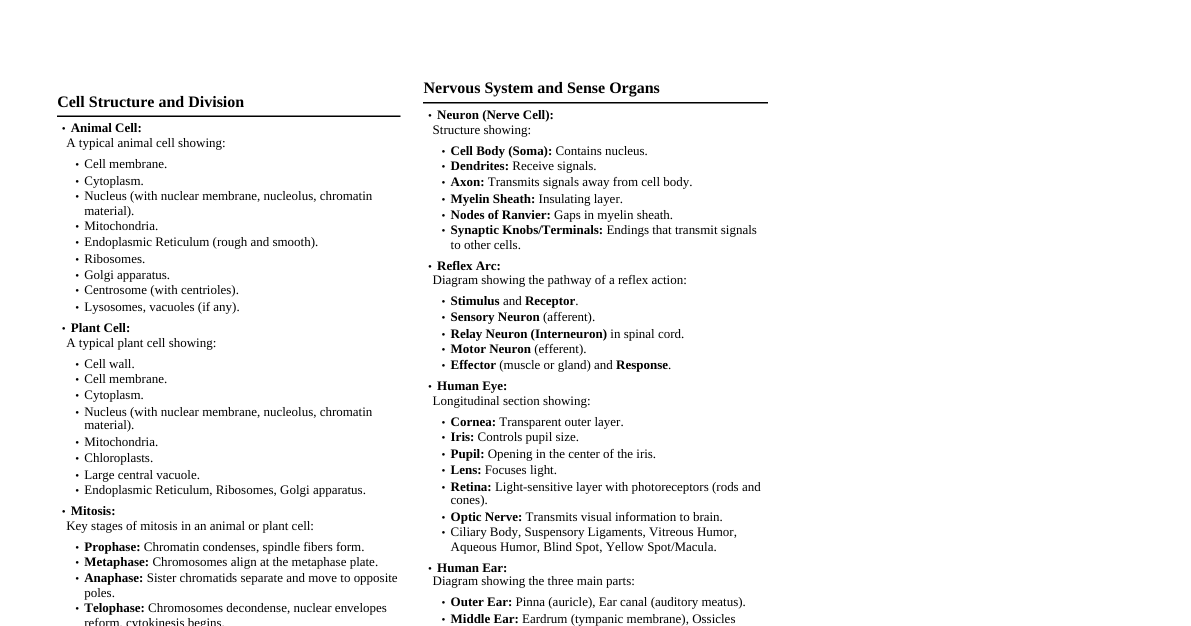
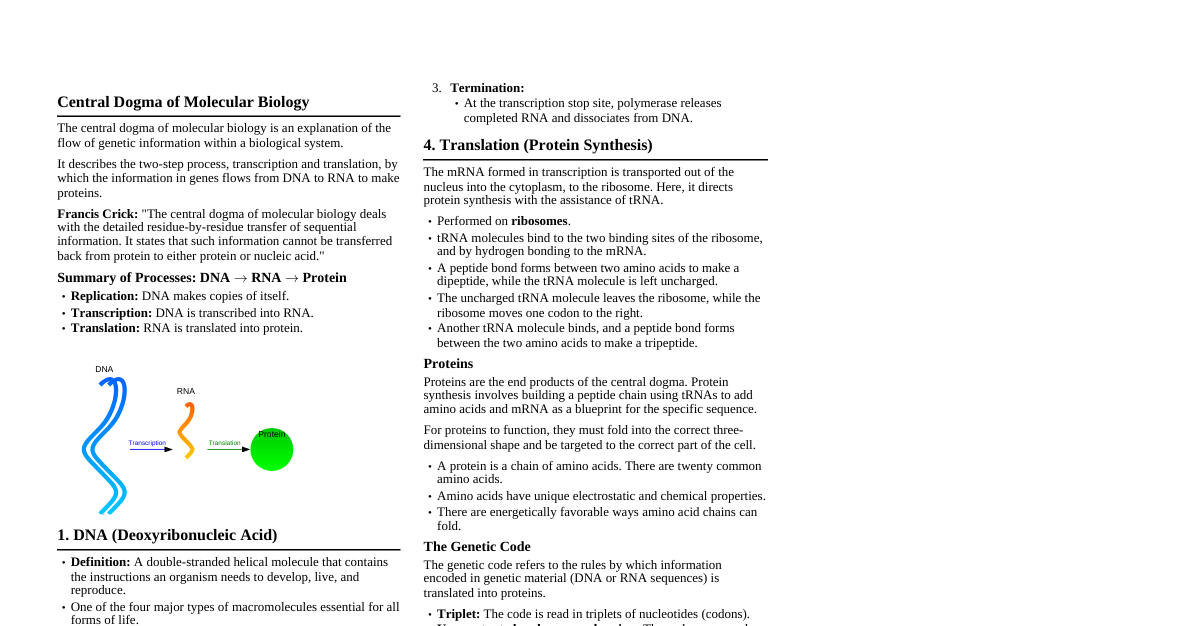
### Bacterial Shapes and Structure Bacteria are prokaryotic microorganisms, meaning they lack a membrane-bound nucleus and other organelles. Despite their simple structure, they exhibit diverse forms and complex cellular machinery. #### Common Shapes (Morphology) - **Coccus (Spherical):** - *Diplococci:* Pairs (e.g., *Neisseria gonorrhoeae*) - *Streptococci:* Chains (e.g., *Streptococcus pyogenes*) - *Staphylococci:* Clusters (e.g., *Staphylococcus aureus*) - *Tetrads:* Groups of four - *Sarcinae:* Cube-like groups of eight - **Bacillus (Rod-shaped):** - *Coccobacilli:* Short rods - *Streptobacilli:* Chains of rods - *Palisades:* Rods arranged side-by-side (e.g., *Corynebacterium diphtheriae*) - **Spiral:** - *Vibrio:* Comma-shaped (e.g., *Vibrio cholerae*) - *Spirillum:* Rigid, wavy forms with external flagella (e.g., *Spirillum minor*) - *Spirochete:* Flexible, helical forms with internal flagella (axial filaments) (e.g., *Treponema pallidum*) - **Other Shapes:** Pleomorphic (variable shapes), filamentous. #### Key Structural Components - **Cell Wall:** - **Function:** Provides shape, structural support, protects against osmotic lysis. - **Composition:** Primarily peptidoglycan (murein) – a polymer of N-acetylglucosamine (NAG) and N-acetylmuramic acid (NAM) cross-linked by peptides. - **Gram-Positive:** Thick peptidoglycan layer, teichoic acids, lipoteichoic acids. Stains purple with Gram stain. - **Gram-Negative:** Thin peptidoglycan layer, outer membrane (contains lipopolysaccharide (LPS), porins, lipoproteins), periplasmic space. Stains pink/red with Gram stain. - **Acid-Fast (e.g., *Mycobacterium*):** Mycolic acid layer outside peptidoglycan, making them resistant to acid-alcohol decolorization. - **Cell Membrane (Plasma Membrane):** - **Structure:** Phospholipid bilayer with embedded proteins. - **Function:** Selective permeability, transport of nutrients, waste excretion, energy generation (electron transport chain), site of metabolic reactions. - **Cytoplasm:** - **Contents:** Cytosol (aqueous component), nucleoid, ribosomes, inclusion bodies. - **Nucleoid:** - **Structure:** Irregularly shaped region containing the bacterial chromosome (usually a single, circular DNA molecule). Not membrane-bound. - **Ribosomes:** - **Structure:** 70S ribosomes (50S and 30S subunits). - **Function:** Protein synthesis. - **Inclusion Bodies (Granules):** - **Function:** Storage of nutrients (e.g., poly-β-hydroxybutyrate for carbon/energy, volutin for phosphate), gas vacuoles for buoyancy. - **Capsule/Slime Layer (Glycocalyx):** - **Structure:** Polysaccharide or polypeptide layer outside the cell wall. - **Capsule:** Well-organized, firmly attached. - **Slime Layer:** Diffuse, unorganized, loosely attached. - **Function:** Protection from phagocytosis, desiccation, adhesion to surfaces (biofilms). - **Flagella:** - **Structure:** Long, helical protein filaments (flagellin) extending from the cell surface. Anchored by basal body. - **Function:** Motility (swimming). - **Arrangement:** - *Monotrichous:* Single flagellum. - *Lophotrichous:* Tuft of flagella at one end. - *Amphitrichous:* Flagella at both ends. - *Peritrichous:* Flagella distributed over the entire surface. - **Pili (Fimbriae):** - **Structure:** Short, hair-like protein appendages. - **Function:** Adhesion to host cells/surfaces (fimbriae), DNA transfer during conjugation (sex pilus). - **Endospores:** - **Structure:** Dormant, highly resistant structures formed by some Gram-positive bacteria (e.g., *Bacillus*, *Clostridium*) in response to nutrient limitation. - **Function:** Survival mechanism, resistant to heat, radiation, chemicals, desiccation. - **Components:** Core (DNA, ribosomes), inner membrane, peptidoglycan cortex, outer membrane, spore coat, exosporium. ### How Bacteria Live (Metabolism) Bacteria exhibit a wide range of metabolic diversity, allowing them to colonize diverse environments. #### Energy Sources (Trophism) - **Phototrophs:** Obtain energy from light. - *Photoautotrophs:* Use light and carbon dioxide (e.g., cyanobacteria). - *Photoheterotrophs:* Use light and organic compounds (e.g., purple non-sulfur bacteria). - **Chemotrophs:** Obtain energy from chemical compounds. - *Chemoautotrophs (Chemolithotrophs):* Use inorganic chemicals (e.g., ammonia, hydrogen sulfide, iron) and carbon dioxide (e.g., nitrifying bacteria). - *Chemoheterotrophs (Chemoorganotrophs):* Use organic compounds for both energy and carbon (most bacteria, including pathogens). #### Oxygen Requirements - **Obligate Aerobes:** Require oxygen for growth (e.g., *Mycobacterium tuberculosis*). - **Facultative Anaerobes:** Grow best with oxygen but can grow without it (e.g., *E. coli*). - **Obligate Anaerobes:** Cannot tolerate oxygen; oxygen is toxic (e.g., *Clostridium botulinum*). - **Aerotolerant Anaerobes:** Do not use oxygen but can tolerate its presence (e.g., *Streptococcus pyogenes*). - **Microaerophiles:** Require oxygen but at lower concentrations than atmospheric levels. #### Nutritional Requirements - **Carbon Source:** Organic compounds (heterotrophs) or CO2 (autotrophs). - **Nitrogen Source:** Amino acids, ammonium, nitrates, N2 (nitrogen fixers). - **Phosphorus, Sulfur, Trace Elements:** Essential for macromolecules and enzyme cofactors. - **Growth Factors:** Some bacteria require specific organic compounds (e.g., vitamins, amino acids) they cannot synthesize. #### Growth and Culture - **Binary Fission:** Primary method of reproduction, leading to exponential growth. - **Growth Curve:** 1. **Lag Phase:** Adaptation to new environment, little to no cell division. 2. **Log (Exponential) Phase:** Cells divide rapidly, population doubles at regular intervals. 3. **Stationary Phase:** Growth rate equals death rate due to nutrient depletion and waste accumulation. 4. **Death Phase:** Cell death exceeds cell growth. - **Culture Media:** Broth (liquid) or agar (solid) media containing necessary nutrients. - *Defined Media:* Exact chemical composition known. - *Complex Media:* Contains extracts (e.g., yeast, beef) where exact composition is unknown. - *Selective Media:* Inhibits growth of unwanted organisms. - *Differential Media:* Distinguishes between different types of bacteria based on metabolic properties. ### Reproduction and Genetics Bacteria primarily reproduce asexually, but they have mechanisms for genetic exchange, contributing to their adaptability. #### Asexual Reproduction: Binary Fission - **Process:** 1. Bacterial chromosome replicates. 2. Two identical chromosomes move to opposite ends of the cell. 3. Cell elongates. 4. A new cell wall and membrane grow inward, forming a septum. 5. Two genetically identical daughter cells are formed. - **Generation Time:** The time required for a bacterial population to double. Varies widely among species (e.g., *E. coli* ~20 min, *Mycobacterium tuberculosis* ~15-20 hours). #### Genetic Exchange (Horizontal Gene Transfer - HGT) HGT allows bacteria to acquire new genetic traits, including antibiotic resistance and virulence factors. - **Transformation:** Uptake of "naked" DNA from the environment. - Some bacteria are naturally "competent" (e.g., *Streptococcus pneumoniae*, *Haemophilus influenzae*). - Can be induced artificially in the lab. - **Conjugation:** Direct transfer of DNA from one bacterium to another through a sex pilus. - Requires cell-to-cell contact. - Often involves transfer of plasmids (e.g., F plasmid for fertility, R plasmids for antibiotic resistance). - Hfr (High-frequency recombination) strains can transfer chromosomal DNA. - **Transduction:** Transfer of bacterial DNA by bacteriophages (viruses that infect bacteria). - **Generalized Transduction:** Any part of the bacterial chromosome can be transferred (packaging error during phage assembly). - **Specialized Transduction:** Only specific genes adjacent to the prophage insertion site are transferred (excision error of lysogenic phage). - **Transposons (Jumping Genes):** DNA segments that can move from one location to another within the genome (e.g., chromosome to plasmid, plasmid to chromosome). Can carry antibiotic resistance genes. #### Bacterial Genome - **Chromosome:** Typically a single, circular, double-stranded DNA molecule located in the nucleoid. - **Plasmids:** Small, circular, extrachromosomal DNA molecules that replicate independently. - Carry non-essential but often advantageous genes (e.g., antibiotic resistance, virulence factors, metabolic pathways). - Widely used in genetic engineering. - **Mutations:** Changes in the DNA sequence, can be spontaneous or induced by mutagens. Drive evolution and adaptation. ### Bacteria in Real Life (Importance and Applications) Bacteria are ubiquitous and play crucial roles in ecosystems, human health, industry, and biotechnology. #### Ecological Roles - **Nutrient Cycling:** - **Nitrogen Cycle:** Nitrogen fixation (conversion of N2 to ammonia by *Rhizobium*, *Azotobacter*), nitrification (ammonia to nitrate by *Nitrosomonas*, *Nitrobacter*), denitrification (nitrate to N2 by *Pseudomonas*). - **Carbon Cycle:** Decomposition of organic matter, CO2 fixation (autotrophs). - **Sulfur Cycle:** Oxidation and reduction of sulfur compounds. - **Decomposition:** Break down dead organic material, recycling nutrients back into the environment. - **Symbiosis:** - *Mutualism:* Both organisms benefit (e.g., gut microbiota aiding digestion, nitrogen-fixing bacteria in legumes). - *Commensalism:* One benefits, other unaffected. - *Parasitism:* One benefits at expense of other (e.g., pathogenic bacteria). #### Human Health and Disease - **Normal Microbiota (Commensals):** - Colonize skin, gut, oral cavity, etc. - **Benefits:** Compete with pathogens, produce vitamins (e.g., Vitamin K, B vitamins), aid digestion, modulate immune system. - **Dysbiosis:** Imbalance of microbiota linked to diseases (e.g., IBD, obesity). - **Pathogenic Bacteria:** Cause infectious diseases. - **Mechanisms:** - **Exotoxins:** Proteins secreted by bacteria (e.g., botulinum toxin, diphtheria toxin). - **Endotoxins:** LPS component of Gram-negative outer membrane, released upon cell lysis (e.g., septic shock). - **Enzymes:** Break down host tissues (e.g., collagenase, hyaluronidase). - **Adhesion Factors:** Pili, capsules for attachment. - **Evasion of Immune System:** Capsules, intracellular growth. - **Examples:** *Streptococcus pyogenes* (strep throat), *Salmonella typhi* (typhoid fever), *Clostridium difficile* (colitis), *Neisseria meningitidis* (meningitis). - **Antibiotics:** Drugs that treat bacterial infections by targeting specific bacterial processes (e.g., cell wall synthesis, protein synthesis, DNA replication). - **Antibiotic Resistance:** A major global health threat, driven by overuse/misuse of antibiotics and HGT. #### Industrial and Biotechnology Applications - **Food Production:** - **Fermentation:** Production of yogurt, cheese (*Lactobacillus*, *Streptococcus*), sourdough bread, vinegar (*Acetobacter*). - **Probiotics:** Live bacteria consumed for health benefits (e.g., in fermented foods, supplements). - **Bioremediation:** Use of bacteria to degrade pollutants (e.g., oil spills, toxic waste) into less harmful substances. - **Biotechnology/Genetic Engineering:** - **Insulin Production:** *E. coli* engineered to produce human insulin. - **Vaccine Production:** Production of recombinant vaccines. - **Enzyme Production:** Industrial enzymes (e.g., amylases, proteases) for detergents, food processing. - **Biofuels:** Production of ethanol, methane. - **Agriculture:** - **Biofertilizers:** Nitrogen-fixing bacteria in crop fields. - **Biopesticides:** Bacteria that produce toxins harmful to pests (e.g., *Bacillus thuringiensis*).