Human Health & Disease Class 12
Cheatsheet Content
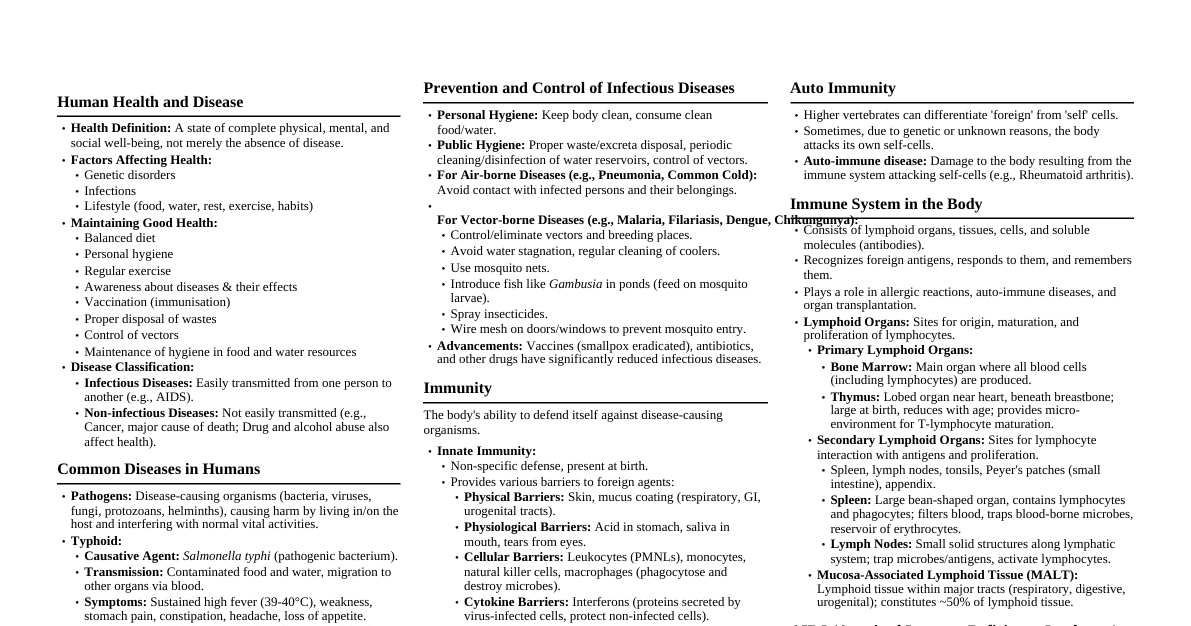
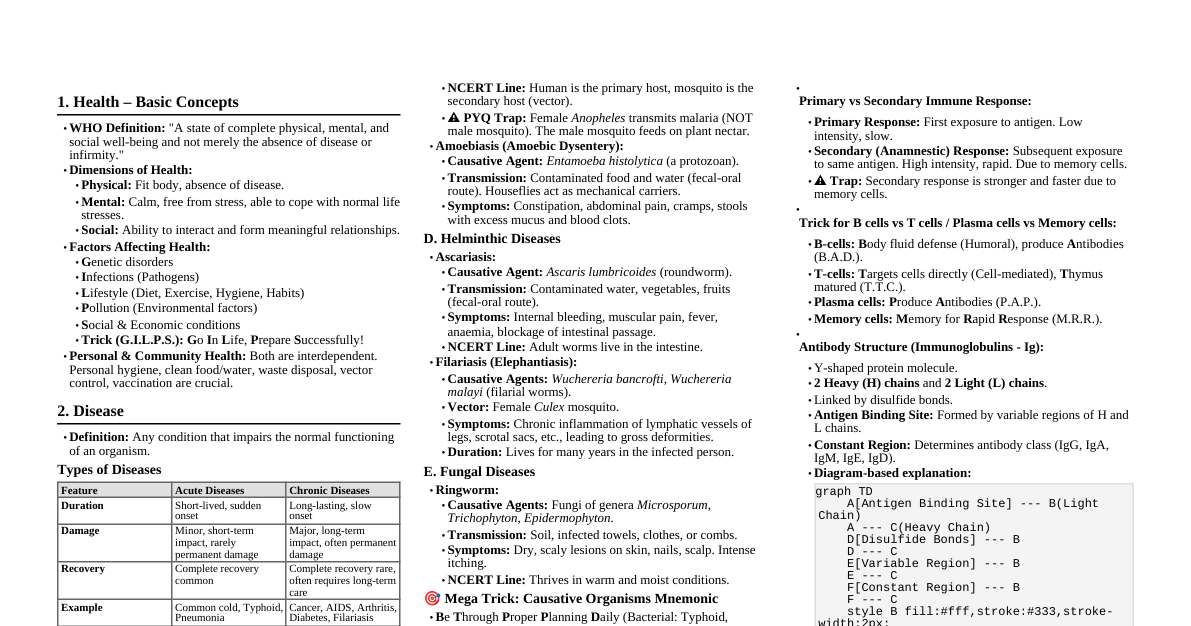
1. Health and Disease Basics Health: State of complete physical, mental, and social well-being, not merely absence of disease or infirmity (WHO). Disease: A condition that impairs normal functioning and is characterized by specific symptoms and signs. Types of Diseases: Infectious/Communicable: Caused by pathogens, can spread. E.g., Cold, Malaria. Non-infectious/Non-communicable: Cannot spread. E.g., Cancer, Diabetes, Hypertension. Common Pathogens: Viruses, Bacteria, Fungi, Protozoans, Helminths. 2. Common Human Diseases 2.1 Bacterial Diseases Typhoid: Pathogen: Salmonella typhi . Spread: Contaminated food/water. Symptoms: High fever ($39^\circ C$ to $40^\circ C$), weakness, stomach pain, constipation, headache, loss of appetite. Intestinal perforation/death in severe cases. Diagnosis: Widal Test. Pneumonia: Pathogen: Streptococcus pneumoniae , Haemophilus influenzae . Spread: Droplet infection. Symptoms: Affects alveoli, leading to fluid accumulation. Fever, chills, cough, headache. Lips/fingernails may turn grey to bluish. Dysentery, Plague, Diphtheria, Cholera, Tetanus: Other important bacterial diseases. 2.2 Viral Diseases Common Cold: Pathogen: Rhinoviruses. Spread: Droplet infection, contaminated objects. Symptoms: Nasal congestion, discharge, sore throat, hoarseness, cough, headache, tiredness. Usually lasts 3-7 days. Affects nasal passage and respiratory tract, not lungs. Measles, Polio, Chickenpox, Dengue, Chikungunya, AIDS: Other important viral diseases. 2.3 Protozoan Diseases Malaria: Pathogen: Plasmodium ( P. vivax, P. malariae, P. ovale, P. falciparum - most severe). Vector: Female Anopheles mosquito. Life Cycle: Infected mosquito bites human, injects sporozoites. Sporozoites reach liver, multiply asexually. Release into blood, infect RBCs, multiply asexually. RBCs rupture, releasing hemozoin (causes chills/fever). Gametocytes develop in RBCs. Mosquito ingests gametocytes during blood meal. Fertilization and development in mosquito gut. Sporozoites form in salivary glands. Symptoms: Recurrent fever, chills (every 3-4 days), enlarged spleen. Amoebiasis (Amoebic Dysentery): Pathogen: Entamoeba histolytica . Spread: Contaminated food/water, houseflies as mechanical carriers. Symptoms: Constipation, abdominal pain, cramps, stool with excess mucus and blood clots. Ascariasis (Roundworm): Pathogen: Ascaris lumbricoides (intestinal parasite). Spread: Contaminated water, vegetables, fruits. Symptoms: Internal bleeding, muscular pain, fever, anemia, blockage of intestinal passage. Filariasis (Elephantiasis): Pathogen: Wuchereria bancrofti , W. malayi (filarial worms). Vector: Female Culex mosquito. Symptoms: Chronic inflammation of lymphatic vessels (legs, arms, scrotum), leading to gross deformities. 2.4 Fungal Diseases Ringworm: Pathogen: Fungi like Microsporum, Trichophyton, Epidermophyton . Spread: Soil, infected towels, clothes, or combs. Symptoms: Dry, scaly lesions on skin, nails, scalp; intense itching. Warm, moist conditions favor growth (e.g., skin folds). 3. Prevention & Control of Infectious Diseases Hygiene: Personal (clean body, food, water) and public (waste disposal, water source). Vector Control: Eliminate breeding sites (stagnant water). Use mosquito nets, repellents. Introduce larvivorous fish (e.g., Gambusia). Spraying insecticides. Avoid contact with infected persons/objects. Vaccination/Immunization: Crucial for preventing many diseases. Education: Awareness about disease modes of transmission. 4. Immunity Definition: The ability of the host to fight against disease-causing organisms. Types of Immunity: Innate Immunity (Non-specific): Present from birth. Provides different types of barriers: Physical: Skin, mucous membranes. Physiological: Acid in stomach, saliva, tears. Cellular: Phagocytes (PMNL, macrophages), NK cells. Cytokine: Interferons (protect non-infected cells from viruses). Acquired Immunity (Specific): Pathogen-specific, acquired after birth. Characterized by memory. Primary Response: First encounter, low intensity. Secondary/Anamnestic Response: Subsequent encounter, high intensity due to memory cells. Mediated by lymphocytes (B-lymphocytes, T-lymphocytes). Humoral Immune Response (Antibody-mediated): B-lymphocytes produce antibodies (proteins that fight pathogens). Antibodies: IgG, IgA, IgM, IgE, IgD. Structure: Y-shaped, 2 heavy, 2 light chains ($H_2L_2$). Cell-mediated Immune Response (CMI): T-lymphocytes directly kill infected cells. Responsible for graft rejection. Active Immunity: Host produces antibodies (e.g., natural infection, vaccination). Slow but long-lasting. Passive Immunity: Ready-made antibodies given (e.g., mother to fetus/infant via placenta/colostrum, anti-tetanus serum). Fast but short-lived. 5. Vaccination and Immunization Principle: Based on the memory of the immune system. Vaccine: Preparation of antigenic proteins of pathogen, or inactivated/weakened pathogen. Process: Vaccine elicits primary immune response, producing antibodies and memory B/T cells. Subsequent exposure leads to a robust secondary response. Recombinant DNA Technology: Used to produce safe vaccines (e.g., Hepatitis B vaccine from yeast). 6. Allergies & Autoimmunity Allergies: Exaggerated response of immune system to certain antigens (allergens). Allergens: Pollen, dust mites, animal dander, specific foods. Symptoms: Sneezing, watery eyes, runny nose, difficulty breathing. Mediated by: IgE antibodies, histamine, serotonin from mast cells. Treatment: Antihistamines, adrenaline, steroids. Autoimmunity: Immune system attacks body's own cells/tissues. Body fails to distinguish self from non-self. Examples: Rheumatoid arthritis, Type 1 diabetes, Multiple Sclerosis. 7. Immune System in the Body Lymphoid Organs: Primary: Bone marrow (B-cell maturation), Thymus (T-cell maturation). Provide environment for lymphocyte development. Secondary: Spleen, Lymph nodes, Tonsils, Peyer's patches (small intestine), Appendix. Sites for lymphocyte interaction with antigens. MALT (Mucosal Associated Lymphoid Tissue): Lines respiratory, digestive, urogenital tracts; constitutes about 50% of lymphoid tissue. 8. AIDS (Acquired ImmunoDeficiency Syndrome) Pathogen: Human Immunodeficiency Virus (HIV) - a retrovirus. Transmission: Sexual contact with infected person. Contaminated blood/blood products. Sharing infected needles (IV drug users). Infected mother to child (placenta, breastfeeding). Mechanism: HIV enters body, infects macrophages (acts as 'HIV factory'). Enters helper T-lymphocytes ($T_H$ cells), replicates, and progeny viruses are released. Progressive decrease in $T_H$ cell count, leading to immunodeficiency. Body becomes vulnerable to opportunistic infections (e.g., Mycobacterium, Toxoplasma, Pneumocystis, Candida ). Diagnosis: ELISA (Enzyme-Linked ImmunoSorbent Assay). Treatment: Antiretroviral drugs (partially effective, cannot cure). Prevention: Safe sexual practices, screening blood, disposable needles, avoid sharing needles, avoid pregnancy by HIV+ mother. 9. Cancer Definition: Uncontrolled growth of cells (neoplasia). Types of Tumors: Benign: Remain confined to original location, do not spread. Less harmful. Malignant: Proliferate rapidly, invade surrounding tissues, exhibit metastasis (spread to distant sites through blood/lymph). More dangerous. Causes (Carcinogens): Physical: Ionizing radiations (X-rays, gamma rays), non-ionizing radiations (UV light). Chemical: Tobacco smoke (lung cancer), certain dyes, asbestos. Biological: Oncogenic viruses, cellular oncogenes (c-onc) or proto-oncogenes ($p-onc$) activated into oncogenes. Detection & Diagnosis: Biopsy & histopathological studies. Radiography (X-rays), CT scan, MRI. Antibodies against cancer-specific antigens. Molecular biology techniques (genes, DNA). Treatment: Surgery. Radiotherapy (tumor cells killed, normal cells protected). Chemotherapy (drugs, but side effects like hair loss, anemia). Immunotherapy (Biological Response Modifiers like $\alpha$-interferon activate immune system). 10. Drugs and Alcohol Abuse 10.1 Drugs of Abuse Opioids: Source: Opium poppy ( Papaver somniferum ). Examples: Morphine, Heroin (diacetylmorphine, 'smack'). Action: Depressant, slows body functions. Binds to opioid receptors in CNS and GI tract. Administration: Snorting, injection. Cannabinoids: Source: Cannabis sativa (marijuana plant). Examples: Marijuana, hashish, charas, ganja. Action: Affects cardiovascular system. Binds to cannabinoid receptors in brain. Administration: Inhalation, oral ingestion. Cocaine (Coca Alkaloid/Crack): Source: Coca plant ( Erythroxylum coca ). Action: Stimulant, increases neurotransmitter dopamine. Causes euphoria, increased energy. Overdose causes hallucinations. Administration: Snorting. Hallucinogens: Examples: LSD (Lysergic acid diethylamide), Datura, Atropa belladonna. Action: Alter thoughts, feelings, perception. Barbiturates, Amphetamines, Benzodiazepines: Used as medicines (depressants/stimulants) but can be abused. Nicotine: Source: Tobacco leaves. Action: Stimulates adrenal gland to release adrenaline/noradrenaline, increasing heart rate and blood pressure. Harm: Linked to cancer (oral, lung, throat), bronchitis, emphysema, heart disease. 10.2 Adolescent Drug/Alcohol Abuse Causes: Curiosity, adventure, excitement, peer pressure, stress, depression, family problems. Effects: Liver cirrhosis, nervous system damage, behavioral changes (aggression, isolation), poor academic performance, risky behavior (HIV/AIDS, Hepatitis). Addiction: Psychological attachment to effects of drugs/alcohol. Dependence: Body's tendency to manifest withdrawal syndrome (anxiety, nausea, sweating, tremors) if drug/alcohol use is discontinued. Prevention & Control: Avoid undue peer pressure. Education and counseling. Seeking help from parents/peers. Looking for danger signs (change in habits, mood swings, withdrawal). Seeking professional and medical help.