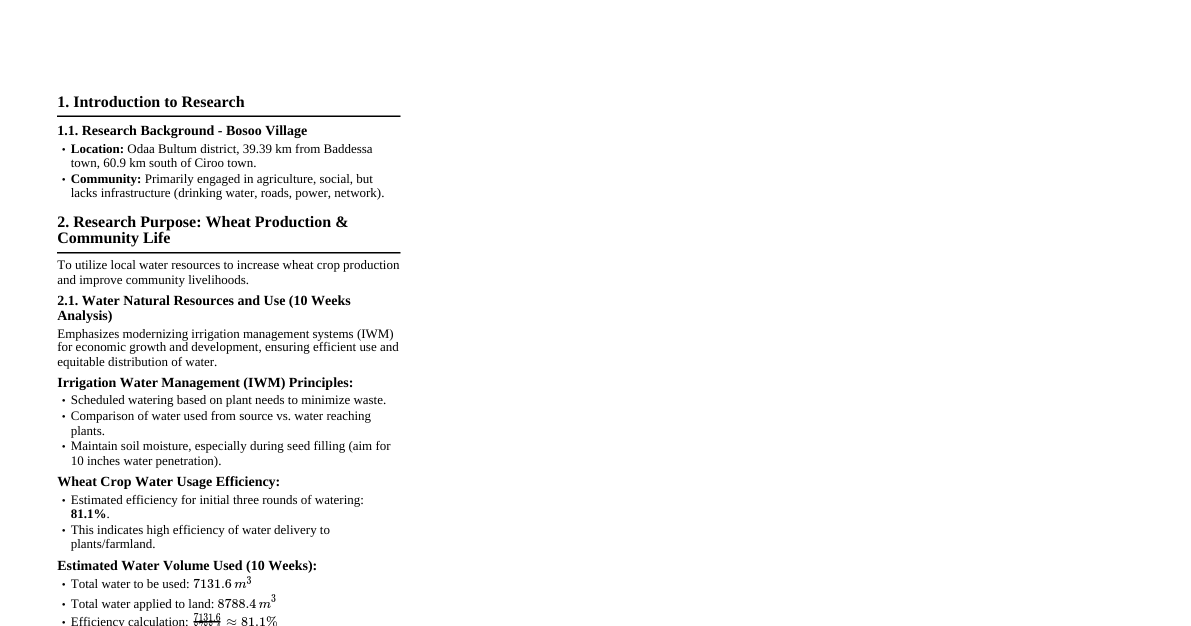
Research Overview Theme: Nationalist-based analysis of water resources and traditional irrigation methods for increasing wheat production. Location: Bosoo Village Administration, Odaa Bultum district, West Hararge, Ethiopia. Community Livelihood: Primarily agriculture-based. Challenges: Lack of infrastructure (drinking water, roads, power, network). Research Purpose & Objectives To utilize local natural water resources to enhance wheat crop production and improve community livelihoods. 1. Water Natural Resources and Their Use Water Management: Emphasizes the importance of preserving water hygiene, efficient use for development, and strengthening administration for future generations. Modernizing Irrigation: Crucial for economic growth and development expansion. Irrigation Water Management (IWM): Ensuring proper water amounts without waste and at the right time. Calculating water usage and needs for development. Strengthening IWM to prevent conflict among water users (upstream/downstream). Irrigation Process: Scheduled watering of plants based on needs, minimizing waste through cycles. Efficiency Measurement: Compares water used from source to water directly reaching plants. Soil Moisture: Essential to maintain, especially when seeds are filling (target: 10 inches). Estimated Water Use Ratio (Wheat): 81.1% efficiency for the first three rounds of watering over ten weeks. 2. Increasing Summer Wheat Crop Production Goal: Accelerate economic growth and achieve food security by optimizing wheat production using Saaqata River resources. Impact: Shift from dependence to productivity, ensuring a sustainable future. Key Strategies for Wheat Production Increase: Increase production by 1%-30%. Protect soil health. Use clean fertilizer. Modernize farming practices. Agricultural Inputs & Estimates (per 10.38 hectares): Wheat seeds: 1338 kg Fertilizers (including transport): 6596.32 kg Tractor use (estimated equivalent): 1000 kg Harvesting machine (estimated equivalent): 4613.33 kg Pesticides: 300 kg Worker power, living expenses, transport, minor expenses: 700 kg Output: Comparison of wheat production and income using financial analysis techniques. Result: 15.6% increase in results from the Saaqata River. Summary of Findings IWM Efficiency: Using IWM tools, the estimated water use efficiency was 81.1% of the total required for ten weeks, indicating efficient irrigation when properly managed. Wheat Production Increase: Utilizing natural water resources led to an estimated 15.6% increase in wheat production profit, contributing to food security and economic efficiency.