Food Sci, Tech, & Agriculture
Cheatsheet Content
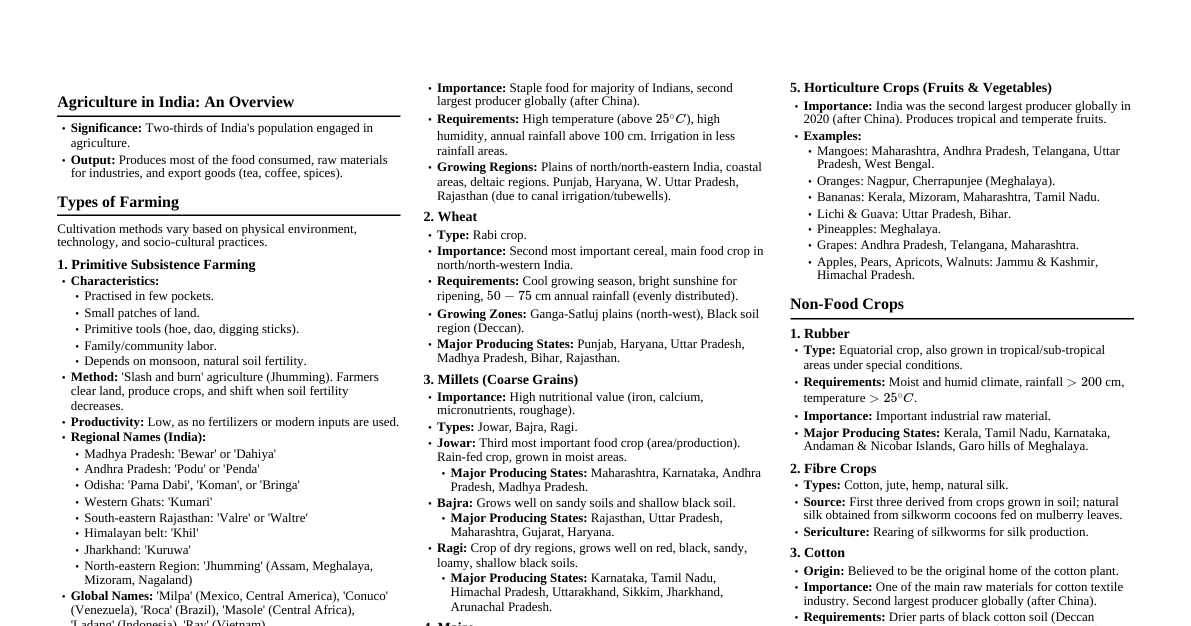
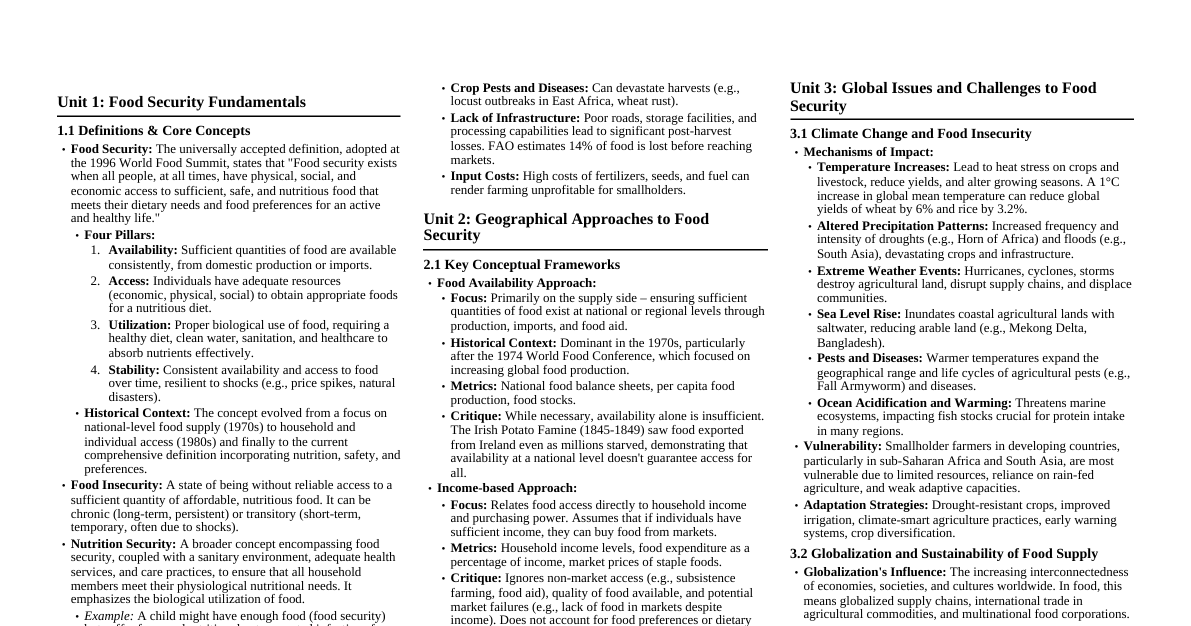
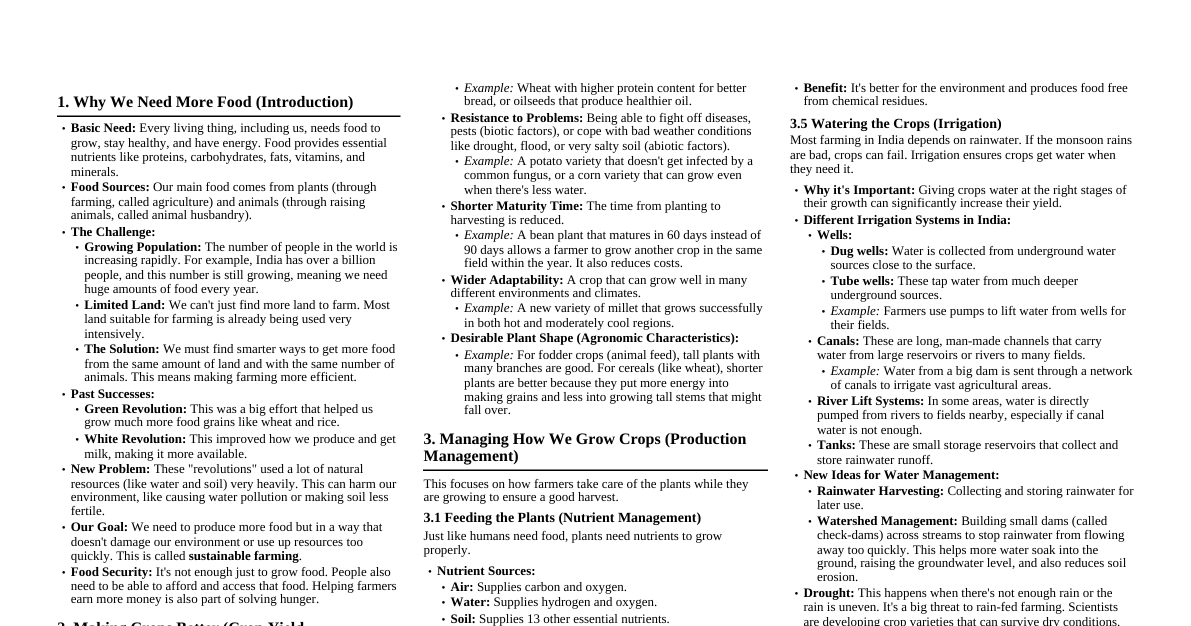
### Food Science Fundamentals - **Definition:** The study of the physical, biological, and chemical makeup of food; the causes of food deterioration; and the concepts underlying food processing. - **Key Disciplines:** Chemistry, Biology, Microbiology, Engineering, Nutrition, Sensory Science. #### Food Components - **Water:** Solvent, reactant, texture. Water activity ($a_w$) affects microbial growth and chemical reactions. - $a_w = \frac{P}{P_0}$ (vapor pressure of food / vapor pressure of pure water) - **Carbohydrates:** Sugars (mono-, di-, oligo-saccharides), starches, fiber. Energy, texture, browning reactions. - **Maillard Reaction:** Reducing sugar + amino acid $\xrightarrow{\text{heat}}$ brown pigments, flavor compounds. - **Caramelization:** Heating sugars alone $\xrightarrow{\text{heat}}$ brown pigments, distinct flavors. - **Proteins:** Amino acids linked by peptide bonds. Enzymes, structure, emulsifiers, foaming agents. Denaturation by heat, pH, mechanical stress. - **Lipids:** Fats, oils, phospholipids. Energy, flavor, texture, heat transfer. - **Saturated vs. Unsaturated:** Affect melting point and stability. - **Oxidation:** Reaction with oxygen, leading to rancidity (off-flavors). - **Vitamins & Minerals:** Micronutrients, essential for health. Can be sensitive to processing. #### Food Deterioration - **Microbial:** Bacteria, yeasts, molds. Spoilage, pathogen growth. - **Enzymatic:** Browning (e.g., polyphenol oxidase), lipid oxidation, proteolysis. - **Chemical:** Lipid oxidation, Maillard reaction (undesired), vitamin degradation. - **Physical:** Moisture loss/gain, crystallization, mechanical damage. ### Food Processing & Preservation - **Goal:** Extend shelf life, ensure safety, improve palatability, convenience. #### Thermal Processing - **Pasteurization:** Mild heat treatment ($\sim72^\circ\text{C}$ for 15s) to reduce pathogens and spoilage organisms, extends shelf life. Does not achieve sterility. - **HTST (High-Temperature Short-Time):** Most common for milk. - **LTLT (Low-Temperature Long-Time):** Batch pasteurization. - **Sterilization (Commercial Sterility):** Severe heat treatment ($\sim121^\circ\text{C}$ for 15-20min) to destroy all spoilage and pathogenic microorganisms, including spores (e.g., *Clostridium botulinum*). Achieved in canning. - **F-value:** Measure of thermal death time. - **Blanching:** Mild heat treatment (e.g., fruits/vegetables) to inactivate enzymes before freezing. - **Aseptic Processing:** Sterilizing food and packaging separately, then combining in a sterile environment. #### Non-Thermal Processing - **High Pressure Processing (HPP):** Uses high hydrostatic pressure (100-800 MPa) to inactivate microorganisms and enzymes without high heat. Preserves fresh qualities. - **Pulsed Electric Fields (PEF):** Short pulses of high voltage electricity to create pores in microbial membranes. - **Irradiation:** Exposing food to ionizing radiation (gamma rays, X-rays, electron beams) to destroy microorganisms, insects, and inhibit sprouting. - **Ohmic Heating:** Food acts as an electrical resistor, generating heat internally. - **Cold Plasma:** Ionized gas used for surface decontamination. #### Preservation Methods - **Refrigeration:** Slows microbial growth and enzymatic reactions ($0-7^\circ\text{C}$). - **Freezing:** Stops microbial growth, slows enzymatic/chemical reactions (below $-18^\circ\text{C}$). - **Freezer Burn:** Surface dehydration due to sublimation of ice. - **Drying/Dehydration:** Removes water to reduce water activity ($a_w$), inhibiting microbial growth and enzymatic activity. - **Methods:** Sun drying, hot air drying, spray drying, freeze drying. - **Curing/Salting/Sugaring:** Uses salt or sugar to reduce $a_w$ and inhibit microbial growth. - **Fermentation:** Uses beneficial microorganisms to convert sugars into acids, alcohols, or gases, preserving food and developing unique flavors. - **Lactic Acid Fermentation:** Sauerkraut, yogurt, kimchi. - **Alcoholic Fermentation:** Beer, wine. - **Acidification:** Lowering pH to inhibit microbial growth (e.g., pickling with vinegar). - **Modified Atmosphere Packaging (MAP):** Altering the gas composition inside packaging (e.g., reduced $\text{O}_2$, increased $\text{CO}_2$) to slow spoilage. - **Vacuum Packaging:** Removing air to limit aerobic microbial growth and oxidative reactions. ### Food Safety & Quality - **Food Safety:** Ensuring food does not cause illness or harm to the consumer. - **Food Quality:** Attributes of food that are acceptable to the consumer (sensory, nutritional, convenience). #### Foodborne Illnesses - **Infections:** Caused by ingestion of live pathogenic microorganisms that multiply in the body (e.g., *Salmonella*, *Listeria monocytogenes*, *E. coli* O157:H7). - **Intoxications:** Caused by ingesting toxins produced by microorganisms in the food (e.g., *Staphylococcus aureus*, *Clostridium botulinum*). - **Toxico-infections:** Caused by ingesting live microorganisms that produce toxins in the body (e.g., *Clostridium perfringens*). #### Food Safety Management Systems - **HACCP (Hazard Analysis and Critical Control Points):** A preventative system to identify and control potential hazards (biological, chemical, physical) at specific points in food production. 1. Conduct Hazard Analysis 2. Determine Critical Control Points (CCPs) 3. Establish Critical Limits 4. Establish Monitoring Procedures 5. Establish Corrective Actions 6. Establish Verification Procedures 7. Establish Record-keeping and Documentation Procedures - **Prerequisite Programs (PRPs):** Good Manufacturing Practices (GMPs), Sanitation Standard Operating Procedures (SSOPs), Pest Control, Allergen Control. #### Allergen Management - **The "Big 8" (US):** Milk, eggs, peanuts, tree nuts, soy, wheat, fish, shellfish. - **Control:** Strict segregation, cleaning, labeling, training. #### Quality Control & Assurance - **Sensory Analysis:** Evaluation of food by human senses (taste, smell, sight, touch, sound). - **Discriminative Tests:** Difference (triangle, paired comparison), Ranking. - **Descriptive Tests:** Quantitative Descriptive Analysis (QDA). - **Affective/Hedonic Tests:** Preference, Acceptance. - **Chemical Analysis:** Nutritional content, additives, contaminants, pH, $a_w$, acidity. - **Physical Analysis:** Texture (firmness, crispness), color, viscosity, size, shape. - **Microbiological Analysis:** Plate counts (total viable count), specific pathogen detection. #### Traceability & Recall Systems - Ability to track food products through all stages of production, processing, and distribution. Essential for rapid recall in case of safety issues. ### Food Additives & Packaging #### Food Additives - **Definition:** Substances added to food to achieve a specific technical effect (e.g., preservation, coloring, sweetening, thickening). - **Categories:** - **Preservatives:** Inhibit microbial growth (e.g., nitrites, sulfites, benzoates). - **Antioxidants:** Prevent oxidation (e.g., BHA, BHT, Vitamin C). - **Colorants:** Enhance visual appeal (e.g., artificial dyes, natural extracts). - **Flavor Enhancers:** Amplify existing flavors (e.g., MSG). - **Sweeteners:** Provide sweetness (e.g., sucrose, aspartame, stevia). - **Emulsifiers:** Stabilize oil-in-water or water-in-oil emulsions (e.g., lecithin, mono- and diglycerides). - **Thickeners/Stabilizers:** Improve texture, prevent separation (e.g., gums, starches). - **Regulations:** Regulated by government agencies (e.g., FDA in US, EFSA in EU) to ensure safety and necessity. Generally Recognized As Safe (GRAS) status. #### Food Packaging - **Functions:** Containment, protection (physical, chemical, microbial), communication, convenience. - **Materials:** - **Glass:** Inert, transparent, good barrier, heavy, fragile. - **Metals (Steel, Aluminum):** Excellent barrier, strong, light (aluminum), recyclable. - **Plastics:** Versatile, lightweight, varying barrier properties, can be recycled. - **PET (Polyethylene Terephthalate):** Bottles, good barrier to gases. - **HDPE (High-Density Polyethylene):** Milk jugs, opaque, good moisture barrier. - **LDPE (Low-Density Polyethylene):** Films, flexible, poor gas barrier. - **PP (Polypropylene):** Containers, good heat resistance. - **PS (Polystyrene):** Disposable cups, brittle. - **PVC (Polyvinyl Chloride):** Cling films, less common due to environmental concerns. - **Paper/Paperboard:** Lightweight, printable, poor barrier unless coated. - **Advanced Packaging:** - **Modified Atmosphere Packaging (MAP):** See Preservation. - **Active Packaging:** Interacts with food or headspace to improve quality/safety (e.g., oxygen scavengers, moisture absorbers, antimicrobial films). - **Intelligent Packaging:** Monitors food condition or environment (e.g., time-temperature indicators, freshness indicators). - **Biodegradable/Compostable Packaging:** Designed to break down naturally. ### Agricultural Fundamentals - **Definition:** The science, art, and business of cultivating the soil, producing crops, and raising livestock; it includes the preparation and marketing of these products. - **Key Concepts:** Crop production, animal husbandry, soil science, agricultural economics, sustainable agriculture. #### Soil Science - **Soil Composition:** Mineral matter (45%), organic matter (5%), water (25%), air (25%). - **Soil Texture:** Proportion of sand, silt, and clay. Affects water holding capacity, drainage, and nutrient retention. - **Loam:** Ideal balance of sand, silt, and clay. - **Soil Structure:** Arrangement of soil particles into aggregates. - **Soil pH:** Acidity or alkalinity. Affects nutrient availability. - **Optimal range:** 6.0-7.0 for most crops. - **Nutrients:** - **Macronutrients:** N (Nitrogen), P (Phosphorus), K (Potassium) - primary; Ca, Mg, S - secondary. - **Micronutrients:** Fe, Mn, Zn, Cu, B, Mo, Cl, Ni. - **Organic Matter:** Decomposed plant and animal material. Improves soil structure, water retention, and nutrient supply. #### Crop Production - **Crop Classification:** Grains, legumes, oilseeds, fruits, vegetables, fibers, forages. - **Plant Growth Factors:** Light, water, temperature, nutrients, $\text{CO}_2$. - **Crop Rotation:** Growing different crops sequentially on the same land to improve soil health, control pests/diseases, and manage nutrients. - **Tillage:** Preparation of soil for planting. - **Conventional Tillage:** Plowing, disking. - **Conservation Tillage:** No-till, minimum tillage, strip-till. Reduces erosion, improves soil health. - **Pest Management:** - **Integrated Pest Management (IPM):** Holistic approach using biological, cultural, physical, and chemical methods to control pests with minimal environmental impact. - **Pesticides:** Herbicides (weeds), Insecticides (insects), Fungicides (fungi). - **Fertilizers:** Supply nutrients to crops. - **Organic:** Manure, compost. - **Inorganic:** Synthetic compounds (e.g., urea, superphosphate). - **Irrigation:** Supplying water to crops. - **Methods:** Flood, furrow, sprinkler, drip. - **Harvesting:** Gathering mature crops. #### Animal Husbandry - **Livestock Categories:** Cattle, swine, poultry, sheep, goats. - **Breeding:** Selection of animals for desirable traits (e.g., growth rate, milk production, disease resistance). - **Nutrition:** Balanced diets for optimal growth, production, and health. - **Health Management:** Disease prevention (vaccination, biosecurity), treatment. - **Housing & Environment:** Providing suitable conditions for animal welfare. - **Waste Management:** Manure handling, odor control. ### Agricultural Technologies #### Precision Agriculture - **Definition:** Using technology to observe, measure, and respond to variability in crops and soil. - **Key Technologies:** - **GPS (Global Positioning System):** Field mapping, guidance for machinery. - **GIS (Geographic Information Systems):** Data visualization and analysis. - **Remote Sensing:** Drones, satellites for monitoring crop health, irrigation needs. - **Variable Rate Technology (VRT):** Applying inputs (fertilizer, water, pesticides) at different rates across a field based on needs. - **Yield Monitoring:** Sensors on combines to measure yield variability. #### Biotechnology in Agriculture - **Genetic Engineering (GE) / Genetically Modified Organisms (GMOs):** Altering genes of plants/animals to introduce desired traits (e.g., pest resistance, herbicide tolerance, enhanced nutrition). - **Cisgenesis:** Transfer of genes from closely related species. - **Transgenesis:** Transfer of genes from unrelated species. - **Gene Editing (e.g., CRISPR-Cas9):** More precise modification of existing genes. - **Marker-Assisted Selection (MAS):** Using DNA markers to select for desirable traits in breeding programs. #### Smart Farming / IoT in Agriculture - **Sensors:** Soil moisture, nutrient, temperature, weather sensors. - **Drones:** Aerial imaging, spraying, monitoring. - **Robotics:** Automated planting, harvesting, weeding, milking. - **AI & Machine Learning:** Data analysis for predictive modeling (e.g., disease outbreaks, yield forecasts), optimizing resource use. #### Sustainable Agriculture Practices - **Conservation Tillage:** Reduces soil erosion and fuel consumption. - **Cover Cropping:** Planting non-cash crops to improve soil health, suppress weeds, prevent erosion. - **Crop Rotation:** See Agricultural Fundamentals. - **Integrated Pest Management (IPM):** See Agricultural Fundamentals. - **Organic Farming:** Relies on natural processes, avoids synthetic pesticides, fertilizers, GMOs, and antibiotics in livestock. - **Agroforestry:** Integrating trees and shrubs into agricultural landscapes. - **Water Conservation:** Drip irrigation, rainwater harvesting. - **Nutrient Management:** Soil testing, precise fertilizer application. ### Food & Agri Economics & Policy #### Agricultural Economics - **Supply & Demand:** Basic economic principles applied to agricultural products. Factors affecting supply (weather, technology, costs) and demand (population, income, preferences). - **Price Volatility:** Agricultural commodity prices are often volatile due to weather, disease, global supply, and demand shocks. - **Market Structures:** Perfect competition (many small farms), oligopoly (few large processors). - **Subsidies & Support Programs:** Government payments or interventions to support farmers' income, stabilize prices, or encourage certain practices. - **Trade:** International trade of agricultural products, tariffs, quotas, trade agreements. #### Food Policy & Regulation - **Food Safety Regulations:** Standards for food production, processing, labeling, and handling to protect public health (e.g., HACCP, GMPs). - **Labeling Requirements:** Nutritional information, ingredients, allergens, country of origin, organic claims. - **Food Standards:** Define quality characteristics, composition, and identity for specific foods (e.g., Codex Alimentarius). - **Environmental Regulations:** Impact of agriculture on water quality, air quality, biodiversity, land use. - **Animal Welfare:** Regulations and best practices concerning the treatment of farm animals. - **Biotechnology Regulation:** Oversight of GMOs, including safety assessments and labeling. #### Global Food Security - **Definition:** Ensuring that all people, at all times, have physical, social, and economic access to sufficient, safe, and nutritious food that meets their dietary needs and food preferences for an active and healthy life. - **Pillars:** - **Availability:** Sufficient quantities of food. - **Access:** Economic and physical access to food. - **Utilization:** Proper biological use of food (nutrition, sanitation). - **Stability:** Consistent availability and access over time. - **Challenges:** Population growth, climate change, resource depletion (water, land), political instability, poverty, food waste. #### Food Waste - **Definition:** Food that is fit for consumption but is not consumed. - **Causes:** - **Production:** Crop damage, spoilage during harvest. - **Processing:** Trimmings, inefficiencies. - **Distribution:** Spoilage, damage during transport. - **Retail:** Overstocking, aesthetic standards, expired dates. - **Consumer:** Plate waste, spoilage at home, misunderstanding labels. - **Impacts:** Economic losses, environmental burden (landfill, greenhouse gas emissions), ethical implications (hunger). - **Mitigation:** Improved supply chain management, consumer education, food donation, upcycling. ### Food & Agri Sustainability & Trends #### Sustainable Food Systems - **Definition:** A food system that delivers food security and nutrition for all in such a way that the economic, social and environmental bases to generate food security and nutrition for future generations are not compromised. - **Environmental Dimension:** Reducing ecological footprint (GHG emissions, water use, land degradation, biodiversity loss). - **Social Dimension:** Fair wages, safe working conditions, food access, community well-being. - **Economic Dimension:** Viable livelihoods for farmers and food workers, affordable food. #### Emerging Trends in Food - **Plant-Based Foods:** Growing demand for alternatives to meat and dairy (e.g., Impossible Foods, Beyond Meat), driven by health, environmental, and ethical concerns. - **Alternative Proteins:** Insects, lab-grown meat (cellular agriculture), algae. - **Personalized Nutrition:** Dietary recommendations based on individual genetics, microbiome, and lifestyle. - **Clean Label:** Consumer demand for foods with fewer, recognizable ingredients, and no artificial additives. - **Upcycled Food:** Creating new products from ingredients that would otherwise be wasted. - **Vertical Farming/Controlled Environment Agriculture (CEA):** Growing crops in vertically stacked layers, often indoors, with controlled environment (light, temperature, humidity). Reduces land/water use, local production. - **Blockchain in Food Supply Chains:** Enhancing traceability, transparency, and food safety. #### Emerging Trends in Agriculture - **Regenerative Agriculture:** Farming practices that aim to restore degraded soil biodiversity, improve water cycles, and enhance ecosystem services. Focus on soil health. - **Precision Breeding:** Using advanced genetic technologies (e.g., gene editing) to develop new crop varieties and animal breeds with enhanced traits more efficiently. - **Bio-fortification:** Increasing the nutritional value of crops through conventional plant breeding or genetic engineering. - **Agrivoltaics:** Co-locating solar panels and agriculture on the same land. - **Indoor/Vertical Farming:** See Emerging Trends in Food. - **Water Scarcity Solutions:** Desalination, efficient irrigation, drought-resistant crops. #### Challenges & Future Outlook - **Climate Change:** Impacts on crop yields, water availability, pest distribution. Need for adaptive and resilient agricultural systems. - **Resource Depletion:** Finite land, water, and phosphorus resources. - **Biodiversity Loss:** Decline in plant and animal genetic diversity. - **Food Waste:** Reducing losses throughout the supply chain. - **Global Population Growth:** Increasing demand for food. - **Technological Divide:** Ensuring equitable access to new agricultural technologies. - **Ethical Considerations:** Debates around GMOs, animal welfare, and sustainable practices. ### Food Engineering & Processing Unit Operations #### Fundamentals of Food Engineering - **Mass Transfer:** Movement of components within a food system (e.g., water evaporation during drying, salt diffusion during curing). - **Heat Transfer:** Movement of thermal energy (e.g., heating, cooling, freezing). - **Conduction:** Through direct contact. - **Convection:** Through fluid movement. - **Radiation:** Through electromagnetic waves. - **Fluid Mechanics:** Flow behavior of liquid and semi-liquid foods (e.g., pumping, mixing, filtration). - **Rheology:** Study of flow and deformation of matter (texture). - **Viscosity:** Resistance to flow (e.g., sauces, yogurts). - **Elasticity:** Ability to return to original shape. #### Common Unit Operations - **Material Handling:** Receiving, cleaning, sorting, grading raw materials. - **Size Reduction:** Cutting, slicing, dicing, grinding, milling. - **Mixing/Blending:** Homogenizing ingredients. - **Separation:** - **Filtration:** Removing solids from liquids. - **Centrifugation:** Separating components based on density (e.g., cream from milk). - **Evaporation:** Concentrating liquids by removing water. - **Distillation:** Separating liquids based on boiling points. - **Membrane Separation (e.g., Ultrafiltration, Reverse Osmosis):** Separating components based on molecular size. - **Heat Exchange:** Heating (e.g., pasteurization, sterilization) and cooling (e.g., refrigeration, freezing). - **Drying/Dehydration:** Removing water. - **Spray Drying:** For liquids, produces powders (e.g., milk powder). - **Freeze Drying (Lyophilization):** Freezing then subliming ice under vacuum; preserves quality well. - **Extrusion:** Forcing food through a die under high pressure and temperature (e.g., snacks, pasta). - **Forming:** Shaping food products (e.g., molding, sheeting). - **Packaging:** Enclosing food in protective materials. #### Process Control - **Sensors:** Temperature, pressure, flow, pH, moisture. - **Automation:** Using control systems (PLC, SCADA) to manage and optimize processing. - **CIP (Clean-in-Place):** Automated cleaning of processing equipment without disassembly. - **SIP (Sterilize-in-Place):** Automated sterilization of equipment. ### Food Chemistry & Biochemistry #### Carbohydrates - **Monosaccharides:** Glucose, Fructose, Galactose. - **Disaccharides:** Sucrose (Glucose+Fructose), Lactose (Glucose+Galactose), Maltose (Glucose+Glucose). - **Polysaccharides:** Starch (amylose, amylopectin), Cellulose, Pectin, Gums. - **Gelatinization:** Starch granules swell and rupture in hot water. - **Retrogradation:** Recrystallization of starch after cooling (staling). - **Fiber:** Indigestible carbohydrates (cellulose, hemicellulose, pectins). #### Proteins - **Amino Acid Structure:** Central carbon, amino group ($\text{NH}_2$), carboxyl group ($\text{COOH}$), R-group. - **Peptide Bond:** Linkage between amino acids. - **Protein Structure:** - **Primary:** Amino acid sequence. - **Secondary:** Alpha-helix, Beta-sheet (hydrogen bonds). - **Tertiary:** 3D folding (disulfide bridges, hydrophobic interactions). - **Quaternary:** Multiple polypeptide chains. - **Denaturation:** Loss of native structure, leading to loss of function (e.g., enzyme inactivation, changes in texture). - **Enzymes:** Biological catalysts (e.g., amylase, protease, lipase, polyphenol oxidase). #### Lipids - **Triglycerides:** Glycerol backbone + 3 fatty acids. - **Saturated Fatty Acids:** No double bonds (e.g., stearic acid). - **Unsaturated Fatty Acids:** One or more double bonds (e.g., oleic acid - monounsaturated, linoleic acid - polyunsaturated). - **Phospholipids:** Glycerol + 2 fatty acids + phosphate group; amphiphilic, act as emulsifiers. - **Cholesterol:** Sterol, precursor to hormones. - **Lipid Oxidation:** Reaction of unsaturated fatty acids with oxygen, producing hydroperoxides, then aldehydes and ketones (rancidity). Accelerated by light, heat, metals. - **Hydrogenation:** Adding hydrogen to unsaturated fatty acids to make them more saturated, solid at room temp, and increase shelf life (can create trans fats). - **Interesterification:** Rearranging fatty acids on glycerol backbone. #### Vitamins - **Fat-soluble:** A, D, E, K. Stored in body fat. - **Water-soluble:** B vitamins (Thiamine, Riboflavin, Niacin, B6, B12, Folate, Biotin, Pantothenic acid), C. Not stored, excreted. - **Stability:** Affected by heat, light, oxygen, pH. #### Minerals - **Major:** Calcium, Phosphorus, Potassium, Sodium, Chloride, Magnesium, Sulfur. - **Trace:** Iron, Zinc, Copper, Selenium, Iodine, Manganese, Fluoride, Chromium, Molybdenum. - **Bioavailability:** Extent to which a nutrient can be absorbed and utilized by the body. #### Water - **Water Activity ($a_w$):** Ratio of vapor pressure of water in food to vapor pressure of pure water at same temperature. - $a_w$ affects microbial growth, enzymatic reactions, and chemical reactions. - **Bound Water:** Associated with solutes, unavailable for reactions. - **Free Water:** Available for reactions. ### Food Microbiology & Safety #### Microorganisms in Food - **Bacteria:** - **Pathogens:** *Salmonella*, *Listeria monocytogenes*, *E. coli* O157:H7, *Staphylococcus aureus*, *Clostridium botulinum*, *Campylobacter jejuni*. - **Spoilage Organisms:** *Pseudomonas*, lactic acid bacteria. - **Beneficial Organisms:** Lactic acid bacteria (fermentation). - **Yeasts:** Spoilage (fermentation, film formation), beneficial (bread, beer). - **Molds:** Spoilage (mycotoxins, fuzzy growth), beneficial (cheese ripening). - **Viruses:** Norovirus, Hepatitis A. Require a host to replicate. - **Parasites:** *Giardia*, *Cryptosporidium*, *Trichinella*. #### Factors Affecting Microbial Growth (F.A.T. T.O.M.) - **Food:** Nutrients available. - **Acidity (pH):** - **Most bacteria:** Optimal pH 6.5-7.5. - **Molds/Yeasts:** Can tolerate lower pH (4.5-6.0). - **Acid foods:** pH 0.85-0.90$. - **Yeasts:** Can grow down to $a_w \sim 0.80$. - **Molds:** Can grow down to $a_w \sim 0.70-0.60$. #### Microbial Control Strategies - **Asepsis:** Preventing entry of microorganisms (e.g., packaging). - **Removal:** Washing, filtration. - **Inhibition:** Refrigeration, freezing, drying, salting, sugaring, acidification, MAP. - **Killing:** Heating (pasteurization, sterilization), irradiation, high pressure. #### Indicators of Microbial Quality - **Total Plate Count (TPC):** General measure of viable bacteria. - **Coliforms/Fecal Coliforms/E. coli:** Indicators of fecal contamination and potential presence of pathogens. - **Specific Pathogen Testing:** PCR, ELISA for rapid detection of specific pathogens. #### Cleaning & Sanitation - **Cleaning:** Removal of soil, food residues. - **Sanitizing:** Reduction of microorganisms to safe levels (chemical sanitizers, heat). - **Sterilization:** Complete destruction of all microorganisms. ### Nutritional Science & Health #### Macronutrients - **Carbohydrates:** 4 kcal/g. Primary energy source. - **Complex Carbs:** Starches, fiber (whole grains, vegetables). - **Simple Carbs:** Sugars. - **Proteins:** 4 kcal/g. Building blocks for tissues, enzymes, hormones. - **Essential Amino Acids:** Must be obtained from diet. - **Fats (Lipids):** 9 kcal/g. Concentrated energy, cell membranes, hormone production, fat-soluble vitamin absorption. - **Essential Fatty Acids:** Linoleic acid (omega-6), Alpha-linolenic acid (omega-3). - **Water:** Essential solvent, transport, temperature regulation. #### Micronutrients - **Vitamins:** Organic compounds needed in small amounts. - **Deficiencies:** Scurvy (Vit C), Rickets (Vit D), Beriberi (Thiamine). - **Minerals:** Inorganic elements needed in small amounts. - **Deficiencies:** Anemia (Iron), Osteoporosis (Calcium). #### Dietary Guidelines & Recommendations - **DRI (Dietary Reference Intakes):** Set of nutrient reference values. - **RDA (Recommended Dietary Allowance):** Average daily level of intake sufficient to meet requirements of most healthy individuals. - **AI (Adequate Intake):** Used when RDA cannot be determined. - **UL (Tolerable Upper Intake Level):** Maximum daily intake unlikely to cause adverse health effects. - **Food Guides:** Visual representations of healthy eating (e.g., MyPlate, Eatwell Guide). - **Calorie Needs:** Vary by age, sex, activity level. #### Diet & Disease - **Obesity:** Excess body fat. Linked to type 2 diabetes, heart disease, some cancers. - **Cardiovascular Disease:** High intake of saturated/trans fats, sodium, cholesterol. - **Type 2 Diabetes:** Linked to poor diet, lack of physical activity, genetics. - **Cancer:** Diet plays a role (e.g., high red meat, low fiber). - **Food Allergies:** Immune response to specific food proteins (e.g., peanuts, milk). - **Food Intolerances:** Non-immune adverse reactions (e.g., lactose intolerance). #### Functional Foods & Nutraceuticals - **Functional Foods:** Foods that provide health benefits beyond basic nutrition (e.g., probiotics, prebiotics, omega-3 enriched eggs). - **Nutraceuticals:** Isolated or purified food components that provide health benefits (e.g., lycopene from tomatoes, curcumin from turmeric). ### Sensory Science & Product Development #### Sensory Evaluation - **Definition:** A scientific discipline used to evoke, measure, analyze, and interpret reactions to characteristics of materials as perceived by the senses. - **Human Senses:** Sight, smell (olfaction), taste (gustation), touch (mouthfeel/texture), hearing. - **Taste:** Sweet, sour, salty, bitter, umami. - **Flavor:** Combination of taste and aroma. - **Tests:** - **Discriminative Tests:** Determine if a difference exists between samples. - **Paired Comparison:** Which sample is more/less intense in a specific attribute? - **Triangle Test:** Which of three samples is different from the other two? - **Duo-Trio Test:** Which of two coded samples matches a reference? - **Descriptive Tests:** Characterize and quantify sensory attributes. - **QDA (Quantitative Descriptive Analysis):** Trained panel rates intensity of specific attributes. - **Flavor Profile Method:** Identifies and describes flavor characteristics. - **Affective/Hedonic Tests:** Measure preference or acceptance. - **Consumer Acceptance Test:** How much do consumers like the product? - **Preference Test:** Which sample do consumers prefer? - **Panelists:** - **Untrained Consumers:** For affective tests. - **Trained Panelists:** For discriminative and descriptive tests. #### Product Development Process 1. **Idea Generation:** Brainstorming, market research, consumer trends. 2. **Concept Development:** Defining product characteristics, target market, positioning. 3. **Feasibility Study:** Technical (ingredients, process), financial, market viability. 4. **Formulation/Benchtop Development:** Creating prototypes, testing ingredients. 5. **Process Development:** Scaling up from benchtop to pilot plant, optimizing manufacturing. 6. **Sensory & Consumer Testing:** Evaluating prototypes, refining formulation. 7. **Packaging Development:** Designing functional and appealing packaging. 8. **Shelf Life Studies:** Determining product stability over time. 9. **Regulatory Review:** Ensuring compliance with food laws. 10. **Commercialization/Launch:** Marketing, distribution. #### Innovation in Food Product Development - **Health & Wellness:** Reduced sugar, salt, fat; functional ingredients; plant-based. - **Convenience:** Ready-to-eat, meal kits, easy preparation. - **Sustainability:** Upcycled ingredients, sustainable sourcing, reduced packaging. - **Novel Ingredients:** Alternative proteins, ancient grains, exotic fruits/vegetables. - **Authenticity & Transparency:** Clean label, traceable ingredients, ethical sourcing. ### Agri-Business & Supply Chain Management #### Agri-Business Management - **Definition:** The business of agricultural production, including farming, seed supply, agrichemicals, farm machinery, wholesale and retail distribution, processing, and marketing of farm products. - **Farm Management:** Planning, organizing, directing, and controlling farm operations. - **Financial Management:** Budgeting, cost analysis, investment decisions, risk management. - **Marketing:** Identifying consumer needs, pricing, promotion, distribution of agricultural products. - **Human Resources:** Labor management, training, safety. #### Agricultural Supply Chain - **Definition:** The network of organizations and activities involved in producing, processing, and delivering agricultural products from farm to fork. - **Stages:** 1. **Input Suppliers:** Seeds, fertilizers, pesticides, machinery. 2. **Producers (Farmers):** Growing crops, raising livestock. 3. **Collectors/Assemblers:** Gathering products from multiple farms. 4. **Processors:** Transforming raw agricultural products into food products. 5. **Wholesalers/Distributors:** Storing and transporting products to retailers. 6. **Retailers:** Supermarkets, restaurants, farmers' markets. 7. **Consumers:** Final purchasers. #### Supply Chain Challenges - **Perishability:** Many agricultural products are highly perishable, requiring careful handling and cold chain management. - **Seasonality:** Production is often seasonal, requiring storage and processing to ensure year-round availability. - **Price Volatility:** Fluctuations due to weather, pests, market demand. - **Logistics:** Transportation, storage, infrastructure. - **Food Safety & Quality:** Maintaining standards throughout the chain. - **Traceability:** Ensuring products can be tracked from origin to consumer. - **Sustainability:** Environmental and social impacts across the chain. #### Risk Management in Agri-Business - **Production Risk:** Weather, pests, diseases. - **Market Risk:** Price fluctuations, demand changes. - **Financial Risk:** Interest rates, debt. - **Institutional Risk:** Regulations, policies. - **Human Risk:** Labor availability, health issues. - **Mitigation Strategies:** Crop insurance, diversification, hedging, contracts, quality control. #### Global Agricultural Trade - **Drivers:** Comparative advantage, consumer demand, trade agreements. - **Challenges:** Tariffs, quotas, non-tariff barriers (sanitary/phytosanitary measures), exchange rate fluctuations, geopolitical issues. - **Organizations:** WTO (World Trade Organization), FAO (Food and Agriculture Organization). ### Aquaculture, Fisheries & Forestry #### Aquaculture - **Definition:** The farming of aquatic organisms (fish, shellfish, algae) in controlled environments. - **Species:** Finfish (salmon, tilapia, catfish), crustaceans (shrimp), mollusks (oysters, mussels), seaweed. - **Systems:** - **Ponds:** Earthen ponds, common for catfish, tilapia. - **Cages/Pens:** Enclosures in natural water bodies. - **Raceways:** Flow-through systems, often concrete channels. - **Recirculating Aquaculture Systems (RAS):** Closed systems that filter and reuse water, highly controlled, low water use. - **Integrated Multi-Trophic Aquaculture (IMTA):** Culturing multiple species from different trophic levels together to utilize waste products. - **Challenges:** Water quality management, disease control, feed costs, environmental impact (waste, escapes), market demand. - **Sustainability:** Reducing environmental footprint, sustainable feed sources, responsible site selection. #### Fisheries Science - **Definition:** The study of wild fish populations, their habitats, and their management for sustainable harvesting. - **Stock Assessment:** Estimating the size, age structure, and productivity of fish populations. - **Maximum Sustainable Yield (MSY):** The largest average catch that can be taken from a fish stock over time without compromising its future productivity. - **Overfishing:** Harvesting fish at a rate that exceeds the ability of the population to replenish itself. - **Bycatch:** Non-target species caught during fishing operations. - **Management Tools:** Quotas, fishing seasons, gear restrictions, marine protected areas. - **Challenges:** Overfishing, habitat destruction, climate change impacts, illegal, unreported, and unregulated (IUU) fishing. #### Forestry & Agroforestry - **Forestry:** The science and art of creating, managing, using, conserving, and repairing forests and associated resources. - **Sustainable Forest Management:** Managing forests to meet the needs of the present without compromising the ability of future generations to meet their own needs. - **Forest Products:** Timber, paper, non-timber forest products (fruits, nuts, medicinal plants). - **Ecosystem Services:** Carbon sequestration, water regulation, biodiversity conservation, recreation. - **Agroforestry:** An integrated approach of using the interactive benefits from combining trees and shrubs with crops and/or livestock. - **Benefits:** Soil improvement, biodiversity, shade, windbreaks, diversified income. - **Systems:** Alley cropping, silvopasture, windbreaks, riparian forest buffers. - **Challenges:** Deforestation, illegal logging, forest fires, pests and diseases, land-use conflict.