Constitution & Preamble
Cheatsheet Content
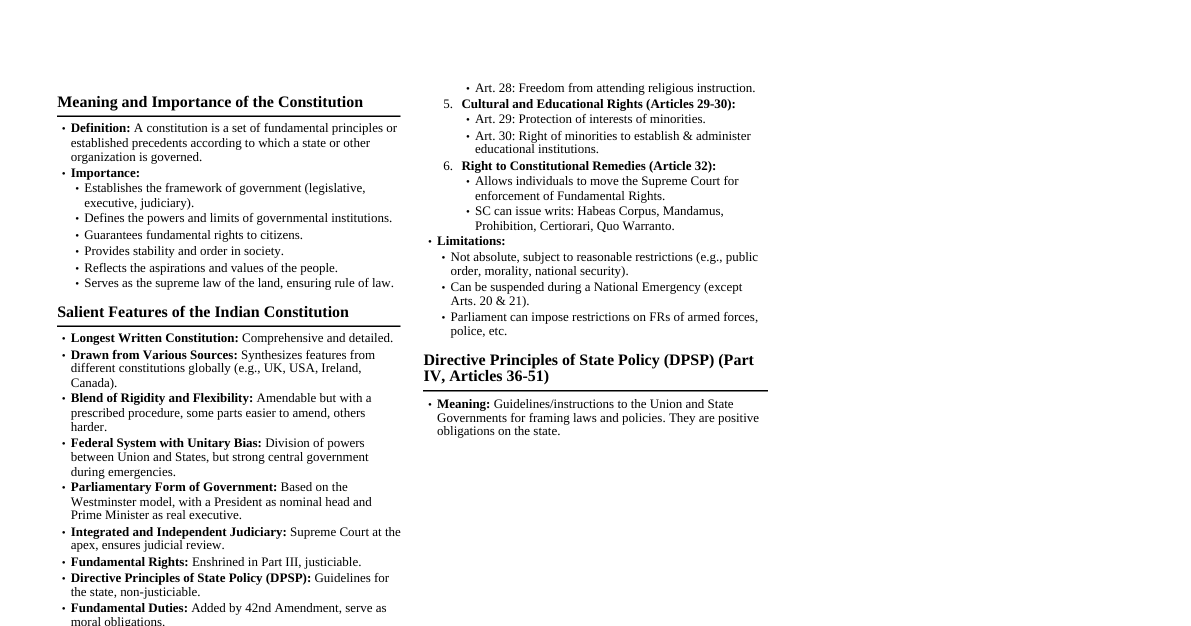
### The Constitution: An Introduction - **What is a Constitution?** A set of fundamental principles or established precedents according to which a state or other organization is governed. It's the supreme law of the land. - **Why do we need one?** - To define the powers of the government. - To protect the rights of citizens. - To establish the structure of the government. - To prevent anarchy and ensure smooth functioning of the country. - **Key Features of the Indian Constitution:** - Longest written constitution in the world. - Blend of rigidity and flexibility. - Parliamentary form of government. - Federal system with unitary bias. - Fundamental Rights and Duties. - Directive Principles of State Policy. - Independent Judiciary. - Universal Adult Franchise. ### Making of the Indian Constitution - **Constituent Assembly:** Formed in 1946 to draft the Constitution. - **President:** Dr. Rajendra Prasad. - **Drafting Committee Chairman:** Dr. B.R. Ambedkar (known as the 'Father of the Indian Constitution'). - **Time Taken:** 2 years, 11 months, 18 days. - **Date of Adoption:** November 26, 1949. - **Date of Enforcement (Republic Day):** January 26, 1950. - **Sources of the Constitution:** Drew inspiration from various constitutions worldwide (e.g., UK, USA, Ireland, Canada). ### The Preamble: Introduction to the Constitution - **What is the Preamble?** It is an introductory statement of the Constitution, which sets out the guiding purpose and principles of the document. It's like an identity card of the Constitution. - **Key Words in the Preamble:** - **WE, THE PEOPLE OF INDIA:** Indicates that the ultimate sovereignty rests with the people of India. - **SOVEREIGN:** India is an independent state, free from external control. It can conduct its own affairs. - **SOCIALIST:** Added by the 42nd Amendment (1976). Aims to achieve social and economic equality, reducing disparities. - **SECULAR:** Added by the 42nd Amendment (1976). All religions are treated equally by the state; no state religion. - **DEMOCRATIC:** Government is chosen by the people through free and fair elections. - **REPUBLIC:** The head of the state (President) is elected, not a hereditary monarch. ### Objectives of the Preamble The Preamble aims to secure for all its citizens: - **JUSTICE:** Social, Economic, and Political. - **LIBERTY:** Of thought, expression, belief, faith, and worship. - **EQUALITY:** Of status and opportunity. - **FRATERNITY:** Assuring the dignity of the individual and the unity and integrity of the Nation. ### Amendment to the Preamble - The Preamble has been amended only **once** so far. - **42nd Amendment Act, 1976:** - Added three new words: **SOCIALIST**, **SECULAR**, and **INTEGRITY**. - This amendment is also known as the 'Mini Constitution' due to its extensive changes.