Wastewater Monitoring & Treatm
Shared 3/31/2026•62 views
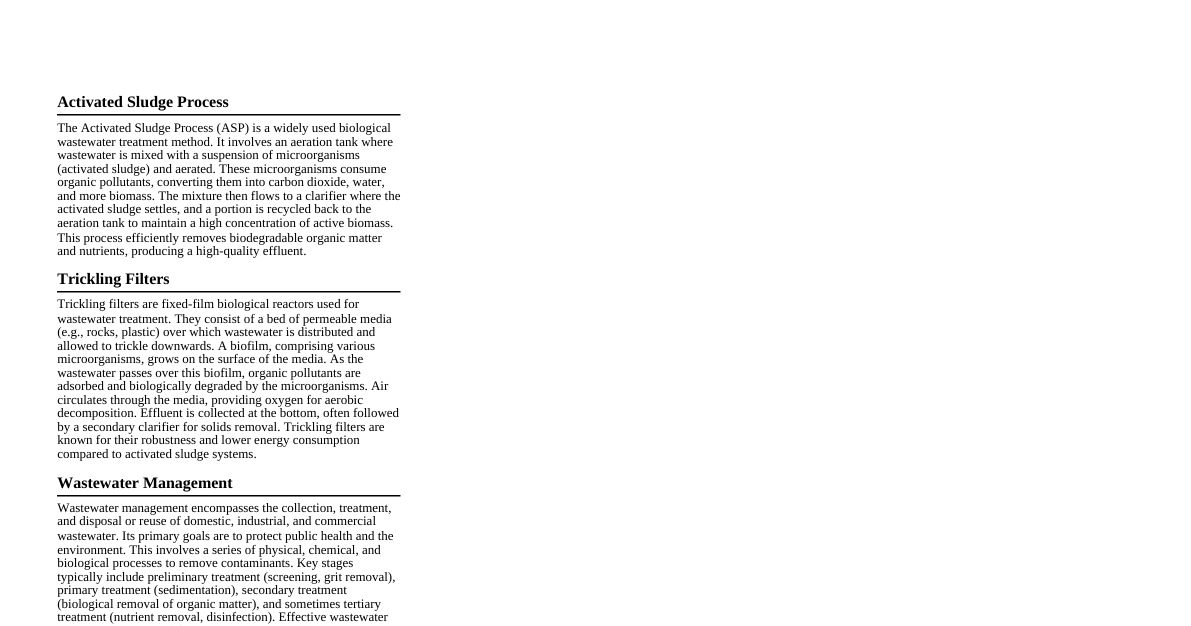
### Wastewater Monitoring Wastewater monitoring is essential for characterizing waste streams, designing treatment facilities, and ensuring compliance with environmental regulations. #### Biochemical Oxygen Demand (BOD) ##### Definition BOD is the amount of dissolved oxygen (DO) required by aerobic microorganisms to decompose organic matter in a water sample, usually $5$ days at $20\text{ }^{\circ}\text{C}$ ($\text{BOD}_5$). ##### Principle Measures DO consumption by microorganisms over $5$ days at $20\text{ }^{\circ}\text{C}$. Sample is diluted, and a microbial "seed" may be added. The difference in DO, adjusted for dilution and seed correction, indicates biodegradable organic load. ##### Protocol 1. Prepare dilution water (aerated distilled water + buffers/nutrients). 2. Neutralize sample pH to $6.5 - 7.5$. 3. Fill two BOD bottles with diluted sample. 4. Measure initial DO ($\text{DO}_0$) in first bottle. 5. Incubate second bottle in dark at $20\text{ }^{\circ}\text{C}$ for $5$ days. 6. Measure final DO ($\text{DO}_5$) after $5$ days. ##### Formula $$\text{BOD}_5 \text{ (mg/L)} = \frac{(\text{DO}_0 - \text{DO}_5) - (B_0 - B_5)f}{P}$$ Where: * $B_0, B_5$: DO of seed control before and after incubation. * $f$: Ratio of seed in sample to seed in control. * $P$: Decimal volumetric fraction of sample used ($V_{\text{sample}} / V_{\text{total}}$). ##### Importance & Significance * Indicates biodegradable fraction of waste. * Essential for sizing biological treatment units. * Evaluates self-purification capacity of receiving waters. * Assesses wastewater treatment plant efficiency. * Serves as a regulatory standard for effluent discharge. #### Chemical Oxygen Demand (COD) ##### Definition COD is the oxygen equivalent of the organic matter content oxidized by a strong chemical oxidant (e.g., potassium dichromate). ##### Principle Organic compounds are oxidized by boiling chromic and sulfuric acids. Excess potassium dichromate ($K_2Cr_2O_7$) is titrated with ferrous ammonium sulfate (FAS). Dichromate consumed indicates oxygen required for chemical oxidation. Silver sulfate ($Ag_2SO_4$) acts as a catalyst, and mercuric sulfate ($HgSO_4$) masks chloride interference. ##### Protocol 1. Add sample to reflux flask. 2. Add known $K_2Cr_2O_7$ and sulfuric acid reagent ($Ag_2SO_4$). 3. Add $HgSO_4$. 4. Reflux for $2$ hours at $150\text{ }^{\circ}\text{C}$. 5. Cool and titrate excess dichromate with FAS (ferroin indicator). 6. Perform blank titration. ##### Formula $$\text{COD (mg/L)} = \frac{(A - B) \times N \times 8000}{\text{mL Sample}}$$ Where: * $A = \text{mL FAS used for blank}$ * $B = \text{mL FAS used for sample}$ * $N = \text{Normality of FAS}$ ##### Importance & Significance * Provides rapid results ($2-3$ hours). * Measures both biodegradable and non-biodegradable oxidizable matter. * $\text{BOD}/\text{COD}$ ratio indicates biodegradability. * Useful for monitoring toxic industrial wastes. * Critical for process control in anaerobic digesters. #### Solids: TSS, TVS, TDS ##### Definitions * **Total Suspended Solids (TSS):** Solids retained by a filter. * **Total Dissolved Solids (TDS):** Solids passing through a filter. * **Total Volatile Solids (TVS):** Weight loss of total solids after ignition at $550\text{ }^{\circ}\text{C}$ (approximation of organic content). ##### Principle Gravimetric analysis. TSS by filtering and drying. TDS by evaporating filtrate. TVS by igniting dried residue. ##### Protocol 1. **TSS:** Filter sample, dry filter at $105\text{ }^{\circ}\text{C}$, weigh. 2. **TDS:** Evaporate filtrate at $180\text{ }^{\circ}\text{C}$, weigh. 3. **TVS:** Ignite dried residue from TS at $550\text{ }^{\circ}\text{C}$, weigh. ##### Formula $$\text{Solids (mg/L)} = \frac{(W_{\text{final}} - W_{\text{initial}}) \text{ in mg} \times 1000}{V_{\text{sample}} \text{ in mL}}$$ ##### Importance & Significance * TSS indicates turbidity and clogging potential. * TDS measures salinity and mineral content. * TVS approximates organic content in solids. * Crucial for sludge handling and disposal. * High solids interfere with disinfection. #### Ash Content ##### Definition Inorganic residue remaining after water and organic matter removal by heating. ##### Principle High-temperature combustion ($550\text{ }^{\circ}\text{C}$) oxidizes organic carbon to $CO_2$ and water. Remaining material (metal oxides, silicates, phosphates) is the fixed/inorganic fraction. ##### Protocol 1. Weigh clean, dry crucible ($W_1$). 2. Add known weight of dried sample ($W_2$). 3. Ignite in muffle furnace at $550\text{ }^{\circ}\text{C}$ for $4$ hours. 4. Cool in desiccator and weigh ($W_3$). ##### Formula $$\% \text{ Ash} = \frac{W_3 - W_1}{W_2 - W_1} \times 100$$ ##### Importance & Significance * Evaluates mineral content. * Important for heating value of solid waste. * Helps determine nutrient value of sludge for soil. * Indicates incineration efficiency. * Tracks inert material accumulation in biological systems. #### Lignocellulosic Components (Lignin, Cellulose, Hemicellulose) ##### Definitions * **Hemicellulose:** Branched polymers of various sugars. * **Cellulose:** Linear chain of glucose units; primary structural component. * **Lignin:** Complex aromatic polymer for structural rigidity. ##### Principle (Van Soest Analysis) Detergent fiber analysis. Hemicellulose is soluble in Neutral Detergent Solution (NDS). Cellulose is solubilized by Acid Detergent Solution (ADS) or $72\% \text{ } H_2SO_4$. Lignin is the residue after acid treatment, consumed during combustion. ##### Protocol 1. **NDF:** Boil sample in neutral detergent. Residue = Hemicellulose + Cellulose + Lignin. 2. **ADF:** Boil NDF residue in acid detergent. Residue = Cellulose + Lignin. 3. **ADL:** Treat ADF residue with $72\% \text{ } H_2SO_4$. Residue = Lignin + Ash. 4. **Ashing:** Burn ADL residue at $550\text{ }^{\circ}\text{C}$. Loss in weight = Lignin. ##### Formula $$\text{Hemicellulose} = \text{NDF} - \text{ADF}$$ $$\text{Cellulose} = \text{ADF} - \text{ADL}$$ $$\text{Lignin} = \text{ADL} - \text{Ash}$$ ##### Importance & Significance * Determines biogas production potential (lignin is recalcitrant). * Critical for pulp and paper industry waste management. * Helps select pretreatment for lignocellulosic biomass. * Lignin content correlates with degradation rate of organic waste. * Essential for carbon sequestration and nutrient cycling. ### Bacteriological Examination of Wastewater Systematic detection, identification, and quantification of microorganisms (pathogenic and indicator bacteria) in water/wastewater. Critical for assessing sanitary quality, treatment efficiency, and public health. #### Indicator Organisms A microorganism whose presence signals possible contamination by pathogenic agents, especially from fecal sources. ##### Why Not Detect Pathogens Directly? * Low, unpredictable numbers. * Complex, specific detection methods. * Expensive and time-consuming. * Some pathogens are viable but non-culturable. Indicator organisms act as proxies for fecal contamination. ##### Common Indicator Organisms 1. **Total Coliform Bacteria:** Gram-negative rods; ferment lactose with gas at $35-37\text{ }^{\circ}\text{C}$. Indicates general contamination. 2. **Fecal Coliforms (Thermotolerant Coliforms):** Subset of total coliforms; grow at $44.5\text{ }^{\circ}\text{C}$. More specific to warm-blooded animal feces. 3. ***Escherichia coli* (E. coli):** Most specific indicator of recent fecal contamination; found exclusively in warm-blooded animal intestines. Gold standard. 4. **Enterococci (Fecal Streptococci):** Gram-positive cocci; more resistant to environmental stress. Used in marine water monitoring. 5. ***Clostridium perfringens*:** Anaerobic, spore-forming bacterium. Indicates **old** fecal contamination due to persistent spores. 6. **Bacteriophages (Coliphages):** Viruses infecting coliforms. Surrogate indicators for human enteric viruses. ##### Characteristics of an Ideal Indicator Organism | Characteristic | Explanation | |---|---| | Present with pathogens | Should co-exist with disease-causing organisms | | Survives longer | Should persist at least as long as pathogens | | Easy to detect | Should be culturable using simple, inexpensive methods | | Non-pathogenic | Should not itself cause disease in healthy individuals | | Present in large numbers | Should be abundant enough for reliable detection | | Specific to fecal source | Should ideally indicate human fecal origin | | Cannot multiply in environment | Should not reproduce outside the host, preventing false positives | | Consistent behavior | Should respond to treatment processes similarly to pathogens | #### Multiple Tube Fermentation Method (MTF) & MPN Classical bacteriological technique to estimate coliform bacteria. Based on lactose fermentation and gas production. Result expressed as **Most Probable Number (MPN)** per 100 mL. ##### Principle Coliforms ferment lactose with acid and gas. Serial dilutions of sample are inoculated into lactose broth. Pattern of positive (gas-producing) tubes across dilutions statistically estimates original bacterial concentration (Poisson statistics). **Three stages:** 1. **Presumptive Test:** Detects lactose fermenters. 2. **Confirmed Test:** Verifies true coliforms. 3. **Completed Test:** Definitive confirmation of coliform identity. ##### Protocol — Step by Step ###### A. PRESUMPTIVE TEST **Objective:** Detect lactose fermenters. **Procedure:** 1. Prepare serial dilutions. 2. Inoculate lactose broth tubes (with Durham tubes) with measured volumes (e.g., 10 mL, 1 mL, 0.1 mL in sets of 5). 3. Incubate at $35-37\text{ }^{\circ}\text{C}$ for $24-48$ hours. 4. Observe for gas production in Durham tube (positive). **Interpretation:** Gas = coliforms possibly present $\rightarrow$ Confirmed Test. ###### B. CONFIRMED TEST **Objective:** Confirm gas production from true coliforms. **Procedure:** 1. From positive presumptive tubes, transfer to: * **Brilliant Green Lactose Bile Broth (BGLB):** Inhibits gram-positive organisms. Incubate at $35-37\text{ }^{\circ}\text{C}$ for $48$ hours. Gas production = confirmed coliforms. * **EMB (Eosin Methylene Blue) Agar:** *E. coli* produces metallic green sheen. * **MUG Agar:** *E. coli* produces blue-white fluorescence under UV light (due to $\beta$-glucuronidase). 2. Incubate plates at $35\text{ }^{\circ}\text{C}$ for $24$ hours. **Interpretation:** Gas in BGLB, metallic sheen on EMB, or fluorescence on MUG = confirmed coliforms/E. coli. ###### C. COMPLETED TEST **Objective:** Definitive confirmation of coliforms (gram-negative, non-spore-forming rods that ferment lactose). **Procedure:** 1. Pick typical confirmed colonies from EMB. 2. Transfer to fresh lactose broth and nutrient agar slant. 3. Incubate at $35\text{ }^{\circ}\text{C}$ for $24-48$ hours. 4. Confirm gas production in lactose broth. 5. Perform Gram staining on nutrient agar growth: observe gram-negative, rod-shaped, non-spore-forming cells. **Positive Result:** Gas production in lactose broth AND gram-negative, non-spore-forming bacilli. ##### MPN — Most Probable Number Statistical method to estimate viable coliform concentration based on positive/negative tubes. **Assumptions:** Random distribution, equal chance per aliquot, positive for $\ge 1$ organism. **Example:** 5-3-0 pattern (5 tubes at 10mL positive, 3 at 1mL positive, 0 at 0.1mL positive) corresponds to an MPN value from a table. ###### MPN Table (Standard 5-Tube, 3-Dilution Format) | Positive Tubes (10mL – 1mL – 0.1mL) | MPN/100 mL | 95% Confidence Range | |---|---|---| | 0-0-0 | 1600 | — | > *Values are from APHA Standard Methods.* ###### Expression of MPN Result Expressed as **MPN per 100 mL**. Adjusted for dilution factor: **MPN (adjusted) = MPN from table $\times$ Dilution factor** ###### Water Quality Standards Based on MPN | Water Type | Acceptable MPN (Coliforms/100 mL) | |---|---| | Drinking water | 0 (zero tolerance) | | Recreational water (swimming) | $\le 200$ fecal coliforms | | Irrigation water | $\le 1000$ total coliforms | | Raw wastewater | $10^6 – 10^9$ (typically) | | Treated wastewater effluent | $ ##### Importance and Significance of MTF/MPN 1. **Drinking Water Safety:** Ensures water meets coliform standards. 2. **Fecal Contamination Detection:** Identifies pollution sources. 3. **Wastewater Treatment Efficiency:** Measures bacterial load reduction. 4. **Regulatory Compliance:** Required by international bodies. 5. **Epidemiological Investigations:** Traces waterborne disease sources. 6. **Environmental Monitoring:** Assesses ecosystem health. 7. **Cost-Effective:** Suitable for routine monitoring. ##### Limitations of MTF/MPN | Limitation | Details | |---|---| | Time-consuming | 3–5 days for all stages | | Statistical estimate only | Not an exact count; wide confidence intervals | | Cannot detect all coliforms | Some ferment slowly or atypically | | Misses viable but non-culturable (VBNC) organisms | Stressed bacteria may not grow | | Labor-intensive | Many tubes, dilutions, handling | | False positives possible | Non-coliforms may ferment lactose | | Low sensitivity | May miss low bacterial densities | #### Advanced Detection Methods ##### Nucleic Acid-Based Methods (NASBA & PCR) Detect and identify microorganisms by targeting and amplifying genetic material (DNA/RNA). Bypass culturing. ###### Types of Nucleic Acid-Based Methods * **Polymerase Chain Reaction (PCR):** Amplifies specific DNA sequences. Variants include qPCR (quantitative), Multiplex PCR (multiple targets), RT-PCR (for RNA). * **NASBA (Nucleic Acid Sequence-Based Amplification):** Isothermal RNA amplification. Detects active organisms. * **LAMP (Loop-Mediated Isothermal Amplification):** Isothermal DNA amplification; simpler equipment. * **Microarray-Based Detection:** Gene chips for simultaneous screening of multiple pathogens. ###### Principle of NASBA Amplify **RNA** at constant $41\text{ }^{\circ}\text{C}$ using Reverse Transcriptase, RNase H, and T7 RNA Polymerase. Autocatalytic cycle produces $10^9-10^{12}$ copies in $90$ minutes. **Advantages:** Amplifies RNA directly (detects active organisms), isothermal, faster than PCR. ###### Principle of PCR Amplifies specific DNA through repeated cycles: 1. **Denaturation** ($94-98\text{ }^{\circ}\text{C}$): DNA melts into single strands. 2. **Annealing** ($50-65\text{ }^{\circ}\text{C}$): Primers bind to complementary sequences. 3. **Extension** ($72\text{ }^{\circ}\text{C}$): DNA polymerase synthesizes new strands. Each cycle doubles DNA, leading to billions of copies. ###### Protocol (General — PCR) 1. Sample collection and preservation. 2. Concentration (filtration/centrifugation). 3. Nucleic acid extraction (lysis, purification). 4. PCR amplification (primers, polymerase, nucleotides, buffer in thermal cycler). 5. Detection (gel electrophoresis or real-time fluorescence). 6. Result interpretation. ###### Target Pathogens in Wastewater | Pathogen | Method Used | Target Gene | |---|---|---| | *E. coli* O157:H7 | PCR/qPCR | stx1, stx2 genes | | *Salmonella* spp. | PCR | invA gene | | *Vibrio cholerae* | PCR | ctxA gene (cholera toxin) | | Norovirus | RT-qPCR / NASBA | ORF1, ORF2 | | Hepatitis A virus | RT-PCR / NASBA | 5' UTR region | | *Cryptosporidium* | PCR | 18S rRNA gene | | *Giardia* | PCR | $\beta$-giardin gene | ###### Importance and Significance 1. **Rapid:** Results in $2-6$ hours. 2. **High Sensitivity:** Detects $1-10$ organisms. 3. **High Specificity:** Primer design ensures target detection. 4. **Detects VBNC organisms.** 5. **Quantitative:** qPCR gives concentration. 6. **Outbreak Surveillance.** 7. **Environmental Monitoring** (wastewater-based epidemiology). 8. **Detects Emerging Pathogens.** ###### Limitations * **High Cost:** Equipment and reagents. * **PCR Inhibitors:** Substances in wastewater cause false negatives. * **Detects Dead DNA:** Cannot always distinguish live from dead (NASBA mitigates). * **Skilled Personnel Required.** * **Contamination Risk.** * **No Antibiotic Resistance Information.** ##### Biosensor-Based Methods Analytical device integrating a **biological recognition element (bioreceptor)** with a **signal transducer** to detect specific targets. Converts biological interaction into measurable electrical, optical, or chemical signal. ###### Components of a Biosensor | Component | Function | Examples | |---|---|---| | **Bioreceptor** | Recognizes and binds target | Antibodies, enzymes, aptamers, DNA probes | | **Transducer** | Converts signal to measurable output | Electrode, optical fiber, piezoelectric crystal | | **Signal Processor** | Amplifies and displays output | Electronic circuit, computer interface | | **Display** | Shows result | Digital readout, graph, color change | ###### Types of Biosensors * **Electrochemical Biosensors:** Detect changes in current, voltage, or impedance. * **Optical Biosensors:** Detect changes in light (absorbance, fluorescence, SPR). * **Piezoelectric Biosensors:** Use QCM to detect mass changes. * **Aptamer-Based Biosensors:** Use stable, synthetic aptamers as bioreceptors. ###### Principle Bioreceptor immobilized on transducer. Target pathogens bind, causing measurable change (electrical, optical, mass). Transducer converts to electrical signal, which is processed and displayed. ###### Protocol 1. Sensor preparation. 2. Sample preparation. 3. Sample application. 4. Signal measurement. 5. Calibration. 6. Regeneration (optional). ###### Advantages over Traditional Methods | Feature | Traditional Culture | Biosensor | |---|---|---| | Detection time | 24–72 hours | Minutes to 1 hour | | Sensitivity | Moderate | Very high | | Portability | Lab-based only | Field-deployable | | Automation | Manual | Can be fully automated | | Continuous monitoring | Not possible | Possible with online sensors | | Cost per test | Low–moderate | Moderate (high initial cost) | ###### Importance and Significance 1. **Real-time Monitoring.** 2. **On-site/Field Testing.** 3. **Early Warning Systems.** 4. **High Throughput.** 5. **Multi-analyte Detection.** 6. **Food and Water Safety.** 7. **Toxin Detection.** ###### Limitations * **Fouling:** Organic matter interference. * **Matrix Effects:** Complex wastewater composition. * **High Initial Cost.** * **Limited Shelf Life.** * **Requires Calibration.** * **Limited Regulatory Acceptance.** ##### Immunological Methods Use specific **antigen-antibody interactions** to detect, identify, and quantify microorganisms. ###### Basis of Immunological Detection Antibodies (specific proteins) bind to antigens (foreign substances). Reaction is highly specific, sensitive, and reversible. ###### Types of Immunological Methods * **ELISA (Enzyme-Linked Immunosorbent Assay):** Widely used. Direct, Indirect, Sandwich, Competitive formats. * **Lateral Flow Assay (Immunochromatography):** Rapid, point-of-care (e.g., pregnancy test strips). * **Immunofluorescence (IF):** Antibodies labeled with fluorescent dyes. Direct or Indirect IF. Used for *Cryptosporidium*, *Giardia*. * **Flow Cytometry with Antibodies:** Detects and counts specific pathogens at high speed. * **Western Blot:** Confirmatory testing for specific proteins. ###### ELISA Protocol (Sandwich ELISA) 1. **Coat plate:** Capture antibody added to wells. 2. **Blocking:** Blocking solution added to prevent non-specific binding. 3. **Sample addition:** Target antigen binds to capture antibody. 4. **Detection antibody:** Enzyme-linked detection antibody added. 5. **Substrate addition:** Enzyme cleaves substrate $\rightarrow$ color change. 6. **Stop reaction:** Stop solution added. 7. **Read results:** Measure optical density (OD). 8. **Quantification:** Compare OD to standard curve. ###### Target Detection in Wastewater | Target | Method | Application | |---|---|---| | *E. coli* O157:H7 | Sandwich ELISA, Lateral flow | Drinking water, food safety | | *Salmonella* | ELISA, Lateral flow | Irrigation water, wastewater | | *Cryptosporidium* | Direct IF, ELISA | Water treatment monitoring | | *Giardia* | Direct IF, ELISA | Filtration efficiency testing | | Cholera toxin | ELISA | Outbreak investigation | | Microcystin (cyanotoxin) | Competitive ELISA | Algal bloom monitoring | | Hepatitis A virus | ELISA | Shellfish growing waters | | Norovirus | ELISA | Recreational water, sewage | ###### Importance and Significance 1. **High Specificity:** Differentiates related species/strains. 2. **Simultaneous Multi-pathogen Detection.** 3. **Toxin Detection:** Even if bacteria are absent. 4. **Quantitative:** Gives concentration data. 5. **Applicable at Different Levels:** Rapid field to sensitive lab tests. 6. **Large-scale Screening.** 7. **Clinical and Environmental Integration.** 8. **Monitoring Treatment Efficacy.** ###### Limitations * **Cross-reactivity:** Antibodies may bind non-target antigens. * **Cannot Detect Viable vs. Dead:** Antigen detection doesn't confirm viability. * **Matrix Interference:** Wastewater components can inhibit binding. * **Antibody Availability.** * **Cost:** Commercial kits are expensive. * **Hook Effect:** Very high antigen can cause false low signal. * **Requires Concentration Step.** #### Comparison of All Methods | Parameter | MTF/MPN | PCR/NASBA | Biosensor | Immunological | |---|---|---|---|---| | **Detection time** | 2–5 days | 2–6 hours | Minutes–1 hour | 1–4 hours | | **Sensitivity** | Moderate | Very high | Very high | High | | **Specificity** | Moderate | Very high | High | High | | **Cost (per test)** | Low | High | Moderate | Moderate | | **Equipment needed** | Basic | Specialized | Specialized | Basic–moderate | | **Skilled personnel** | Moderate | High | Moderate | Moderate | | **Quantitative?** | Yes (MPN) | Yes (qPCR) | Yes | Yes (ELISA) | | **Detects VBNC?** | No | Yes (RNA) | Varies | No | | **Field deployable?** | No | Limited | Yes | Limited | | **Regulatory acceptance** | High | Growing | Limited | Moderate | | **Detects toxins?** | No | Limited | Yes | Yes | | **Live/dead discrimination?** | Yes | Partial | Varies | No | #### Applications of Bacteriological Examination | Sector | Application | |---|---| | **Public health** | Ensuring drinking water safety; preventing waterborne disease outbreaks | | **Water treatment** | Monitoring treatment efficiency (chlorination, UV, ozone, filtration) | | **Environmental** | Assessing river, lake, beach, and groundwater quality | | **Agriculture** | Testing irrigation water and food wash water for pathogen safety | | **Industrial** | Monitoring effluent discharge for regulatory compliance | | **Aquaculture** | Testing fish farm and shellfish harvesting water quality | | **Research** | Studying microbial ecology, pathogen behavior, antibiotic resistance | | **Epidemiology** | Outbreak investigation, source tracing, WBE surveillance | #### Regulatory Standards | Organization | Standard | Requirement | |---|---|---| | **WHO** | Drinking Water Guidelines | 0 E. coli per 100 mL | | **US EPA** | Safe Drinking Water Act | 0 coliforms per 100 mL (MCLG) | | **EU Directive 98/83/EC** | Drinking Water Directive | 0 E. coli per 100 mL | | **APHA** | Standard Methods (23rd Ed.) | MTF/MPN as reference method | | **ISO 9308-1** | International Standard | Membrane filtration for E. coli | ### Industrial Effluents Treatment Wastewater from industrial operations. Contains complex pollutants. **Why treatment is necessary:** High BOD, COD, suspended solids, toxic chemicals, heavy metals, oils, pathogens. Direct discharge causes severe pollution and health risks. Environmental regulations mandate treatment. **Pollutants of concern:** BOD, COD, TSS, TDS, pH, Nutrients (N, P), Toxic substances. **General approach:** Combines physical, chemical, and biological processes (Primary, Secondary, Tertiary). #### Aerobic Treatment Biological process where microorganisms use **dissolved oxygen** to break down organic pollutants into $CO_2$, $H_2O$, and new microbial biomass (sludge). ##### Principle Aerobic microorganisms use organic matter as carbon/energy. O$_2$ is the terminal electron acceptor. Organic pollutants are oxidized. **Organic matter + O$_2$ $\rightarrow$ CO$_2$ + H$_2$O + new cells + energy** * Oxygen must be continuously supplied (aeration). * Generates biological sludge (activated sludge). * Fast degradation rate. * Most effective for low to medium strength wastewater (BOD ##### Aerobic Treatment Systems ###### A. Activated Sludge Process (ASP) Most widely used. 1. **Screening & Pre-treatment:** Removes large solids, grit. 2. **Primary Sedimentation:** Settles heavy suspended solids (primary sludge). Reduces TSS by $50-60\%$, BOD by $25-35\%$. 3. **Aeration Tank:** Primary effluent mixed with **return activated sludge (RAS)**. Air supplied. Aerobic bacteria degrade organics, forming flocs. 4. **Secondary Clarifier:** Mixed liquor settles. Microbial flocs form **secondary sludge**. Clear treated effluent overflows. BOD removal: $85-95\%$. 5. **Sludge Recycling:** RAS recycled to aeration tank. **Waste Activated Sludge (WAS)** sent for sludge treatment. 6. **Tertiary Treatment (if needed):** Filtration, disinfection, nutrient removal. ###### B. Trickling Filter Effluent sprinkled over media with biofilm. Air flows naturally. Simpler, lower energy than ASP, but less efficient. ###### C. Oxidation Pond / Lagoon Shallow basins, natural sunlight, wind. Long retention time. Low cost, minimal operation. ###### D. Sequencing Batch Reactor (SBR) Single tank for aeration and sedimentation in alternating cycles. Flexible, space-efficient. ##### Importance and Significance * **High efficiency:** $85-95\%$ BOD/COD reduction. * **Fast treatment:** HRT in hours. * **Stable effluent:** Meets discharge norms. * **Well-established technology.** * **Flexible:** Handles varying flows/compositions. * **Less odor generation.** * **Can achieve nitrification.** ##### Limitations * **High energy consumption:** Aeration is main operating cost. * **Large sludge production.** * **Not suitable for very high BOD effluents.** * **Sensitive to toxic shocks.** * **Not energy-recovering.** #### Anaerobic Treatment Biological degradation in **absence of oxygen**, producing **biogas** (CH$_4$, CO$_2$). ##### Principle Consortium of interdependent microorganisms. No free oxygen; organic compounds are electron donors/acceptors. **Four stages:** 1. **Hydrolysis:** Complex macromolecules broken into monomers. 2. **Acidogenesis:** Monomers fermented to organic acids, alcohols, gases. 3. **Acetogenesis:** VFAs, alcohols converted to acetate, H$_2$, CO$_2$. 4. **Methanogenesis:** Acetate, H$_2$, CO$_2$ converted to CH$_4$. * Methanogens are sensitive (inhibited by O$_2$, pH 1000–2000 mg/L). * **Energy-recovering:** Methane (fuel) produced. ##### Four Stages of Anaerobic Digestion ###### Stage 1 — HYDROLYSIS * **What happens:** Complex insoluble macromolecules broken down into soluble monomers. * **Organisms:** Hydrolytic bacteria. * **Reactions:** Proteins $\rightarrow$ amino acids; carbohydrates $\rightarrow$ sugars; lipids $\rightarrow$ glycerol + fatty acids. * Rate-limiting step for solid wastes. ###### Stage 2 — ACIDOGENESIS (Acid Formation) * **What happens:** Soluble monomers fermented into simpler organic acids, alcohols, and gases. * **Organisms:** Acidogenic/fermentative bacteria. * **Products:** Volatile fatty acids (VFAs), alcohols, CO$_2$, H$_2$. * Lowers pH. Fastest stage. ###### Stage 3 — ACETOGENESIS (Acetate Formation) * **What happens:** VFAs and alcohols converted into **acetate, hydrogen (H$_2$), and CO$_2$**. * **Organisms:** Syntrophic acetogenic bacteria, in relationship with methanogens. * **Key products:** Acetate (CH$_3$COO⁻), H$_2$, CO$_2$. ###### Stage 4 — METHANOGENESIS (Methane Formation) * **What happens:** Acetate, H$_2$, and CO$_2$ converted into **methane (CH$_4$)**. * **Organisms:** Methanogenic archaea (acetoclastic and hydrogenotrophic). * **Final biogas:** $60-70\%$ CH$_4$, $30-40\%$ CO$_2$. * pH optimum: $6.8-7.2$. Rate-limiting step for high-soluble-substrate digesters. ##### Anaerobic Treatment Systems ###### A. UASB Reactor — Upflow Anaerobic Sludge Blanket * Effluent flows **upward** through dense anaerobic granular sludge. * **Gas-liquid-solid separator (GLSS)** separates biogas, treated water, sludge. * Compact, efficient. Used for dairy, distillery, food processing. ###### B. Anaerobic Contact Process Effluent mixed with recycled anaerobic sludge in a closed digester. Sludge settles in a clarifier and is recycled. ###### C. Fixed Film Reactors (Anaerobic Filter) Microorganisms grow as biofilm on packing material. Effluent passes through media. ###### D. Two-Phase Anaerobic System Separates hydrolysis/acidogenesis from methanogenesis into two reactors. Better control and stability. ##### Importance and Significance * **Biogas/energy recovery:** Methane for heat/electricity. * **Excellent for high-strength effluent** (BOD > 1,000 mg/L). * **Low sludge production:** $3-20$ times less than aerobic. * **Low energy consumption:** Net energy-positive. * **Digestate as fertilizer.** * **Compact reactor designs.** * **Reduces greenhouse gases:** Biogas capture prevents methane emissions. ##### Limitations * **Slow process:** Methanogens grow slowly; startup takes weeks/months. * **Sensitive to pH:** Fails below pH 6.5. * **Incomplete treatment:** Needs aerobic polishing. * **Produces H$_2$S:** Toxic, corrosive, requires scrubbing. * **Sensitive to toxins.** * **Temperature-sensitive.** * **Complex monitoring.** #### Treatment of Specific Industrial Effluents ##### DAIRY INDUSTRY EFFLUENT ###### Sources of Effluent Milk processing, cleaning (CIP), product manufacturing, spillages. ###### Characteristics of Dairy Effluent | Parameter | Typical Range | |---|---| | BOD | 1,000 – 5,000 mg/L | | COD | 2,000 – 10,000 mg/L | | TSS | 200 – 1,000 mg/L | | pH | 4.5 – 10 (variable) | | Fats/Oils | 200 – 600 mg/L | | Nitrogen | 20 – 100 mg/L | | Phosphorus | 10 – 50 mg/L | **Key pollutants:** Lactose, milk proteins, milk fat, detergents, variable pH. ###### Treatment Steps 1. **Screening & Grit Removal:** Removes large solids. 2. **Fat/Grease Removal (DAF):** Dissolved Air Flotation floats fats/proteins as scum. Removes $80-90\%$ fats. 3. **Equalization Tank:** Averages flow/strength, pH adjustment ($6.5-8.0$). 4. **Anaerobic Treatment:** UASB for high-BOD streams (especially cheese whey). Biogas produced. $60-80\%$ BOD removal. 5. **Aerobic Treatment:** Activated Sludge Process for residual BOD. Nitrification occurs. $85-95\%$ BOD removal. 6. **Secondary Clarifier:** Sludge settles, effluent overflows. 7. **Nutrient Removal:** Chemical precipitation for P, denitrification for N. 8. **Disinfection & Discharge:** Chlorination/UV. Reuse for irrigation. ###### Importance and Significance * **Prevents eutrophication.** * **Fat recovery:** Economic value. * **Biogas generation.** * **Water reuse.** * **Regulatory compliance.** * **Protects aquatic ecosystem.** ##### DISTILLERY INDUSTRY EFFLUENT ###### Sources of Effluent Spent wash (slop/vinasse) is primary effluent. Lees, condensate, cleaning water, cooling water. ###### Characteristics of Distillery Effluent (Spent Wash) | Parameter | Typical Value | |---|---| | BOD | 30,000 – 80,000 mg/L | | COD | 80,000 – 1,50,000 mg/L | | Color | Dark brown/black | | pH | 3.5 – 5.0 (highly acidic) | | TSS | 8,000 – 15,000 mg/L | | Sulfate | 5,000 – 12,000 mg/L | **Key pollutants:** Melanoidins (dark color, recalcitrant), vinasse, sulfates, potassium, high temperature. ###### Treatment Steps 1. **Cooling & Screening:** Cool to $35-40\text{ }^{\circ}\text{C}$, remove solids. 2. **Slop Thickening/Concentration:** Multi-effect evaporators. Concentrated slop for animal fodder, bio-manure, or fuel. 3. **Biomethanation (Anaerobic Treatment):** Diluted spent wash ($\text{BOD} ###### Importance and Significance * **Biogas recovery:** High methane yield. * **Ferti-irrigation:** Valuable for sugarcane. * **Zero Liquid Discharge:** Legal mandate. * **Prevents soil/groundwater pollution.** * **Energy self-sufficiency.** * **Reduces odor pollution.** ##### VEGETABLE OIL INDUSTRY EFFLUENT ###### Sources of Effluent Oil extraction, refining processes (degumming, neutralization, bleaching, deodorization), washing, condensates. ###### Characteristics of Vegetable Oil Effluent | Parameter | Typical Range | |---|---| | BOD | 3,000 – 20,000 mg/L | | COD | 8,000 – 45,000 mg/L | | Oil and Grease | 500 – 5,000 mg/L | | TSS | 500 – 2,000 mg/L | | pH | 4.0 – 9.0 (variable) | | Phosphorus | 50 – 300 mg/L | **Key pollutants:** Free fatty acids (FFAs), soapstock (extremely high BOD/COD), phospholipids, residual hexane, bleaching earth. ###### Treatment Steps 1. **Screening & Grit Removal:** Removes oil-coated solids, grit. 2. **Oil/Grease Separation (Primary):** * **API Separator:** Gravity separation for free oil. * **DAF (Dissolved Air Flotation):** For emulsified oil; chemical coagulants often added. Removes $90-95\%$ oil/grease. 3. **Equalization:** Averages flows/concentrations, adjusts pH. 4. **Chemical Treatment (Coagulation-Flocculation):** Coagulants (alum, ferric chloride) and flocculants remove residual oil, solids, color. 5. **Anaerobic Treatment:** UASB for high-strength effluent ($\text{BOD} > 3,000 \text{ mg/L}$). LCFA (Long Chain Fatty Acids) inhibition is a challenge. Biogas produced. 6. **Aerobic Biological Treatment:** ASP or biofilm systems for polishing. $85-95\%$ BOD removal. 7. **Sludge Management:** Oil-rich sludge to anaerobic digestion. Biological sludge dewatered. 8. **Tertiary Treatment & Discharge:** Filtration, disinfection. ###### Special Consideration — Soapstock Treatment Soapstock (from caustic neutralization) is highly polluting. * **Acidulation:** Treat with H$_2$SO$_4$ to recover crude fatty acid. * **Anaerobic digestion:** Excellent biogas yield. * **Animal feed supplement.** ###### Importance and Significance * **Oil recovery:** Commercial value. * **Prevents aquatic ecosystem damage.** * **Soapstock valorization.** * **High biogas potential:** Fats have high methane yield. * **Regulatory compliance:** Strict oil/grease limits. * **Prevents clogging.** #### Aerobic vs. Anaerobic Treatment | Parameter | Aerobic | Anaerobic | |---|---|---| | Oxygen requirement | Essential | Strictly absent | | Speed of treatment | Fast (hours) | Slow (days–weeks startup) | | Energy consumption | High (aeration) | Low (no aeration) | | Energy production | None | Yes (biogas/methane) | | Sludge production | High | Very low | | BOD removal | 85–95% | 60–80% | | Suitable for | Low–medium BOD ( 2000 mg/L) | | End products | CO₂, H₂O, biomass | CH₄, CO₂, H₂O, small biomass | | Odor | Minimal | H₂S if not controlled | | Temperature sensitivity | Moderate | High | | Effluent quality | Good (discharge-ready) | Needs aerobic polishing | | Capital cost | Moderate | Moderate–high | | Operating cost | High | Low | | Start-up time | Days to weeks | Weeks to months | #### Industrial Effluents Comparison | Parameter | Dairy | Distillery | Vegetable Oil | |---|---|---|---| | BOD range | 1,000–5,000 mg/L | 30,000–80,000 mg/L | 3,000–20,000 mg/L | | Main pollutants | Lactose, proteins, fats | Melanoidins, organic acids, sulfates | Fatty acids, oils, soapstock | | Color | Light/milky | Very dark brown-black | Light–amber | | Key challenge | Fat removal, variable pH | High BOD, color removal | Oil/grease removal, LCFA inhibition | | Best anaerobic system | UASB | UASB / Biomethanation | UASB (with pretreatment) | | Energy recovery | Moderate (biogas) | High (biogas) | High (fatty acid biogas) | | Byproduct value | Fat (animal feed) | Ferti-irrigation, bio-manure | Crude fatty acid, recovered oil | | Special regulation | CPCB norms | ZLD mandatory (India) | CPCB norms | ### Biodegradation Breakdown of organic pollutants by microorganisms into simpler, less toxic compounds via enzymatic reactions. #### Types of Biodegradation * **Aerobic Biodegradation:** In presence of oxygen. End products: CO$_2$ + H$_2$O + energy. Fast, complete. * **Anaerobic Biodegradation:** In absence of oxygen. Uses alternate electron acceptors. End products: CH$_4$ + CO$_2$ + H$_2$S. Slower. * **Co-metabolism:** Pollutant degraded incidentally while growing on another substrate. Important for recalcitrant compounds. * **Mineralization:** Complete breakdown to inorganic end products (CO$_2$ + H$_2$O + salts). * **Partial Degradation (Biotransformation):** Pollutant converted to simpler compounds; may produce more toxic metabolites. * **Reductive Dechlorination:** Specific to halogenated compounds. Chlorine replaced by hydrogen by anaerobes. #### Factors Affecting Biodegradation | Factor | Effect | |---|---| | Temperature | Higher temp = faster metabolism (up to optimum) | | pH | Optimum pH 6.5–8.0 for most organisms | | Oxygen | Determines aerobic vs. anaerobic pathway | | Nutrients (N, P) | Limiting nutrients slow degradation | | Moisture | Required for microbial activity | | Pollutant structure | Simple structures degrade faster; complex/halogenated = slower | | Bioavailability | Sorbed or insoluble pollutants are less accessible | #### ROLE OF MICROORGANISMS IN BIODEGRADATION * **Bacteria:** Most important. Produce enzymes (oxygenases, hydrolases, dehalogenases). * *Pseudomonas:* Petroleum, phenol, toluene. * *Dehalococcoides:* Reductive dechlorination. * **Fungi:** Degrade recalcitrant, complex polymers. Produce ligninolytic enzymes (laccase, peroxidase). White-rot fungi. * *Phanerochaete chrysosporium:* Lignin, PAHs, dioxins. * **Algae:** Contribute in aquatic environments. Produce O$_2$, some degrade hydrocarbons/heavy metals. * **Protozoa:** Indirect role; graze on bacteria, stimulate turnover. #### Enzymes in Biodegradation | Enzyme | Function | |---|---| | Oxygenases (mono/di) | Add oxygen to aromatic rings; break ring structures | | Dehalogenases | Remove halogen (Cl, Br, F) atoms from compounds | | Hydrolases | Break ester, ether, and amide bonds | | Oxidoreductases | Transfer electrons; oxidize/reduce pollutants | | Laccases | Oxidize phenolic compounds (fungi) | | Nitro-reductases | Reduce nitroaromatic compounds (explosives) | ### BIOREMEDIATION Use of **living microorganisms** (bacteria, fungi, algae) or their enzymes to degrade, transform, or detoxify pollutants. #### TYPES OF BIOREMEDIATION ##### IN SITU BIOREMEDIATION Treatment at original location; no excavation. * **Advantages:** Lower cost, less disturbance, treats large/deep zones, reduces exposure. * **Limitations:** Difficult to monitor/control, slow, uneven distribution of resources, not for heterogeneous soils or very high concentrations. ##### EX SITU BIOREMEDIATION Contaminated material removed and treated in a controlled facility. * **Advantages:** Better control, faster, easier monitoring, handles high concentrations, predictable. * **Limitations:** High excavation/transport cost, site disturbance, increased worker exposure, treats only shallow contamination, requires space. ##### In Situ vs. Ex Situ — Quick Comparison | Feature | In Situ | Ex Situ | |---|---|---| | Excavation | Not required | Required | | Cost | Lower | Higher | | Speed | Slower | Faster | | Control | Difficult | Easy | | Site disturbance | Minimal | High | | Depth of treatment | Deep zones possible | Surface/shallow only | #### BIOREMEDIATION TECHNOLOGIES ##### BIOVENTING Injection of air (oxygen) into **unsaturated (vadose) zone** soil to stimulate aerobic degradation of petroleum hydrocarbons. In situ. ###### Advantages: * Simple, low-cost. * Minimal surface disturbance. * Can combine with soil vapor extraction. ###### Limitations: * Only in unsaturated zone. * Ineffective in low-permeability soils. * Slow in cold climates. ##### BIOAUGMENTATION Addition of **exogenous microorganisms** to enhance degradation. Used when native population is insufficient. Can be in situ or ex situ. ###### Advantages: * Introduces specialized degraders. * Faster remediation. * Handles unusual/recalcitrant pollutants. ###### Limitations: * Added organisms may not survive. * Regulatory approval for GE organisms. * Difficult to distribute evenly. * Effectiveness may decrease over time. ##### BIOSPARGING Injection of air **below the water table (saturated zone)** to increase DO and stimulate aerobic biodegradation in groundwater. In situ. Dual action: volatilization + biodegradation. ###### Advantages: * Treats groundwater without pumping. * Combines physical and biological mechanisms. * Relatively low cost. ###### Limitations: * Air channeling. * Not for low-permeability soils. * May mobilize pollutants. * Volatiles must be captured. ##### BIOSTIMULATION Addition of **nutrients (N, P), electron donors, or electron acceptors** to stimulate native microorganisms. Simpler and less risky than bioaugmentation. ##### Bioreactor Summary Table | Reactor Type | Phase | Speed | Cost | Best Application | |---|---|---|---|---| | Slurry bioreactor | Liquid-solid | Fast | High | High-conc. polluted soils | | Land farming | Solid | Slow | Low | Petroleum, pesticides | | Composting | Solid | Moderate | Low–moderate | PAHs, explosives | | Biopile | Solid | Moderate | Moderate | Fuel hydrocarbons | | Constructed wetland | Aquatic | Slow | Low | Effluent polishing | #### ADVANTAGES & LIMITATIONS OF BIOREMEDIATION ##### Advantages * **Eco-friendly.** * **Cost-effective.** * **Complete mineralization** possible. * **Treats large areas.** * **Public acceptance.** * Can be combined with other methods. ##### Limitations * **Slow process.** * **Not universal** for all pollutants (heavy metals). * **Site-specific.** * **Incomplete degradation risk:** Toxic intermediates. * **Monitoring difficult.** * **Regulatory uncertainty** for GE organisms. * Cannot handle very high concentrations. #### BIOREMEDIATION OF HYDROCARBONS Use of microorganisms to degrade petroleum hydrocarbons (crude oil, diesel, BTEX, PAHs) into harmless products. ##### Types of Hydrocarbons Targeted * **Aliphatic hydrocarbons:** Most easily degraded. * **Aromatic hydrocarbons (BTEX):** Moderately degradable. * **Polycyclic Aromatic Hydrocarbons (PAHs):** Most resistant, carcinogenic. * **Chlorinated hydrocarbons:** Require anaerobic or co-metabolic degradation. ##### Principle of Degradation Aerobic bacteria use **oxygenase enzymes** to incorporate oxygen, making hydrocarbons reactive/soluble. Pathway: Hydrocarbon $\rightarrow$ Alcohols $\rightarrow$ Aldehydes $\rightarrow$ Fatty acids $\rightarrow$ Acetyl-CoA $\rightarrow$ TCA cycle $\rightarrow$ CO$_2$ + H$_2$O. Anaerobic degradation uses alternate electron acceptors (nitrate, sulfate, iron). **Bioavailability** is critical. Biosurfactants increase solubility. ##### Microorganisms | Organism | Type | Hydrocarbons Degraded | |---|---|---| | *Pseudomonas putida* | Bacteria | BTEX, alkanes, PAHs | | *Alcanivorax borkumensis* | Bacteria | Alkanes — dominant in marine oil spills | | *Marinobacter* spp. | Bacteria | Crude oil components in seawater | | *Rhodococcus* spp. | Bacteria | Alkanes, aromatic compounds, PCBs | | *Bacillus subtilis* | Bacteria | Alkanes; produces biosurfactants | | *Mycobacterium* spp. | Bacteria | High-molecular-weight PAHs | | *Phanerochaete chrysosporium* | White-rot fungus | PAHs, crude oil fractions | | *Aspergillus niger* | Fungus | Aliphatic and aromatic hydrocarbons | ##### Enzymes Involved | Enzyme | Role | |---|---| | **Monooxygenase** | Adds one oxygen atom to aliphatic chain | | **Dioxygenase** | Adds two oxygen atoms to aromatic ring | | **Catechol 1,2-dioxygenase** | Ortho cleavage of aromatic ring | | **Catechol 2,3-dioxygenase** | Meta cleavage of aromatic ring | | **Dehalogenase** | Removes chlorine from chlorinated hydrocarbons | | **Alkane hydroxylase** | Initiates oxidation of long-chain alkanes | ##### Application — Oil Spill Bioremediation * **Exxon Valdez (1989):** Biostimulation (N, P fertilizers) accelerated cleanup. * **Deepwater Horizon (2010):** Natural attenuation by *Alcanivorax borkumensis*. **Steps:** Site assessment, nutrient addition, oxygen supply, bioaugmentation (if needed), monitoring. ##### Significance * Primary method for **oil spill cleanup.** * Restores ecosystem function. * Biosurfactant-producing organisms enhance remediation. * Combined with phytoremediation. * PAH bioremediation for coal tar, creosote. ##### Limitations * PAHs with 4+ rings are resistant. * Bioavailability problem (oil trapped in soil). * Anaerobic zones require slower pathways. * Cold temperatures slow activity. * Salinity/heavy metals inhibit degraders. #### USE OF MIXTURE OF BACTERIA (MICROBIAL CONSORTIUM) A defined mixture of two or more microbial species working **synergistically** to degrade pollutants more effectively than single species. ##### Why Consortia are Superior to Single Strains * Degrade **complex pollutants** (hundreds of compounds). * Metabolic products of one organism serve as **substrates for another (syntrophy)**. * Division of metabolic labor. * Greater **ecological stability**. * Broader pH, temperature, toxicity tolerance. * Prevent **accumulation of toxic intermediates**. ##### Types of Interactions in Consortia | Interaction | Description | Example | |---|---|---| | **Syntrophy** | Metabolic cooperation; product of one feeds another | Acetogens + methanogens in anaerobic digestion | | **Co-metabolism** | One organism degrades pollutant incidentally while another provides primary substrate | TCE degradation supported by methane-oxidizers | | **Cross-feeding** | Intermediate compounds shared between species | Aromatic acid from one bacterium used by another | | **Biofilm formation** | Consortium forms structured biofilm — protected microenvironment | Enhanced oil degradation in biofilm consortia | ##### Examples of Consortia in Use * **Petroleum Hydrocarbons:** *Pseudomonas*, *Bacillus*, *Rhodococcus*, *Alcanivorax*. * **Chlorinated Solvents:** *Dehalococcoides mccartyi* + fermentative bacteria (H$_2$ supply). * **Dyes:** Anaerobic bacteria (azo reduction) + aerobic bacteria (amine mineralization). * **Heavy Metal + Organic Co-contamination:** Sulfate-reducing bacteria + hydrocarbon degraders. * **Activated Sludge:** Thousands of species for wastewater treatment. ##### Significance * More **efficient and complete** degradation. * Standard practice in modern bioremediation. * Activated sludge is a successful example. * More **robust** under fluctuating field conditions. #### GENETICALLY ENGINEERED BACTERIAL STRAINS Bacteria with deliberately modified genetic material to introduce, enhance, or broaden pollutant-degrading capabilities. ##### Historical Landmark — Chakrabarty's Superbug **Ananda Mohan Chakrabarty (1971):** First GE organism for bioremediation. Combined four plasmids from different *Pseudomonas* strains into a single "superbug" to degrade multiple hydrocarbon fractions. First patented living organism. ##### Genetic Engineering Approaches * **Plasmid Transfer (Conjugation):** Transfer of degradative genes on plasmids. * **Recombinant DNA Technology:** Cloning specific genes into expression vectors. * **Directed Evolution/Mutagenesis:** Improving existing enzymes. * **Metabolic Engineering:** Optimizing entire metabolic pathways. * **CRISPR-Cas9 Engineering:** Precise gene editing. ##### Examples of GE Strains Developed | Strain | Modification | Target Pollutant | |---|---|---| | *Pseudomonas* (Chakrabarty) | 4 plasmid combination | Crude oil fractions | | *E. coli* (engineered) | *merA* + *merB* genes overexpressed | Mercury (Hg²⁺ and methyl-Hg) | | *Deinococcus radiodurans* (engineered) | Mercury and toluene degradation genes + extreme radiation resistance | Radioactive + chemical waste sites | | *Pseudomonas* (engineered) | *laccase* gene from fungi inserted | Synthetic dye degradation | | *E. coli* (engineered) | Organophosphate hydrolase (*opd* gene) | Organophosphate pesticides | | *Bacillus* (engineered) | Enhanced arsenic reduction genes | Arsenic contamination | ##### Significance * Degrade **recalcitrant pollutants**. * Combines abilities from multiple organisms. * Designed for **specific site conditions**. * Useful for **novel/emerging pollutants**. * Drives innovation in industrial biotechnology. ##### Limitations and Concerns * **Regulatory barriers:** Extensive approval for environmental release. * **Ecological risk:** May outcompete native species, horizontal gene transfer. * **Survival in field:** Lab strains may not survive. * **Genetic instability.** * **Public perception:** "GMO in the environment." * **Containment difficulty.** #### BIOREMEDIATION OF DYES Use of microorganisms and enzymes to decolorize and degrade synthetic dyes from industrial wastewater. ##### Types of Dyes and Their Challenges | Dye Class | Examples | Key Feature | Challenge | |---|---|---|---| | **Azo dyes** | Congo red, Reactive red | Contain –N=N– (azo bond) | Resistant to aerobic degradation | | **Triphenylmethane** | Malachite green, Crystal violet | Cationic dyes | Toxic; inhibit microbial growth | | **Anthraquinone** | Reactive blue 19 | Complex ring structure | Most recalcitrant | | **Indigo** | Indigo carmine | Textile blue dye | Moderately biodegradable | | **Vat dyes** | Vat blue | Insoluble | Low bioavailability | ##### Mechanism of Dye Degradation ###### Step 1 — Anaerobic Azo Bond Reduction: * Azoreductase enzyme (anaerobic/facultative bacteria) cleaves –N=N– bond. * Products: **aromatic amines** (colorless, potentially toxic). ###### Step 2 — Aerobic Mineralization of Aromatic Amines: * Aromatic amines degraded aerobically by dioxygenases. * Sequential anaerobic-aerobic treatment needed for **complete detoxification.** ###### Fungal Degradation (Oxidative pathway): * White-rot fungi use **ligninolytic enzymes** (laccase, peroxidase) to oxidize and cleave dye chromophores. * Single aerobic step; no toxic amine intermediates. ##### Microorganisms | Organism | Type | Mechanism | |---|---|---| | *Pseudomonas aeruginosa* | Bacteria | Azoreductase; decolorizes azo dyes | | *Bacillus subtilis* | Bacteria | Azoreductase; broad dye tolerance | | *Shewanella putrefaciens* | Bacteria | Anaerobic dye reduction (iron-reducing) | | *Phanerochaete chrysosporium* | White-rot fungus | Laccase, lignin peroxidase — broadest dye degradation | | *Trametes versicolor* | White-rot fungus | Laccase — industrial-scale decolorization | | *Aspergillus niger* | Fungus | Degrades triphenylmethane and azo dyes | | *Rhizopus arrhizus* | Fungus | Biosorption + degradation | ##### Enzymes in Dye Bioremediation | Enzyme | Source | Dyes Targeted | |---|---|---| | **Azoreductase** | Bacteria, fungi | Azo dyes — cleaves N=N bond | | **Laccase** | White-rot fungi | Broad — oxidizes phenolic dye structures | | **Lignin peroxidase** | *Phanerochaete* | Anthraquinone, azo, triphenylmethane | | **Manganese peroxidase** | White-rot fungi | Azo and polymeric dyes | | **NADH-DCIP reductase** | Bacteria | Azo dyes (electron transfer mechanism) | ##### Factors Affecting Dye Biodegradation Dye structure, concentration, carbon source, redox conditions, mediators. ##### Significance * Textile industry produces **200,000 tonnes of dye waste/year.** * Many dyes are mutagenic, carcinogenic, endocrine-disrupting. * Biological treatment achieves **complete decolorization AND detoxification.** * Enzyme-based treatment used in textile plants. #### BIOREMEDIATION OF HEAVY METALS Use of microorganisms to remove, immobilize, transform, or detoxify heavy metal ions. Metals cannot be destroyed, only transformed or concentrated. ##### Target Heavy Metals and Their Sources | Metal | Major Sources | Key Toxicity | |---|---|---| | **Mercury (Hg)** | Chlor-alkali, mining | Neurotoxin; methylmercury bioaccumulates | | **Lead (Pb)** | Batteries, paint | Neurotoxin (children) | | **Cadmium (Cd)** | Electroplating, fertilizers | Kidney damage; carcinogen | | **Arsenic (As)** | Mining, pesticides | Carcinogen; skin lesions | | **Chromium (Cr)** | Tanning, electroplating | Cr(VI) highly toxic; Cr(III) safer | | **Nickel (Ni)** | Metal refining, batteries | Carcinogen; allergic reactions | | **Copper (Cu)** | Mining, electrical | Toxic to aquatic life | | **Zinc (Zn)** | Galvanizing, mining | Phytotoxic at high concentrations | ##### Mechanisms of Microbial Heavy Metal Remediation ###### A. Biosorption * **Passive, metabolism-independent** binding to cell surface. * Negatively charged functional groups (carboxyl, amino, phosphate) on cell wall attract metals. * Both living and dead biomass. Fast, reversible. ###### B. Bioaccumulation * **Active, metabolism-dependent** uptake into cell. * Requires living cells and energy. * Metal sequestered inside cell (metallothioneins, vacuoles). * Cells harvested and disposed. ###### C. Biotransformation (Redox Transformation) * Microorganisms **change oxidation state** of metals, altering solubility, mobility, toxicity. * **Cr(VI) $\rightarrow$ Cr(III):** Toxic chromate reduced to insoluble Cr(III) hydroxide by bacteria (*Bacillus*, *Pseudomonas*). * **Hg²⁺ $\rightarrow$ Hg⁰:** Reduced to volatile elemental mercury. * **Se(VI) $\rightarrow$ Se(0):** Reduced to elemental selenium. ###### D. Mercury Biotransformation — Detailed * **Inorganic mercury (Hg²⁺):** Reduced to volatile elemental mercury Hg(0) by **mercuric reductase** (*merA* gene). * **Methylmercury (CH$_3$Hg⁺):** Degraded by **organomercury lyase** (*merB* gene) to Hg²⁺, then to Hg(0). * *merA* + *merB* form the **mer operon**. ###### E. Bioprecipitation * Microorganisms produce metabolic products causing metals to **precipitate as insoluble compounds**. * **Sulfate-reducing bacteria (SRB):** Produce H$_2$S $\rightarrow$ metal sulfide precipitates (CdS, PbS). Used in acid mine drainage (AMD) treatment. * **Phosphate/Carbonate precipitation:** Bacteria release phosphate/CO$_2$ $\rightarrow$ metal phosphate/carbonate precipitates. ###### F. Bioleaching * Acidophilic bacteria (*Acidithiobacillus*) produce sulfuric acid, dissolving metals from ore/soil. * Used in mining to extract metals and remediate contaminated soils. ##### Microorganisms for Heavy Metal Remediation | Organism | Metal | Mechanism | |---|---|---| | *Bacillus subtilis* | Cr(VI), Pb, Cu | Biosorption; Cr(VI) reduction | | *Pseudomonas aeruginosa* | Cu, Cd, Zn | Biosorption, bioaccumulation | | *Desulfovibrio* spp. | Pb, Cd, Zn, Cu | Sulfate reduction $\rightarrow$ bioprecipitation | | *Acidithiobacillus ferrooxidans* | Cu, Au, Fe | Bioleaching | | *Geobacter metallireducens* | Cr(VI), U(VI) | Reductive precipitation | | *Bacillus cereus* | Hg | Biosorption, methylmercury degradation | | *E. coli* (engineered *merA/merB*) | Hg²⁺, CH₃Hg | Volatilization of mercury | | *Rhizopus arrhizus* | Uranium, Cu, Cr | Biosorption (fungal biomass) | | *Chlorella vulgaris* | Cd, Pb, Cu | Algal biosorption + bioaccumulation | ##### Significance * **Non-destructive remediation:** Metals concentrated/recovered. * **Chromate bioreduction** in tannery/electroplating wastewater. * **Acid mine drainage** treatment using SRB. * **Phytoremediation support:** Metal-mobilizing/immobilizing bacteria. * **Cost-effective.** * **Mercury bioremediation** reduces neurotoxic risk. ##### Limitations * Metals **cannot be destroyed.** * **Biosorption saturation.** * **Metal speciation complexity.** * **Competing ions.** * **Microbial toxicity** at high concentrations. * **Secondary pollution** from bioleaching. #### BIOREMEDIATION OF XENOBIOTICS Degradation of synthetic chemical compounds foreign to biological systems, often resistant to biodegradation. ##### Categories of Xenobiotics | Category | Examples | Source | |---|---|---| | **Pesticides** | DDT, atrazine | Agriculture | | **Polychlorinated Biphenyls (PCBs)** | Aroclor mixtures | Electrical transformers | | **Polycyclic Aromatic Hydrocarbons (PAHs)** | Benzo[a]pyrene | Combustion, coal tar | | **Chlorinated solvents** | TCE, PCE | Dry cleaning, degreasing | | **Plastics/microplastics** | Polyethylene, PET | Packaging | | **Pharmaceuticals** | Antibiotics, hormones | Hospitals, wastewater | | **Explosives** | TNT, RDX | Military sites | | **Dioxins/furans** | TCDD | Combustion byproducts | | **Surfactants** | Nonylphenol ethoxylates | Detergents | ##### Why Xenobiotics are Difficult to Degrade Novel chemical bonds (C–Cl), high halogenation, steric hindrance, low water solubility, persistence, bioaccumulation. ##### Mechanisms of Xenobiotic Biodegradation ###### A. Co-metabolism Microorganism degrades xenobiotic incidentally while growing on primary substrate. Enzyme has broad specificity. * Example: *Methylosinus trichosporium* degrades TCE while growing on methane (methane monooxygenase). ###### B. Reductive Dehalogenation Removal of halogen atoms by replacing with hydrogen. Strictly anaerobic. * Key organism: ***Dehalococcoides mccartyi*** completely dechlorinates PCE/TCE to harmless ethene. Requires H$_2$. ###### C. Oxidative Degradation (of partially degraded xenobiotics) Less-chlorinated intermediates mineralized aerobically. Sequential **anaerobic $\rightarrow$ aerobic** treatment needed. ###### D. Ring Cleavage Aromatic xenobiotics (PCBs, dioxins, PAHs) require ring opening. Aerobic (dioxygenases) or anaerobic pathways. ###### E. Hydrolysis Ester/amide bonds in pesticides hydrolyzed by enzymes (esterases, amidases). * Example: Organophosphate pesticides hydrolyzed by **organophosphate hydrolase (OPH)**. ##### Organisms for Xenobiotic Degradation | Organism | Xenobiotic | Mechanism | |---|---|---| | *Dehalococcoides mccartyi* | TCE, PCE, PCBs | Reductive dechlorination | | *Burkholderia cepacia* | TCE, toluene, 2,4-D | Oxidative degradation, co-metabolism | | *Sphingomonas* spp. | PAHs, atrazine, dioxins | Oxidative ring cleavage | | *Phanerochaete chrysosporium* | PCBs, DDT, dioxins, TNT | Lignin peroxidase non-specific oxidation | | *Pseudomonas* spp. | Atrazine, PCBs, chlorophenols | Plasmid-encoded degradation genes | | *Ideonella sakaiensis* | PET plastic | PETase enzyme | | *Nitrosomonas europaea* | Chlorinated solvents | Co-metabolism with ammonia monooxygenase | | *Flavobacterium* spp. | Parathion, organophosphates | Phosphatase, hydrolysis | ##### Specific Cases * **DDT:** Highly persistent. Anaerobic reductive dechlorination $\rightarrow$ aerobic mineralization. * **PCBs:** Two-stage treatment: anaerobic reductive dechlorination $\rightarrow$ aerobic oxidation. * **Atrazine:** *Pseudomonas* sp. strain ADP degrades as sole nitrogen source via *atzABC* pathway. * **PET Plastic:** *Ideonella sakaiensis* produces **PETase** enzyme, degrading PET. ##### Significance * Xenobiotics are **persistent and dangerous pollutants.** * Bioremediation is often the **only cost-effective option.** * Discovery of new degrading organisms (e.g., *Ideonella sakaiensis* for plastics). * Genetic engineering valuable for novel xenobiotic bonds. * Supports compliance with **Stockholm Convention on POPs.** ##### Limitations * **Incomplete degradation** (toxic intermediates). * **Bioavailability** is major bottleneck. * **Very long timescales.** * **Regulatory/public concerns** for GE organisms. * **Site heterogeneity.** ##### SUMMARY COMPARISON TABLE | Pollutant | Key Organisms | Primary Mechanism | Main Challenge | |---|---|---|---| | Hydrocarbons | *Pseudomonas*, *Alcanivorax*, *Rhodococcus* | Aerobic oxidation; oxygenases | PAH bioavailability; cold climates | | Dyes (azo) | *Pseudomonas*, *Phanerochaete* | Azoreductase (anaerobic) + aerobic mineralization | Complete detoxification of amines | | Heavy metals | *Desulfovibrio*, *Geobacter*, *Bacillus* | Biosorption, bioprecipitation, redox transformation | Metals cannot be destroyed | | Xenobiotics | *Dehalococcoides*, *Sphingomonas*, *Burkholderia* | Co-metabolism, reductive dechlorination | Novel bonds; bioavailability; toxic intermediates | ### PHYTOREMEDIATION Use of **living plants and their associated rhizosphere microorganisms** to remove, degrade, contain, or detoxify pollutants. A green, in situ, low-cost alternative. **Why plants work:** Large root surface, root exudates stimulate microbes, hydraulic pumping, hyperaccumulation. #### TYPES OF PHYTOREMEDIATION ##### Phytoextraction (Phytoaccumulation) * Plants **absorb contaminants** (heavy metals) and translocate to shoots. * Harvested biomass removed. Repeated over seasons. * **Hyperaccumulators:** Store 100$\times$ higher metal concentrations. * *Thlaspi caerulescens* (Zn, Cd) * *Pteris vittata* (Arsenic) * *Alyssum* spp. (Ni) * *Helianthus annuus* (Pb, U, Cs) * Harvested biomass disposal: Incineration, composting, phytomining. ##### Phytostabilization * Plants **immobilize contaminants** in soil or root zone. Reduce mobility. * Contaminants NOT taken into shoots. * Mechanisms: Root exudates change soil chemistry (precipitation), roots bind soil (erosion control), reduce leaching. * **Does NOT remove pollutant.** * Example plants: *Agrostis*, *Festuca*, *Populus*. ##### Phytodegradation (Phytotransformation) * Plants **take up and enzymatically degrade** organic pollutants within tissues. * Plant enzymes (dehalogenases, nitroreductases, laccases, peroxidases). * Pollutant broken into non-toxic metabolites. * Example: *Populus* degrades TCE, atrazine, TNT. ##### Rhizodegradation (Phytostimulation) * **Microorganisms in the rhizosphere** degrade organic pollutants. Plant supports microbial activity. * Plant roots release **exudates** that stimulate microbial populations. * Most effective for organic pollutants (PAHs, petroleum, pesticides). * Plants do not degrade pollutant themselves. * Example: Prairie grasses, ryegrass for petroleum. ##### Phytovolatilization * Plants **absorb contaminants, transform, and release** as volatile compounds through leaves. * Most important for: Mercury (Hg²⁺ $\rightarrow$ Hg⁰), Selenium, Chlorinated solvents. * **Concern:** Pollutant not destroyed, transferred to atmosphere. ##### Phytofiltration (Rhizofiltration) * Plant **roots absorb and adsorb** contaminants from water (not soil). * Used for water treatment (groundwater, surface water, wastewater). * Plants grown hydroponically. Roots harvested. * Example: Sunflower roots for uranium, cesium from water (Chernobyl). ##### Summary of Types | Type | Mechanism | Pollutant | Fate of Pollutant | |---|---|---|---| | Phytoextraction | Root uptake $\rightarrow$ shoot accumulation | Heavy metals, radionuclides | Removed in harvested biomass | | Phytostabilization | Root immobilization | Heavy metals | Remains in soil; immobilized | | Phytodegradation | Plant enzyme degradation | Organic (TNT, TCE) | Degraded inside plant | | Rhizodegradation | Rhizosphere microbial degradation | Organic (PAHs, petroleum) | Degraded in soil by microbes | | Phytovolatilization | Uptake + volatilization via leaves | Hg, Se, TCE | Released to atmosphere | | Rhizofiltration | Root absorption from water | Metals, radionuclides | Removed in harvested roots | #### LIMITATIONS **Technical Limitations:** * **Slow process** ($10-30$ growing seasons). * **Shallow treatment depth.** * **Bioavailability problem.** * **Low biomass of hyperaccumulators.** * **Incomplete degradation** (toxic metabolites). * **Phytovolatilization concern.** **Site and Environmental Limitations:** * Climate-dependent, soil conditions, competition from weeds, water requirement, animal grazing risk. **Regulatory and Practical Limitations:** * Contaminated biomass disposal (hazardous waste). * Not for acute/emergency cleanup. * Mixed contaminant sites. * Regulatory uncertainty for GE plants. #### APPLICATIONS ##### Heavy Metal Contaminated Sites * **Mine tailings:** Phytostabilization with grasses for Pb, Zn, Cu. * **Cadmium-contaminated land:** *Thlaspi caerulescens* for phytoextraction. * **Arsenic-contaminated soil:** *Pteris vittata*. * **Nickel phytomining:** *Alyssum* spp. ##### Radionuclide Contamination * **Chernobyl (1986):** Sunflowers for rhizofiltration of cesium-137, strontium-90 from water. ##### Petroleum and PAH Contamination * Prairie grasses, ryegrass for rhizodegradation of petroleum. * Poplar trees for TCE in soil/groundwater. * Constructed wetlands for petroleum runoff. ##### Pesticide-Contaminated Agricultural Land * *Brassica* spp., *Phaseolus* for organochlorine pesticides. * *Populus* for atrazine. ##### Constructed Wetlands for Wastewater * *Phragmites australis*, *Typha latifolia* for N, P, heavy metals, BOD from municipal/industrial wastewater. ##### Selenium-Contaminated Agricultural Drainage * *Brassica* for phytovolatilization of selenium. ##### Urban and Roadside Applications Trees and grasses absorb heavy metals from vehicle emissions. #### ADVANTAGES * Eco-friendly, solar-powered, aesthetically pleasing. * Low cost. * Applicable over large areas. * Prevents soil erosion. * Permanent removal (phytoextraction) or safe containment (phytostabilization). * Dual benefit: remediation + carbon sequestration + ecosystem restoration. * High public acceptance.